

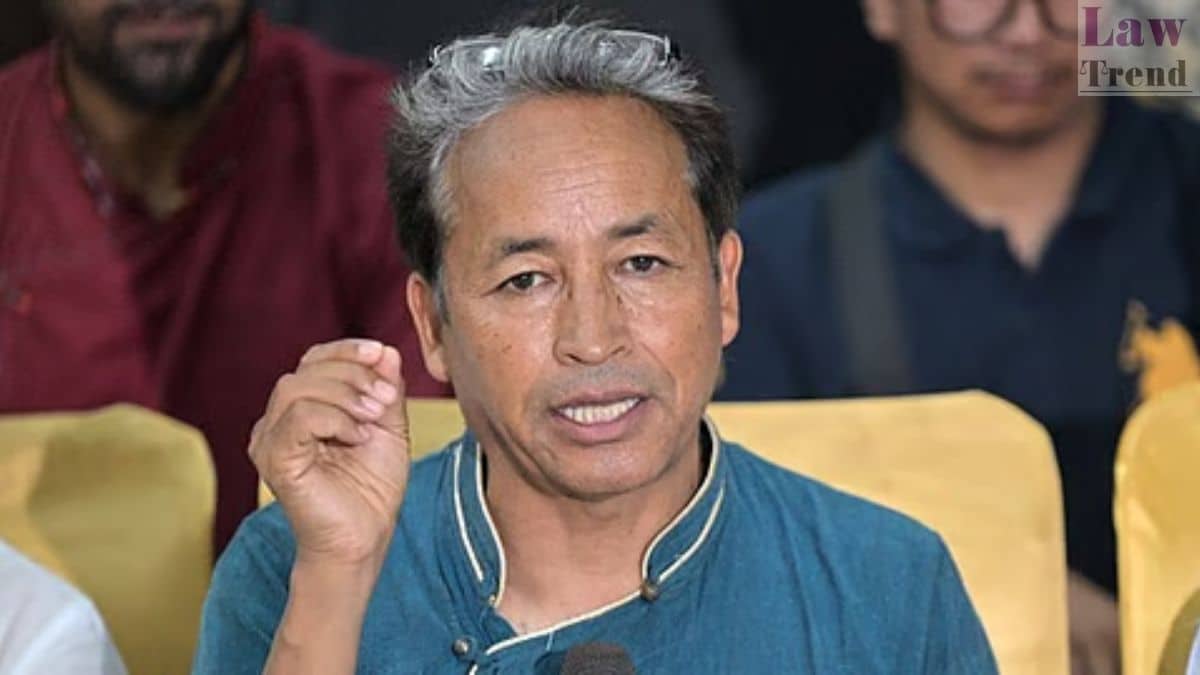
The Delhi High Court is scheduled to begin hearing a petition on Sunday challenging the alleged illegal detention of activist Sonam Wangchuk at Safdarjung Hospital. Filed by his wife, Gitanjali Angmo, the plea demands his immediate discharge and asserts that authorities used a previous medical monitoring order as a pretext to forcibly confine him.
Delhi Police forcibly removed Wangchuk from his protest site at Jantar Mantar early Saturday morning. This action occurred one day after a new Commissioner of the Delhi Police assumed office, and two days before the scheduled start of the parliamentary Monsoon Session on Monday. Wangchuk and the activist group Cockroach Janta Party had planned to mark the session’s opening with a march to Parliament.
Petition Alleges Rights Violations And Solitary Confinement
In her petition, Angmo argues that authorities took undue advantage of a July 15 Delhi High Court order to remove Wangchuk without his free and informed consent. The July 15 directive had only instructed government doctors to monitor Wangchuk’s health and administer appropriate medical care based on professional advice.
Angmo contends that the executive branch cannot expand terms such as medical monitoring, intervention, or treatment to justify forcible restraint, solitary confinement, or the restriction of bodily autonomy.
The plea further alleges that Wangchuk is being kept in solitary confinement under the guise of medical treatment. While Angmo has been permitted to visit her husband, she reports being barred from using a mobile phone or any other electronic devices during these meetings. Furthermore, the petition states that Wangchuk has been arbitrarily denied access to his legal counsel and to the doctors who had been treating him over the previous 20 days.
Disputed Potassium Levels and Lack of Medical Transparency
Before filing the court petition, Angmo wrote to the medical superintendent of Safdarjung Hospital, demanding that no oral or intravenous fluids or substances be administered to Wangchuk without her consent. She raised concerns over a reported drop in his potassium levels, which hospital staff claimed had fallen to an abnormal 2.9 mg from normal levels the previous night. Low potassium levels can affect nerve and muscle functions.
According to the petition, Angmo requested a blood sample for independent testing, which the hospital delayed providing for nearly 10 hours. The subsequent independent analysis of his blood potassium levels recorded a normal level of 3.6 mg, contradicting the hospital’s earlier claim of 2.9 mg.
Angmo states that the hospital has refused to share Wangchuk’s medical reports either physically or digitally. She citing this lack of transparency as a primary reason for seeking his discharge.
The petition asks the Delhi High Court to declare Wangchuk’s ongoing confinement at Safdarjung Hospital unconstitutional, order his immediate discharge, and allow his transfer to a medical facility chosen by his family.


