

Suspension of Sentence Cannot Precede Final Hearing When Parties Are Ready: Allahabad HC Denies Bail to Ex-MLA
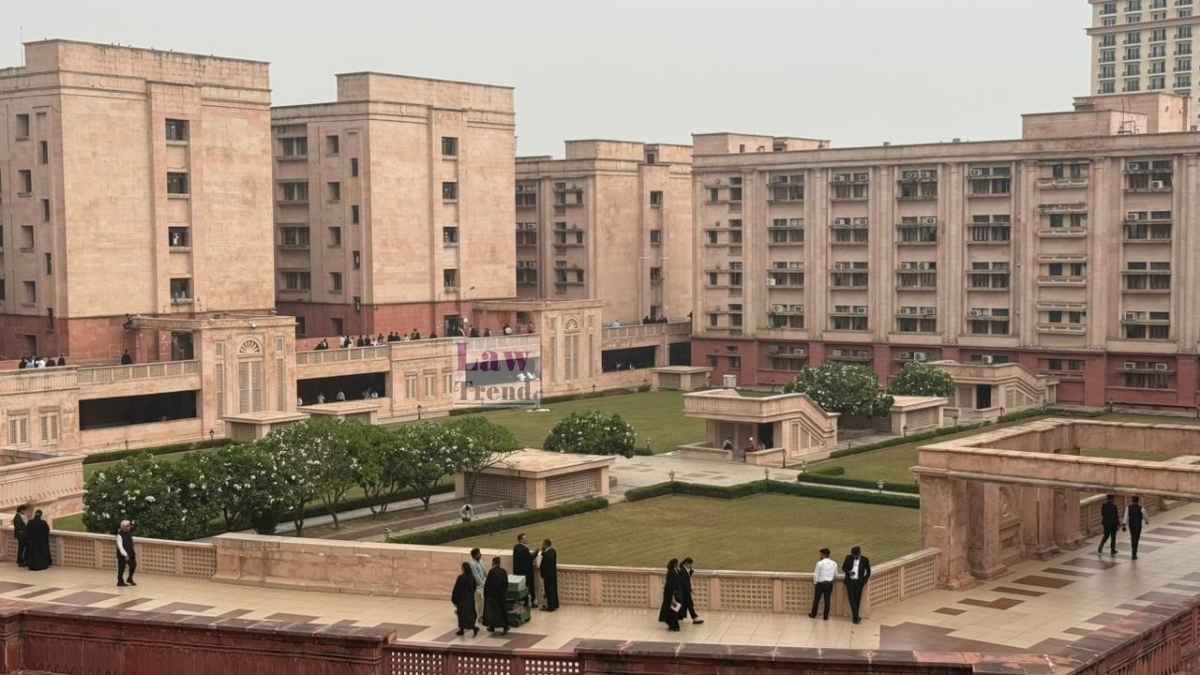

In a significant ruling on post-conviction bail, the Lucknow Bench of the Allahabad High Court, comprising Justice Rajesh Singh Chauhan and Justice Ram Manohar Narayan Mishra, rejected the application for suspension of sentence filed by convict Pawan Kumar Pandey in a 1990 attempt-to-murder case. The Court held that when counsel for the parties have previously agreed to argue the main appeal and revision on merits, the appellant cannot be allowed to decline arguing the appeal and insist on pressing only the bail application, nor will the Court permit delaying tactics in the final disposal of the case.

Background of the Case

The case stems from an incident that occurred on June 26, 1990, in a busy market under Police Station Baskhari, District Ambedkar Nagar, in which the victim, Anil Kumar Singh, sustained severe firearm injuries. Following a trial lasting nearly 35 years, the Special Judge (M.P./M.L.A. related matters)/Additional Sessions Judge (FTC-II), District Ambedkar Nagar, convicted Pawan Kumar Pandey on January 4, 2025, and sentenced him on January 6, 2025, under Sections 147, 148, 307 read with 149, and 427 of the Indian Penal Code (IPC) to a maximum of seven years’ rigorous imprisonment along with fine stipulations.

Assailing his conviction, Pandey filed Criminal Appeal No. 346 of 2025 along with an application for suspension of sentence (CMA/I.A. No. 1 of 2025) under Section 389 of the Code of Criminal Procedure (Cr.P.C.). Simultaneously, Nirbhay Singh, the son of the injured victim, filed Criminal Revision No. 370 of 2025 seeking enhancement of Pandey’s sentence from seven years’ rigorous imprisonment to life imprisonment. Both matters were connected for joint consideration.

Arguments of the Appellant

Counsel representing the appellant—Sri Ayodhya Prasad Mishra, Sri Brij Mohan Sahai, Sri Vivek Kumar Tripathi, Sri Alok Verma, Sri Atul Krishna, Sri Prajjwal Harsh, and Sri Praveen Kumar Yadav—submitted that the appellant had served more than two years in jail and urged the Court to suspend his sentence pending final disposal of the appeal. They contended that the appellant was falsely implicated, that key fact witnesses did not support the prosecution story regarding his presence at the spot, and that his criminal history of 93 cases had been properly explained in a rejoinder affidavit.

The defense highlighted that out of 93 cases, the appellant was convicted in only two cases (the present case for seven years and another case for six months), while being acquitted or granted bail in the rest. Relying on the Supreme Court judgments in Prabhakar Tewari v. State of U.P. & Anr. and Indra Pratap Tiwari v. The State of Uttar Pradesh, counsel argued that criminal history, when properly explained, cannot be a ground to deny bail.

READ ALSO  Candidate with Tattoo Must Be Given Opportunity to Remove It Before Rejection: Delhi High Court

Furthermore, counsel cited the Supreme Court decision in Purushothaman v. State of Tamil Nadu, specifically referencing the observation that “When only the application for suspension of sentence is listed for hearing, the advocate for the accused is not expected to be ready to argue the appeal.” On this basis, counsel stated he had no instructions from his client to argue the appeal on merits and pressed solely for the suspension of sentence.

Arguments of the State and the Victim

Opposing the bail application, the State was represented by Sri Vinod Kumar Shahi (learned Additional Advocate General of U.P.), Sri Anurag Verma (learned AGA-I), and Sri Ajeet Singh (learned State Counsel), alongside Ms. Akanksha Gupta, Sri Anurag Singh, Sri Devansh Vikram Singh, Sri Gaurav Mehrotra, and the Government Advocate. Sri Nadeem Murtaza represented the victim.

The State argued that the defense could not resile from its earlier commitment recorded in the Court’s order dated February 4, 2026, wherein time was specifically granted to address the Court on the merits of both the appeal and the revision.

Citing the Supreme Court landmark decision in State of Maharashtra v. Ramdas Shrinivas Nayak and Another, the State emphasized that judicial records are conclusive of what transpired in court, quoting: “The principle is well-settled that statements of fact as to what transpired at the hearing, recorded in the judgment of the court, are conclusive of the facts so stated and no one can contradict such statements by affidavit or other evidence.” The State further cited “Judgments cannot be treated as mere counters in the game of litigation.”

Addressing the scope of Section 389 Cr.P.C., the prosecution relied on Dhan Jee Pandey v. The State of Bihar & Another, highlighting that: “Upon conviction, the presumption of innocence stands displaced by a judicial determination of guilt, and the appellate court is required to exercise its jurisdiction under Section 389 Cr. P.C. with due circumspection and restraint.” The State also cited State of Haryana v. Hasmat and Om Prakash Sahni v. Jai Shankar Chaudhary to contend that suspension of sentence in serious offences must not be granted mechanically.

Regarding criminal antecedents, the prosecution referenced Rajni v. State of Punjab and Another, where the Apex Court observed that: “Where an accused carries multiple antecedents for offences as grave as those under Sections 302 and 307 of the IPC, such antecedents must weigh heavily against the grant of bail.” The State also pointed to Central Bureau of Investigation v. Rajendra Sadashiv Nikalje alias Chhota Rajan @ Nana Sheth @ SIR & Anr. (citing Sidhartha Vashisht v. State (NCT of Delhi) and Vijay Kumar), establishing that in serious offences punishable under Section 302 or 307 IPC, suspension of sentence is granted only in exceptional cases.

READ ALSO  Tribunal’s Integrity Cannot Be Compromised: Allahabad High Court Orders CBI Probe into DRT Lucknow Irregularities

Counsel for the victim further refuted the appellant’s claim of having spent over two years in prison, placing trial court records to show that Pandey remained in jail for only 35 days during the trial (from August 18, 1993 to September 23, 1993) due to non-cooperation and issuance of non-bailable warrants, making his total period of incarceration approximately one year and seven months.

Court’s Analysis and Decision

Distinguishing the precedent in Purushothaman, the Bench noted that unlike in Purushothaman—where only the sentence suspension application was listed—the present criminal appeal, revision, and bail application were all listed together, and counsel had previously sought time specifically to argue the appeal on merits.

READ ALSO  Bidder Can’t Claim Fundamental Right to Carry on Business With the Government: Allahabad HC

The Court observed that if counsel are prepared to argue the main appeal or revision, the application for suspension of sentence should not take precedence over final disposal. The Bench held that the endeavour of the Court must be to decide the appeal at the earliest, and an appellant cannot be permitted to adopt delaying tactics or postpone the final hearing at will.

Consequently, without entering into the merits of the appeal or revision, the High Court rejected the application for suspension of sentence (CMA/I.A. No. 1 of 2025) and fixed August 19, 2026, for final hearing and disposal of both the criminal appeal and the connected revision.

Case Title: Pawan Kumar Pandey v. State of U.P. Thru. Prin. Secy. Home Lko.
Case No.: Criminal Appeal No. 346 of 2025
Bench: Justice Rajesh Singh Chauhan, Justice Ram Manohar Narayan Mishra
Date: July 28, 2026

Law Trend
Law Trendhttps://lawtrend.in/
Legal News Website Providing Latest Judgments of Supreme Court and High Court

Related Articles

Latest Articles

