

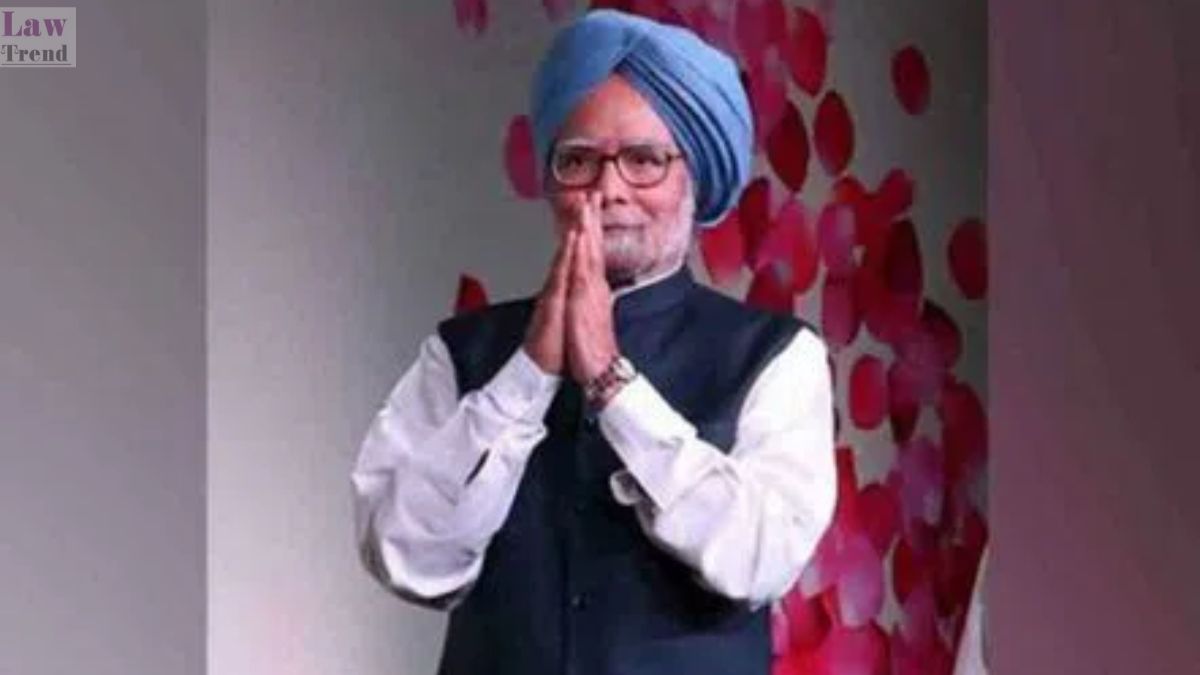
The Supreme Court of India on Wednesday formally closed criminal proceedings against former Prime Minister Manmohan Singh in connection with the 2005 Talabira-II coal block allocation, setting aside a lower court’s order that had summoned him as an accused. By accepting the closure report submitted by the Central Bureau of Investigation, the apex court officially acquitted the former leader, who passed away on December 27, 2024.
Bench Accepts Investigation Findings
A three-judge bench comprising Chief Justice Surya Kant, Justice Joymalya Bagchi, and Justice V. Mohana ruled that the special trial court judge lacked valid grounds to reject the investigative agency’s clean chit. While observing that the appeal could technically have been treated as infructuous following Singh’s death, the top court stated that it chose to review both closure reports filed by the agency to assess the trial judge’s decision to initiate proceedings. Upon applying established legal parameters regarding investigative reports, the bench concluded that taking cognisance was unjustified, thereby setting aside the contested ruling and terminating the case against all named parties.
Origins of the Probe and Special Court Action
The legal dispute stemmed from the 2005 allocation of the Talabira-II coal block in Odisha to industrial firm Hindalco Industries Ltd., during a period when Singh was serving as prime minister and holding charge of the coal portfolio. The investigating agency initially registered a First Information Report naming former Coal Secretary P.C. Parakh, industrialist Kumar Mangalam Birla, Hindalco Industries Ltd., and unknown individuals for alleged offences under Section 120B for criminal conspiracy under the Indian Penal Code and provisions of the Prevention of Corruption Act.
During the investigation, the court instructed the agency to question Singh alongside key Prime Minister’s Office personnel, including his then Principal Secretary T.K.A. Nair and former Private Secretary B.V.R. Subramanyam. Following its inquiry, the agency submitted a closure report indicating a lack of prosecutable evidence.
Trial Court Summons and Apex Court Intervention
Special CBI Judge Bharat Parashar subsequently declined to accept the agency’s closure submission and issued summonses to six entity and individual respondents. These included Singh, Birla, Parakh, Hindalco, and company executives Shubhendu Amitabh and D. Bhattacharya, invoking charges under Section 120B and Section 409 for criminal breach of trust by a public servant, as well as corruption statutes.
Singh challenged the summons before the Supreme Court, pointing out the absence of mandatory statutory sanction required to prosecute public officials and maintaining that his official decisions contained no criminality. The Supreme Court subsequently stayed the trial court’s order pending Wednesday’s final judgment.




