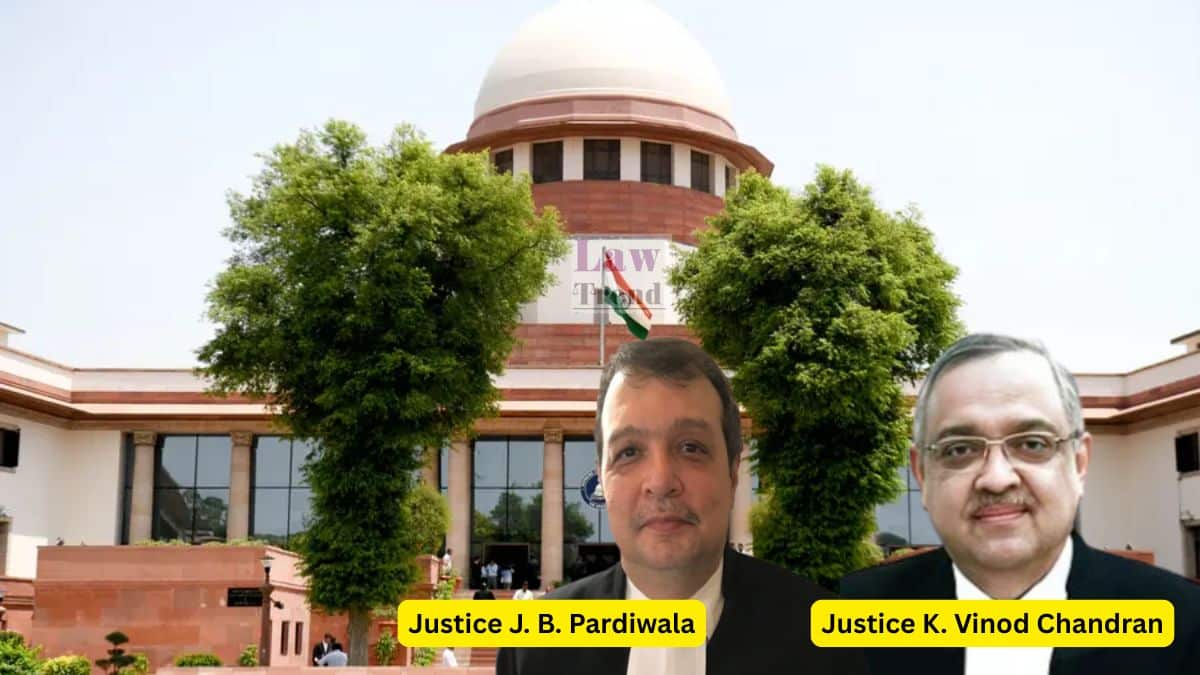
In a child custody dispute, the Supreme Court, comprising Justice J. B. Pardiwala and Justice K. Vinod Chandran, exercised its parens patriae jurisdiction while hearing a contempt petition and ordered that the custody of a minor child be returned to his maternal grandparents, concluding that the welfare of the child would be best served in their care.
Background of the Case
The contempt petition was instituted by the maternal grandparents, Ashok Kumar Tiwari, alleging non-compliance with an earlier court judgment regarding custody and visitation rights. The mother of the child had passed away, following which the maternal grandparents were taking care of the minor.
In the earlier proceedings, the Supreme Court had noted decisions permitting child custody considerations under Article 226 of the Constitution of India when sought by the natural guardian, the father. The court had been persuaded to handover custody to the father, Vivek Kumar Chaturvedi. The court had noted that the paternal grandfather had deposited ₹10 lakh in the child’s name and taken out a life insurance policy of ₹25 lakh with the child as the beneficiary. Furthermore, the father held a responsible position in the state administrative services and had remarried, purportedly to ensure due care for the minor.
Because the child had been separated from the father since 2021, the court had initially directed custody to remain with the grandparents until April 30, 2025, to allow completion of the academic year. The father was permitted familiarization visits on alternate weekends and second Saturdays. The child was scheduled to be handed over to the father on May 1, 2025, in the presence of the jurisdictional Station House Officer, while granting the grandparents visitation rights on every second Saturday starting June 2025.
Arguments of the Parties
The maternal grandparents filed the contempt petition alleging that the minor child was not sent to them even once after the custody was transferred.
In response, the father submitted that the grandparents had not come to take custody on the designated second Saturdays. He further stated that he had moved from his earlier location due to an official transfer, which was far from the residence of the grandparents.
Court’s Analysis and Decision
The Supreme Court directed the child to be produced before it, and the bench interacted directly with the minor in the Committee Room. Following this interaction, the court observed:
“having interacted with the child we are of the opinion that the interest and welfare of the child would be best served if he is allowed to be looked after by his grandparents.”
The court also took note that three maternal uncles reside with the grandparents, one of whom was present in court. The uncle submitted that the child had been admitted to a prestigious institution and fees had already been paid when the earlier order handing over custody to the father was passed.
Explaining its decision to modify the custody arrangement during contempt proceedings, the bench emphasized its protective role over the child, stating:
“We quite realize that we were dealing with a contempt case but after interacting with the child, we were of the opinion that exercise of the parens patriae jurisdiction is expedient, under which, we have passed the above order.”
Consequently, the court allowed the maternal uncle to take the child from the court. The bench clarified that the grandparents are entitled to pursue claims for maintenance in accordance with law.
Regarding visitation rights, the court held that the father must first build confidence in the child. If the child desires, the father may be allowed to visit once every three months, under strict supervision of the grandparents or maternal uncles.
With these directions, the Supreme Court closed the contempt case.
Case Details:
Case Title: Ashok Kumar Tiwari v. Vivek Kumar Chaturvedi and Ors.
Case No.: Contempt Petition (C) No.251 of 2026 In Criminal Appeal No.623 of 2025
Bench: Justice J. B. Pardiwala, Justice K. Vinod Chandran
Date: August 07, 2026