

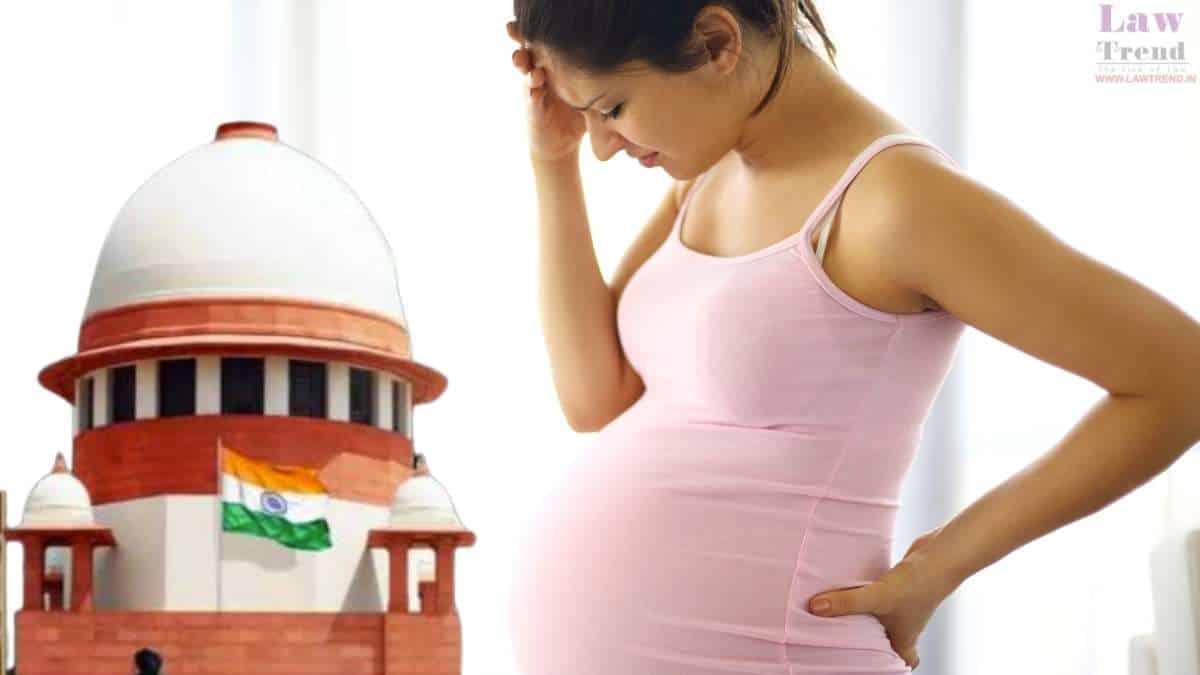
The Supreme Court of India on Thursday took a strong stand against a plea by the All India Institute of Medical Sciences (AIIMS) seeking to reverse an order allowing a 15-year-old rape survivor to terminate her 30-week pregnancy. Stressing that the law must remain “organic” and evolve with the times, the court urged the Central Government to consider amending legislation to remove time limits for termination in cases of rape.
The proceedings underscored a significant legal and ethical debate over reproductive autonomy versus foetal viability, with the bench emphasizing the lifelong trauma and “humiliation” an unwanted pregnancy could inflict on a child survivor.
The matter reached the top court after a bench comprising Justices B.V. Nagarathna and Ujjal Bhuyan had, on April 24, permitted the 15-year-old girl to undergo a medical termination of her 30-week pregnancy. AIIMS subsequently filed a curative petition seeking to set aside this order, citing medical and ethical concerns regarding the advanced stage of the pregnancy.
Representing AIIMS, Additional Solicitor General Aishwarya Bhati argued that termination at this stage was no longer a viable medical option in the traditional sense. She informed the court that the procedure would result in a “live baby with severe deformities.”
Furthermore, the ASG highlighted the health risks to the minor, stating, “The minor mother will have lifelong health issues and cannot reproduce… It has been 30 weeks now. It is a viable life now.” AIIMS suggested that the child could instead be carried to term and given up for adoption.
A bench led by Chief Justice Surya Kant and Justice Joymalya Bagchi dismissed the medical institute’s reservations, focusing on the rights and mental well-being of the survivor. The bench observed that the law needs to be “in sync with evolving time” and that in cases of pregnancy resulting from rape, there should ideally be no restrictive time limit.
“This is a case of child rape and the survivor will have a lifelong scar and trauma if termination is not allowed,” the bench remarked. Addressing the suggestion of adoption, the court noted the grim reality of abandoned children and the existence of “mafias” targeting them, asserting that an unwanted pregnancy cannot be “thrusted” upon a person.
The Justices highlighted the age of the survivor to underscore the gravity of the situation: “Imagine she is a child. She should be studying now. But we want to make her a mother. Imagine the pain, the humiliation the child has suffered in this.”
The Supreme Court maintained that the ultimate decision regarding the termination must rest with the survivor and her parents. It directed AIIMS to counsel the family to ensure they make an informed choice, rather than seeking to block the procedure through legal intervention. The court clarified that as long as the mother does not face “permanent disability” from the procedure, the termination should proceed if that is the survivor’s wish.
The bench concluded by asking the Centre to look into amending the law to specifically permit rape survivors to seek terminations beyond the current 20-week limit, ensuring the legal framework remains compassionate to those facing exceptional trauma.




