

Students Shifted From Derecognised Medical College Cannot Get ‘Bonanza’ of Government-Rate Fees in Private Colleges: Supreme Court
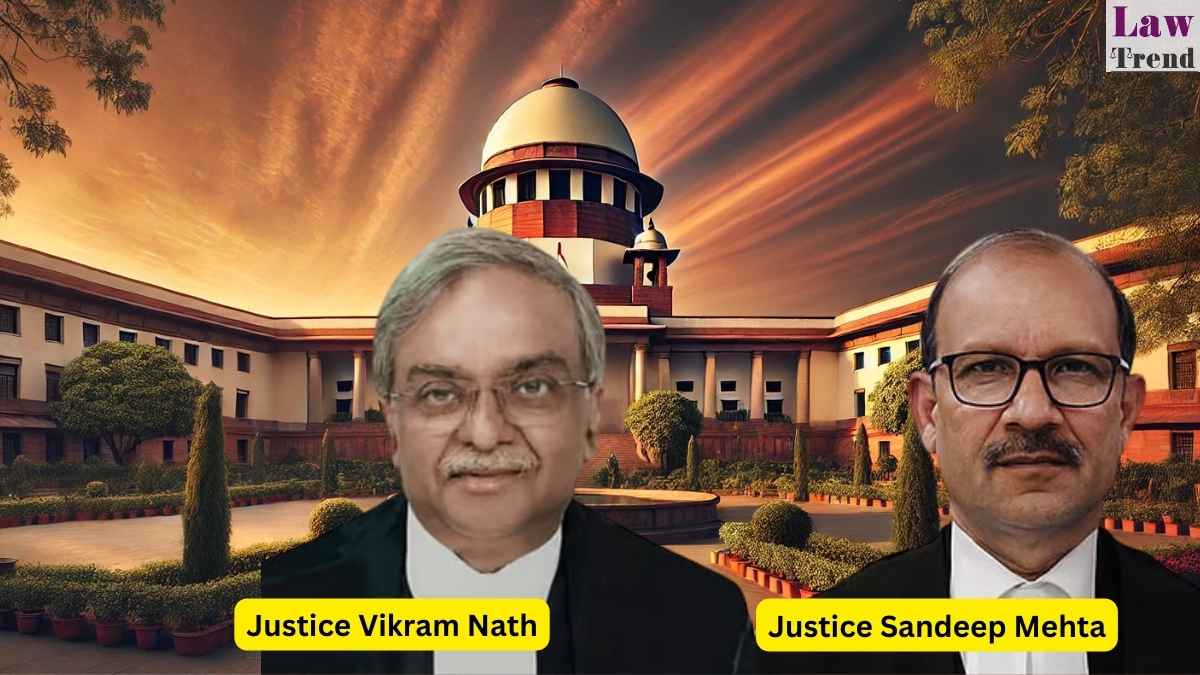

The Supreme Court of India has held that students shifted from a derecognised private medical college to other private medical institutions pursuant to court orders cannot continue to enjoy the benefit of highly subsidised Government-rate fees as a “windfall or a bonanza.” The Court directed release of nearly ₹14 crore secured from the defaulting institution and its trust to three transferee medical colleges towards unpaid fee liabilities arising from relocation of MBBS students.

A Bench of Justice Vikram Nath and Justice Sandeep Mehta disposed of appeals arising from litigation concerning relocation of students from Sardar Rajas Medical College, Hospital and Research Centre after deficiencies in infrastructure and faculty led to denial of renewal of recognition by the Medical Council of India, now National Medical Commission.

Background of the Dispute

The case related to MBBS students admitted during academic sessions 2013-2014 and 2014-2015 in Sardar Rajas Medical College, which was managed by Selvam Educational and Charitable Trust.

During inspections, the Medical Council of India found serious deficiencies relating to infrastructure, faculty and regulatory compliance, leading to denial of renewal of recognition. The academic future of students was consequently jeopardised.

The Orissa High Court initially directed relocation of students to recognised medical colleges in Odisha. Subsequent proceedings before the Supreme Court led to transfer of 122 students to three private medical colleges — Kalinga Institute of Medical Sciences, Institute of Medical Sciences and SUM Hospital, and Hi-Tech Medical College and Hospital.

The students were relocated through a State-supervised counselling process pursuant to interim orders passed by the Supreme Court to ensure that they did not lose an academic year.

Claims Raised by Transferee Colleges

The three transferee colleges later approached the Supreme Court seeking directions for payment and reimbursement of fees for education imparted to the transferred students.

READ ALSO  सुप्रीम कोर्ट ने certiorari रिट जारी करने के लिए अनुच्छेद 226 के तहत अधिकार क्षेत्र के प्रयोग को नियंत्रित करने वाले कानून के दो प्रमुख सिद्धांतों पर चर्चा की

The colleges contended that the students had paid only Government-rate fees of around ₹30,000 annually pursuant to interim directions of the Court, whereas the actual fee structure in the private institutions was substantially higher.

The Court referred to comparative fee charts placed on record by the colleges showing that the fees payable in private institutions were significantly higher than those charged by SRMCH itself.

The colleges further submitted that they had also paid stipends to the students wherever applicable and had suffered financial losses while accommodating additional students under court directions.

Students Opposed Additional Liability

The students argued that they had initially secured admission through a valid process and were compelled to shift institutions for no fault of theirs. They contended that they had already completed their medical education after years of hardship and uncertainty and should not be burdened with additional financial liability at such a belated stage.

The Selvam Educational and Charitable Trust argued that findings regarding deficiencies in the college were still disputed and contended that the entire liability could not be imposed upon it without adjudication of those issues.

Supreme Court on Government-Rate Fees

The Court held that the controversy regarding Government quota and management quota seats did not survive because there was no material to show that vacant Government quota seats existed in the transferee colleges. The Court therefore presumed that all transferred students were accommodated against private or management quota seats.

READ ALSO  Arbitration and SARFAESI Proceedings Can Run Concurrently: Bombay HC 

Referring to earlier interim orders passed in 2014, the Court noted that students had temporarily been allowed to pay Government-rate fees in private colleges as an emergent measure because of the extraordinary situation created by derecognition of the institution.

However, the Bench held that students who had initially taken admission in a private medical college with a substantially higher fee structure could not permanently claim the benefit of subsidised Government-rate fees.

The Court observed:

“This, in our opinion, would amount to unjust enrichment of these transferee students…”

It further stated:

“Thus, neither the students can be given undue advantage or bonanza nor can the defaulting institution, i.e., the SRMCH/Selvam Trust, be permitted to take benefit of its own follies.”

Liability Fastened on Defaulting Trust

The Court noted that SRMCH had already collected substantial fees from students and had also furnished bank guarantees of approximately ₹10 crore before the MCI/NMC. In addition, ₹2 crore had earlier been deposited before the Supreme Court Registry pursuant to court orders.

Holding that the primary financial burden must fall upon the defaulting institution and trust, the Court directed that the ₹10 crore secured through bank guarantees and the ₹2 crore deposited before the Court, along with accrued interest, be released equally to the three transferee colleges.

READ ALSO  एंटीलिया बम कांड मामले में सुप्रीम कोर्ट ने प्रदीप शर्मा को जमानत दी

The Court directed the MCI/NMC to release the bank guarantee amount within three months and also ordered disbursement of the amount lying deposited before the Supreme Court Registry.

Students May Still Be Liable for Outstanding Dues

The Bench observed that even after release of approximately ₹14 crore, the transferee colleges would still suffer a shortfall compared to the fee amounts legitimately payable at the rates charged by SRMCH itself.

The Court also noted that students had executed undertakings acknowledging that the issue of fee liability remained pending before the Court and agreeing to abide by the final decision.

The Court therefore permitted the transferee colleges to approach the NMC with details of any remaining fee shortfall for recovery from the students after appropriate adjustments.

At the same time, the Court clarified that any amounts already paid by students to SRMCH at the time of admission must be duly adjusted while calculating any outstanding dues.

Finally, the Court directed that students complying with the determined fee liability would be entitled to receive all academic records, certificates and course completion documents without delay.

Case Details:

  • Case Title: Soumya Ranjan Panda & Ors. v. Subhalaxmi Dash & Ors.
  • Case No.: Civil Appeal Arising out of SLP(Civil) No(s). 35075-35076 of 2015
  • Bench: Justice Vikram Nath and Justice Sandeep Mehta
  • Date: May 14, 2026

Law Trend
Law Trendhttps://lawtrend.in/
Legal News Website Providing Latest Judgments of Supreme Court and High Court

Related Articles

Latest Articles

