

Sole Testimony of Child Abuse Survivor Sufficient for Conviction Without Corroboration: Allahabad High Court
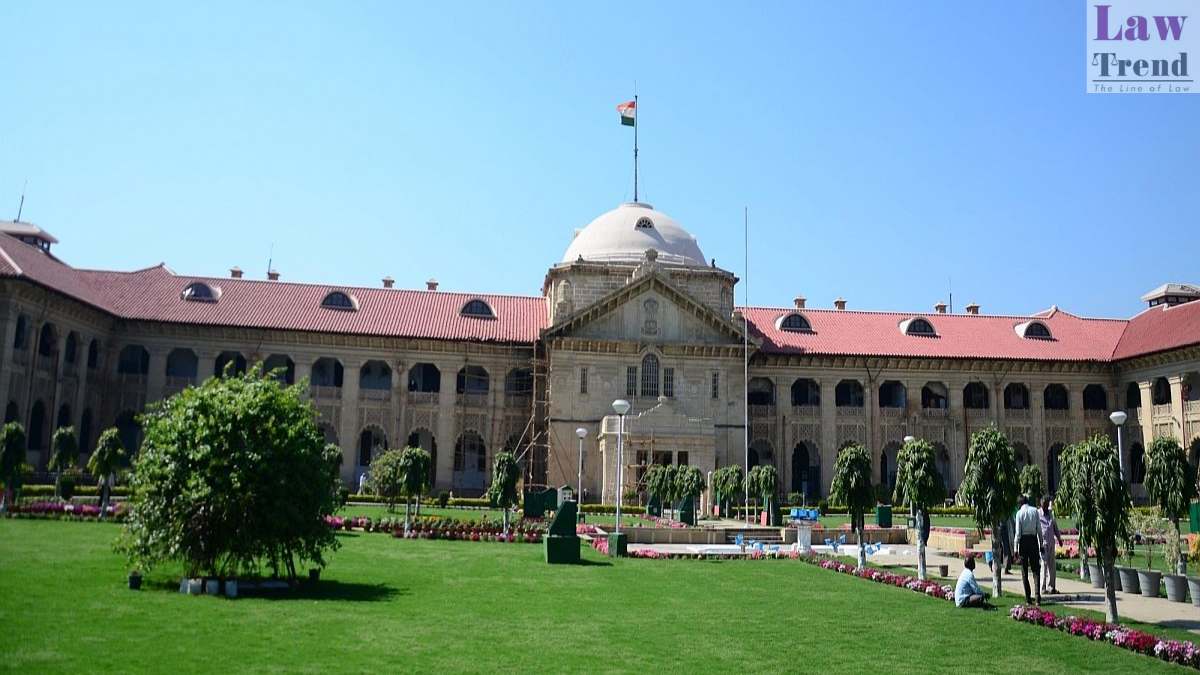
The Allahabad High Court has affirmed that the sole testimony of a minor victim of sexual assault, if found worthy of credence and reliable, is sufficient to sustain a conviction without any requirement for corroboration. A division bench of Justice Siddhartha Varma and Justice Jai Krishna Upadhyay delivered this ruling while dismissing a criminal appeal filed by a neighbor convicted of abducting and raping a seven-year-old girl in 2014. The Court upheld the trial court’s order sentencing the appellant to rigorous life imprisonment under the Protection of Children from Sexual Offences (POCSO) Act.

Background of the Case

The case arose from an incident during the night of July 8/9, 2014, in the jurisdiction of Police Station Nai Mandi, District Muzaffarnagar. According to the First Information Report (FIR) lodged by the victim’s father, Tejvir Singh, his family was sleeping at their residence when an unidentified individual abducted his daughter. The next morning, discovering the child missing from her cot, the family initiated a search. At approximately 5:30 AM, a neighbor, Ompal Prajapati, brought the victim home after finding her near the village school. The neighbor noted that she was in a poor physical condition and appeared to have been subjected to physical injury and rape.

Initially, the police registered Case Crime No. 660 of 2014 against unknown persons under Sections 376 and 323 of the Indian Penal Code (IPC) and Sections 3 and 4 of the POCSO Act. Subsequently, the informant submitted an additional report stating that once his daughter regained consciousness on July 9, 2014, she uttered the name “Kiran.” Upon being asked if she meant Kiran, the son-in-law of Sukhbir who lived in their neighborhood, tears welled up in her eyes and she lost consciousness. This convinced the informant that the appellant, Kiranpal alias Kiran, was the perpetrator.

The investigation was conducted by S.I. Jitendra Kumar Sharma, who prepared the site plan and sent the victim’s bloodstained clothes (kurta and salwar) and the accused’s clothes to the Forensic Science Laboratory (FSL) in Agra. The FSL report subsequently confirmed the presence of human blood on the victim’s garments. The victim was medically examined by Dr. Abha Aatrey, who found eleven external injuries (abrasions and contusions) alongside severe internal vaginal lacerations. A radiological exam performed by Dr. Vineet Kaushik for age determination led the Chief Medical Officer to conclude that the victim was about seven years old.

The trial court of the Additional District & Sessions Judge-VIII / Special Judge (POCSO Act), Muzaffarnagar, on August 24, 2018, convicted the appellant under Sections 376 and 323 of the IPC and Sections 5/6 of the POCSO Act, sentencing him to rigorous life imprisonment and a fine of Rs. 25,000 under Section 6 of the POCSO Act. The appellant subsequently appealed this conviction in the High Court.

READ ALSO  Allahabad High Court Upholds New Excise Policy, Dismisses Challenges Against E-Lottery System

Arguments of the Parties

The learned counsel representing the appellant argued that the prosecution had failed to establish its case beyond a reasonable doubt. They contended that the trial court ignored glaring inconsistencies and contradictions in the oral evidence. The defense argued that the informant (PW-1) was not an eyewitness, the medical evidence did not support the prosecution’s case, and the victim (PW-2) was a tutored and unreliable witness who was falsely implicated due to personal enmity.

Conversely, the learned Additional Government Advocate (AGA) appearing for the State supported the trial court’s judgment. The State argued that the testimonies of the informant and the victim were consistent and that the medical evidence, including the doctor’s findings, fully supported the oral narrative. The State maintained that the trial court’s findings were based on a correct appreciation of the facts and law, leaving no room for judicial interference.

READ ALSO  S. 33C(2) Industrial Disputes Act | Labour Court Can't Award Interest in Execution Proceedings: Allahabad HC

The Court’s Analysis

The High Court analyzed the established jurisprudence regarding the weight attached to a victim’s testimony in sexual offense cases. Delivering the judgment, Justice Jai Krishna Upadhyay emphasized that the law is well-settled: if the evidence of a victim of rape is wholly reliable, it can serve as the sole basis for conviction.

The Court cited the Supreme Court’s decision in State of Rajasthan v. Babu Meena (2013) 4 SCC 206, observing: “We do not have the slightest hesitation in accepting the broad submission of Mr. Jain that the conviction can be based on the sole testimony of the prosecutrix, if found to be worthy of credence and reliable and for that no corroboration is required.”

The bench also referenced the Apex Court’s ruling in Hem Raj S/O Moti Ram v. State of Haryana JT 2014 (2) SC 399, highlighting the high status afforded to a victim’s testimony: “In a case involving charge of rape the evidence of the prosecutrix is most vital. If it is found credible; if it inspires total confidence, it can be relied upon even sans corroboration.”

Furthermore, the High Court relied on State of H.P. v. Asha Ram (2005) 13 SCC 766 to rule that minor discrepancies should not be used to discard a reliable prosecution story: “It is now a well-settled principle of law that conviction can be founded on the testimony of the prosecutrix alone unless there are compelling reasons for seeking corroboration. The evidence of a prosecutrix is more reliable than that of an injured witness.”

The bench also drew upon the principles laid down in Ganesan v. State represented by its Inspector of Police (2020) 10 SCC 573 and Phool Singh v. State of Madhya Pradesh (2022) 2 SCC 74, reiterating that solitary testimony is sufficient if it is of “sterling quality.”

Applying these standards, the High Court found that the minor victim (PW-2) had given a clear, natural, and consistent account of how the appellant abducted her at midnight and raped her at the school. Her testimony remained firm despite rigorous cross-examination by the defense. The medical findings of Dr. Abha Aatrey, who noted severe internal injuries and lacerations, further corroborated the victim’s account. The Court declared the victim to be a “sterling witness” whose testimony was completely trustworthy.

READ ALSO  Accused Not Entitled to Pre-Hearing Before Lodging of FIR: Chhattisgarh HC

The Court also highlighted the gravity of offenses under the POCSO Act, noting that such a gruesome crime causes lifelong trauma that adversely affects the healthy growth of a minor.

Decision of the Court

The High Court concluded that the prosecution had proved its case beyond a reasonable doubt and that the trial court’s judgment suffered from no illegality or infirmity. Consequently, the High Court dismissed the criminal appeal and affirmed the trial court’s conviction and life sentence. The appellant, currently in jail, was ordered to serve the remaining portion of his sentence.

Case Title: Kiranpal Alias Kiran v. State of U.P.
Case No.: Criminal Appeal No. 6007 of 2018
Bench: Justice Siddhartha Varma, Justice Jai Krishna Upadhyay
Date: June 03, 2026

Law Trend
Law Trendhttps://lawtrend.in/
Legal News Website Providing Latest Judgments of Supreme Court and High Court

Related Articles

Latest Articles
