

‘Shocking That Litigating Party Can Call Judge Over Pending Case’: Allahabad HC Refers Durga Shakti Nagpal Matter for Criminal Contempt
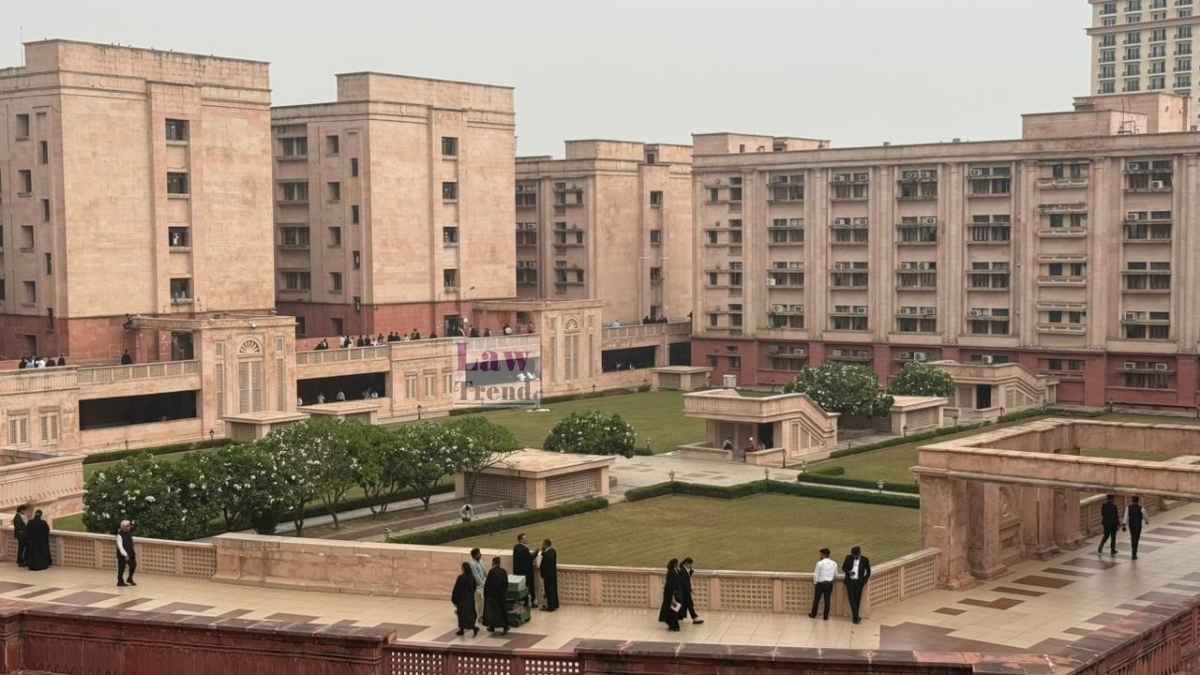

The High Court of Judicature at Allahabad, Lucknow Bench, presided over by Justice Syed Qamar Hasan Rizvi, has initiated proceedings to place a matter before a bench dealing with criminal contempt after observing that an attempt was made by a senior administrative officer to influence a trial judge in a pending civil dispute. Hearing a transfer application under Section 24 of the Code of Civil Procedure, the Court held that while the plea for transferring the trial court suit had lost its efficacy as the District Judge had already transferred the case, the High Court could not ignore allegations of a litigating party contacting a judicial officer over the telephone to exert pressure.

Background of the Case

The matter stems from Regular Suit No. 721 of 1997 (Jyoti Vidya Mandir vs. Nagar Palika Parishad), which has been pending for nearly 30 years regarding Nazul land and is currently at the evidence stage before the Civil Judge (Senior Division), Gonda. The applicant, Jyoti Vidya Mandir, approached the High Court seeking to transfer the suit out of the Devi Patan Mandal Division to the Faizabad or Lucknow Division, alleging that opposite parties were misusing their office, threatening office bearers, and putting undue pressure on the trial court.

In support of the transfer plea, attention was drawn to a letter dated August 4, 2026, written by Civil Judge (Senior Division) Gonda, Shabina Khan, to the District Judge, Gonda. In her letter, the judge reported receiving phone calls on July 15, 2026, from Divisional Commissioner, Devi Patan Mandal, Durga Shakti Nagpal. According to the trial judge’s letter, the officer questioned her about her leave status, made remarks regarding her conduct, threatened to complain to the High Court, and expressed a desire to speak about the pending suit. The trial judge stated that the officer attempted to intimidate her by misusing her position and requested that the case file be transferred to another court.

On the same date, August 4, 2026, the Divisional Commissioner also addressed a letter to Justice Prakash Padia, Administrative Judge for Gonda, alleging that the trial judge used improper language against her in open court, refused to hear the government matter, and failed to maintain proper judicial decorum.

Following the receipt of the trial judge’s request, the District & Sessions Judge, Gonda, had already withdrawn the suit from the Court of Civil Judge (Senior Division), Gonda, and transferred it to the Court of Civil Judge (Senior Division)/F.T.C. Naveen/ACJM, Gonda.

READ ALSO  Filing False Section 498A Case by Wife to 'Correct' Husband's Behaviour Constitutes Cruelty: Bombay High Court

Arguments of the Parties

Appearing for the applicant, Senior Advocate A.M. Tripathi, along with advocates Anurag Tripathi and Akhand Pratap Singh, submitted that the opposite parties were abusing their position and pressuring the court, making a transfer necessary to ensure justice.

Additional Advocate General Pritish Kumar, assisted by Chief Standing Counsel Shailendra Kumar Singh for the State, argued that since the District Judge had already transferred the suit to another court of equivalent jurisdiction, the transfer application before the High Court had become infructuous. State counsel highlighted that the government sought an expeditious decision in the decades-old suit.

Addressing the allegations regarding the phone calls, the State counsel did not deny that the Divisional Commissioner had made the call to the trial judge. He submitted that the call was made solely to ascertain the duration of the judge’s leave and whether it would be extended.

Court’s Analysis and Key Observations

Evaluating the developments, the High Court noted that because the District Judge had already transferred the case to the FTC Naveen court, no further orders regarding transfer were required at this stage. However, the Court expressed deep concern over the allegations made by the trial judge regarding the phone calls.

The Court observed:

“The tone and language of the aforesaid alleged telephonic conversation given a direct impression that the Presiding Officer of the Court was tried to be influenced and that made her feel offended.”

Emphasizing that the State counsel did not deny the occurrence of the telephonic call, the High Court remarked:

“It is shocking that how a litigating party can approach the Court by making such a phone call and that too in context with a pending matter before the said Court.”

Highlighting the constitutional duty of higher courts to uphold judicial independence and shield lower courts from external interference, the High Court stated:

“This Court being the High Court is under obligation to protect the lower courts from being insulted or pressurized. All the courts function for the noble cause of dispensing justice, as such, they have to have full freedom and independence in settling the litgation.”

The Court further held:

“Any action on the part of any person or litigant or lawyer which tends to pressurize the Court amounts to obtrust the process of justice; have to be depreciated so that the proceedings may be held in an ordinary fashion and everyone who participates in those proceedings must have the liberty to present their case for proper adjucation.”

To reinforce the legal framework governing threats and interference with judicial functioning, the High Court relied on the decision of the Supreme Court in In Re: Ajay Kumar Pandey (1996) 6 SCC 510, which cited Dr. D. C. Saxena’s case, quoting:

“41. In Dr. D. C. Saxena’s case (supra), this Court has already laid down that if a Judge, on Account of the proceedings conducted by him in his court, is threatened that he would be prosecuted in a court of law for the judicial act done by him, it amounts to criminal contempt as it lowers and tends to lower the dignity of the court.”

“42. We are also of the same opinion. We may observe that any threat of filing a complaint against the Judge in respect of the judicial proceedings conducted by him in his own court is a positive attempt to interfere with the due course of administration of justice. In order that the Judges may fearlessly and independently act in the discharge of their judicial functions, it is necessary that they should have full liberty to act within the sphere of their activity. If, however, litigants and their counsel start threatening the Judge or launch prosecution against him for what he has honestly and bona fide done in his court, the judicial independence would vanish eroding the very edifice on which the institution of justice stands. It would also be in violation of the statutory protection available to the Judges and Magistrates under the Judicial Officers (Protection) Act as also the Judges (Protection) Act.”

Decision of the Court

The High Court held that the transfer application had lost its efficacy and consigned it to record. The Court granted liberty to the applicant to approach the District Judge, Gonda, through an appropriate application raising any available legal grounds, which shall be decided strictly on its merits and in accordance with law.

READ ALSO  Trial Courts Are Consistently Failing to Perform Their Duties: MP High Court While Acquitting Man in POCSO Case

Concurrently, finding prima facie grounds that the issue involves interference with the administration of justice, the High Court directed that the matter be placed before the appropriate Court dealing with criminal contempt matters, after obtaining necessary directions from the Chief Justice or the Senior Judge.

Case Title: Jyoti Vidya Mandir vs. Nagar Palika Parishad Gonda and others
Case No.: Transfer Application (Civil) No. 165 of 2026
Bench: Justice Syed Qamar Hasan Rizvi
Date: August 21, 2026

READ ALSO  पहलगाम आतंकी हमले पर टिप्पणी को लेकर रॉबर्ट वाड्रा के खिलाफ याचिका पर शुक्रवार को सुनवाई करेगा इलाहाबाद हाईकोर्ट
Ad 20- WhatsApp Banner

Law Trend
Law Trendhttps://lawtrend.in/
Legal News Website Providing Latest Judgments of Supreme Court and High Court

Related Articles

Latest Articles

