

Court Cannot Direct Production Of Automatically Deleted CCTV Footage Under Section 94 BNSS: Chhattisgarh High Court
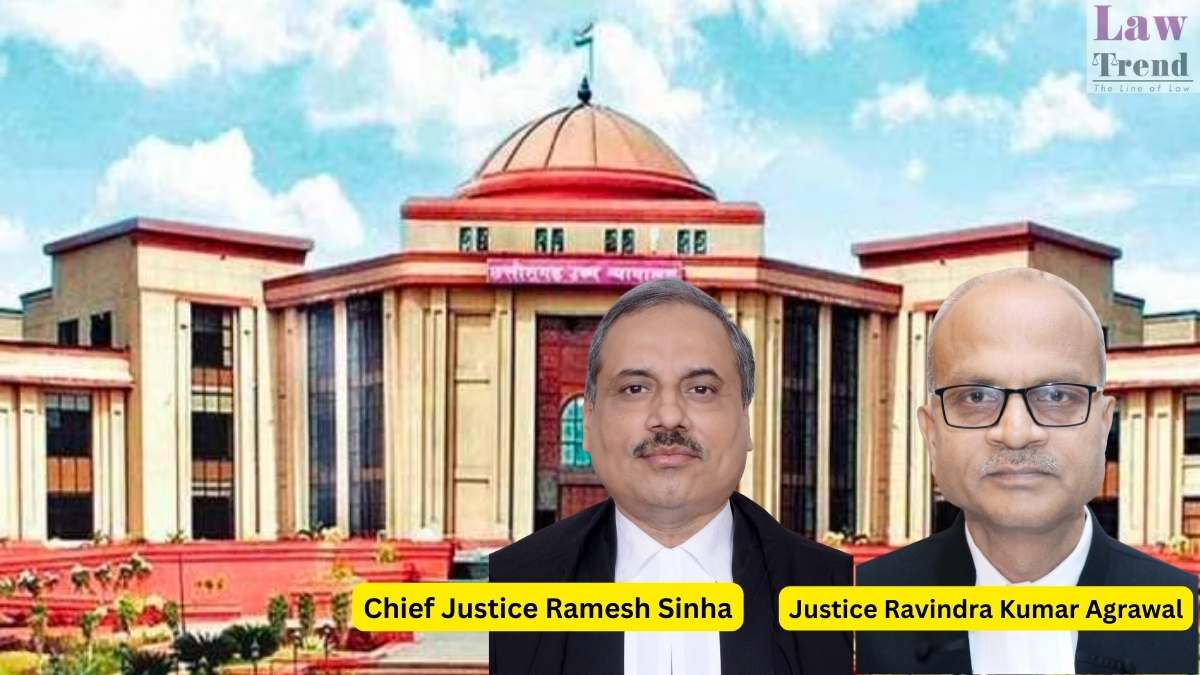

A Division Bench of the High Court of Chhattisgarh, comprising Chief Justice Ramesh Sinha and Justice Ravindra Kumar Agrawal, has held that a trial court cannot be faulted for refusing to direct the production of police station CCTV footage under Section 94 of the Bharatiya Nagarik Suraksha Sanhita, 2023 (BNSS) when the recording has already been automatically deleted after the expiry of the mandatory 18-month storage period and is no longer available. Dismissing a writ petition filed by four individuals accused under the Narcotic Drugs and Psychotropic Substances Act, 1985 (NDPS Act), the Court affirmed an order passed by the Special Judge (NDPS Act), Bilaspur, which rejected their plea for the preservation and production of CCTV footage from Police Station Gaurela.

Case Background

The petitioners—Banwari Lal Gupta, Rohit Gupta, Ankul Jaitwar, and Gopal Panadiya alias Gopi Panika—were arrested in connection with Crime No. 304/2024 registered at Police Station Gaurela, District Gaurela-Pendra-Marwahi, for offences punishable under Sections 20(b) and 29 of the NDPS Act and Section 111 of the Bharatiya Nyaya Sanhita, 2023 (BNS), involving the alleged transportation of Ganja.

Following the filing of the charge-sheet on March 10, 2025, and the subsequent framing of charges, the petitioners moved an application under Section 94 of the BNSS on May 23, 2025, before the Special Judge (NDPS Act), Bilaspur. They prayed for directions to produce 36 hours of unedited CCTV footage from Police Station Gaurela for the period from midnight of September 13, 2024, to midnight of September 15, 2024. Additionally, they sought 24-hour Call Detail Records (CDR) and tower location data for their mobile numbers for September 14, 2024.

Arguments of the Parties

Counsel for the petitioners submitted that the seized contraband was not recovered from their vehicle and that they had been detained at Police Station Gaurela on September 14, 2024—a day prior to the alleged incident—to falsely implicate them. They argued that because statutory presumptions under Sections 35 and 54 of the NDPS Act operate against the accused, electronic evidence was crucial to establish their illegal detention and innocence.

In support of their contentions, the petitioners cited Noor Aga v. State of Punjab, D.K. Basu v. State of West Bengal, Shafhi Mohammad v. State of Himachal Pradesh, and Paramvir Singh Saini v. Baljit Singh. They also relied on Sunita Shukla v. State of U.P., where the Allahabad High Court directed the preservation of police station CCTV footage in an NDPS case, and Sekar v. Superintendent of Police, which highlighted the necessity of functional CCTV systems in police establishments for transparency and accountability.

READ ALSO  छत्तीसगढ़ हाईकोर्ट ने सरकार से लंबित राजस्व मामलों का विवरण मांगा

Opposing the petition, Additional Advocate General Shashank Thakur argued that the petition was misconceived and sought to initiate a parallel inquiry during trial. The State pointed out that upon the Special Judge seeking a report on May 5, 2026, the Station House Officer (SHO) of Police Station Gaurela submitted a written report on May 15, 2026, stating that no prior judicial direction for preservation of footage had been received and that the CCTV footage for September 13–15, 2024 had automatically been deleted from the system after 18 months in accordance with storage protocols. The State added that the mobile CDRs of the petitioners had already been obtained and submitted to the trial court.

Court’s Analysis and Compliance Review

Analyzing the statutory scope of Section 94 of the BNSS, the High Court observed that while the power of the trial court to require the production of any document or thing is wide, its exercise depends on the actual availability and demonstrated relevance of the material. The Bench noted:

READ ALSO  Writ Court Cannot Reappreciate Evidence Where Title Dispute is Pending and Landlord-Tenant Relationship is Not Proven: Chhattisgarh High Court

“The power is undoubtedly wide and is intended to facilitate a fair and effective adjudication. However, the existence of such power does not mean that the Court is required to issue a direction for production of every document or electronic record merely because an accused asserts that the same may be favourable to his defence.”

Addressing the maintainability of writ petitions under Article 226 of the Constitution against interlocutory evidentiary orders in ongoing trials, Justice Ramesh Sinha and Justice Ravindra Kumar Agrawal emphasized judicial restraint, stating:

“The supervisory or writ jurisdiction cannot ordinarily be converted into a mechanism for conducting a parallel inquiry into the prosecution case or for substituting the discretion of the Trial Court on matters which can effectively be dealt with during trial.”

During the proceedings, the High Court reviewed the State’s compliance with Supreme Court directives on police station CCTV infrastructure. Personal affidavits were submitted by the Chief Secretary and the Director General of Police (DGP) of Chhattisgarh. The filings disclosed that the State Level Oversight Committee (SLOC) and District Level Oversight Committees (DLOCs) were actively functioning, mandatory monthly inspections were enforced, and a project outlay of Rs. 102.10 Crore under the Assistance to States & UTs for Modernisation of Police (ASUMP) scheme for FY 2026-27 had been considered by the Central Government to upgrade CCTV infrastructure across 550 police stations in the State.

READ ALSO  Fixed Deposit Earning Interest Not Automatically ‘Commercial Purpose’; Consumer Complaint Not Maintainable Where Fraud Allegations Require Trial: SC

Decision of the Court

The High Court held that the trial court committed no jurisdictional error in declining to direct the production of CCTV footage that was no longer available in the system. Regarding the CDRs and location details, the Court noted that since the police had already submitted the records before the Special Judge, the petitioners’ grievance on that front did not survive, and they remained at liberty to rely on those records during trial.

While dismissing the writ petition, the Bench reiterated the binding nature of Supreme Court judgments governing CCTV surveillance in police stations, observing:

“This Court, therefore, hopes and trusts that the State of Chhattisgarh, through the concerned authorities and the oversight committees constituted for the said purpose, shall ensure strict, effective and continuous compliance with the aforesaid directions of the Hon’ble Apex Court.”

The Bench added:

“It is further expected that the State authorities shall ensure that CCTV systems installed in all Police Stations remain functional at all times, are subjected to regular inspection and monitoring, have adequate power backup and storage capacity, and that the CCTV footage is preserved for the period prescribed in accordance with law, so that relevant electronic evidence is not lost on account of administrative or technical lapses.”

Case Details:

Case Title: Banwari Lal Gupta & Others v. State of Chhattisgarh

Case No.: WPCR No. 306 of 2026

Bench: Justice Ramesh Sinha, Chief Justice and Justice Ravindra Kumar Agrawal

Date: 21/08/2026

Law Trend
Law Trendhttps://lawtrend.in/
Legal News Website Providing Latest Judgments of Supreme Court and High Court

Related Articles

Latest Articles

