

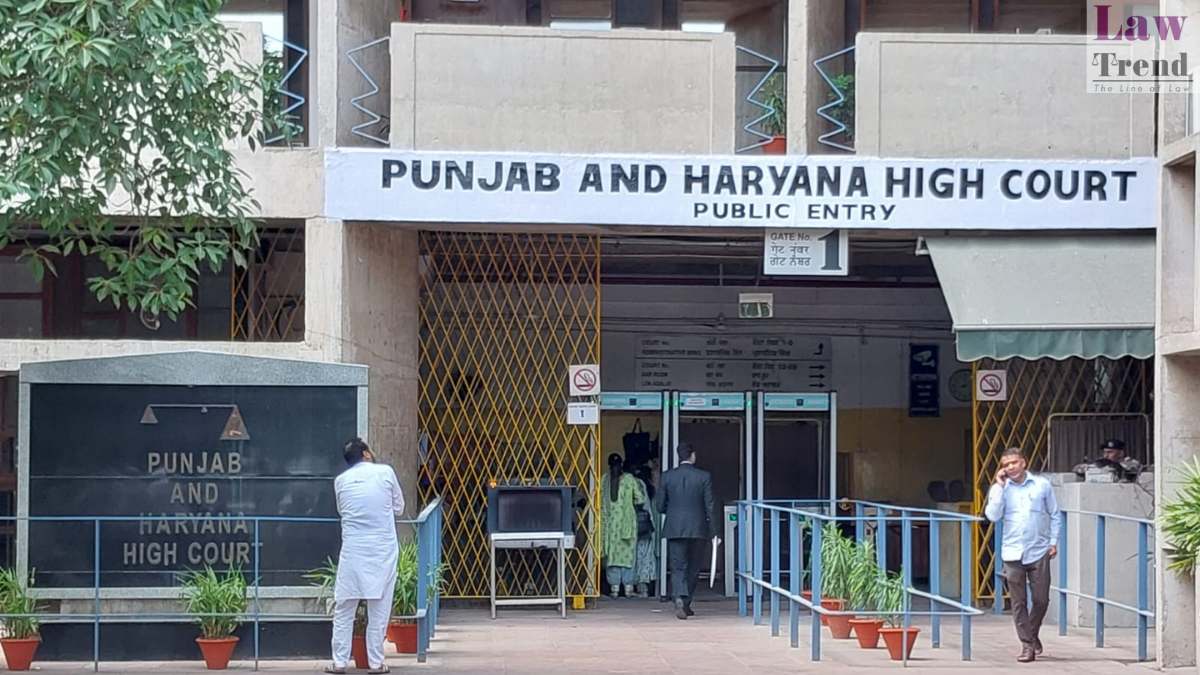
The Punjab and Haryana High Court has upheld the cancellation of a property transfer made by an elderly father in favour of his son, holding that an obligation to provide basic amenities and physical needs under the Maintenance and Welfare of Parents and Senior Citizens Act, 2007 can be determined from the entire transaction and need not depend solely on express wording in the transfer deed.
Justice Kirti Singh dismissed the son’s petition challenging orders passed by the Sub-Divisional Magistrate and the Deputy Commissioner annulling the transfer of a factory shed in Jalandhar. The father had alleged that he transferred the property after his son assured him that he would care for him and his wife and attend to their daily needs, but subsequently failed to do so.
The High Court said the existence of a condition requiring maintenance must be examined by considering the transfer deed, pleadings, surrounding circumstances and other material placed before the competent authority.
Condition Of Care Need Not Be Confined To Words Of Transfer Deed
The dispute concerned a factory shed measuring approximately 12 marlas and 28 square feet in Jalandhar’s Industrial Area. The father acquired the property in 2008 and transferred it to his son through a registered deed in July 2017.
While the deed did not expressly record that the son was required to provide basic amenities and physical needs to his parents, the father had specifically pleaded before the competent authority that the transfer was made after his son assured him that he would take care of both parents and meet their daily requirements.
The High Court noted that this was not a case where the claim regarding maintenance or care was raised subsequently. The assurance was specifically relied upon by the father in the proceedings concerning cancellation of the transfer.
The court held that under the 2007 Act, a transfer can be annulled where it was accompanied by a condition that the transferee would provide basic amenities and basic physical needs to the senior citizen and the transferee subsequently failed to fulfil that obligation.
In determining whether such a condition existed, the court said the inquiry cannot be restricted to searching for particular words in the transfer document. The transaction must instead be considered as a whole.
Father Alleged Neglect After Hospitalisation
According to the father’s case, the son’s conduct changed after the property was transferred. He alleged that the son failed to care for him and his wife and behaved abusively with him over business-related matters.
The father further alleged that when he was hospitalised with tuberculosis in September 2020, his son did not properly look after him. He claimed that he was subsequently compelled to move to an old-age home.
Senior advocate Sunil Chadha, appearing with advocate Tara Dutt for the father, submitted that the son had stopped caring for his parents and had subjected his father to abusive behaviour in connection with business affairs.
Son Denied Allegations And Cited Financial Support
Senior advocate Anmol Rattan Sidhu, appearing with advocate Shiv Kumar Sharma for the petitioner-son, disputed the allegations and contended that the authorities had failed to properly consider the material facts and the defence placed before them.
The petitioner argued that the registered transfer deed contained no condition requiring him to provide his father with basic amenities or physical needs.
He also claimed that he had taken care of his father during his hospitalisation, paid his medical expenses and extended an unsecured loan of approximately Rs 19 lakh to him for his business.
Senior Citizens Act Must Be Construed Purposively
The High Court stressed the welfare objective behind the Maintenance and Welfare of Parents and Senior Citizens Act, 2007, observing that the increasing number of senior citizens approaching legal authorities to obtain basic care, protection and necessities from their own children was a matter of serious concern.
The court said the 2007 Act is beneficial social welfare legislation intended to ensure that elderly persons can live with dignity, security and care. Its provisions, therefore, have to be interpreted purposively and liberally while keeping the dignity of senior citizens and the legislative objective in view.
The court also considered a compromise reached in 2022. It observed that the compromise could not retrospectively create a condition that did not exist when the property was transferred in 2017. However, it could be taken into account as subsequent conduct while evaluating the competing claims of the parties.
High Court Declines To Interfere
After considering the circumstances surrounding the transfer, the father’s specific pleadings regarding the son’s assurance of care, and the material before the authorities, the High Court found no ground to interfere with the orders annulling the property transfer.
Accordingly, the son’s petition was dismissed.




