

Proof of Mens Rea Not Required for Penalty on Power Generators Failing to Demonstrate Declared Capacity: Supreme Court

The Supreme Court of India has ruled that a power generator’s failure to demonstrate its declared capability upon being called to do so by the State Load Despatch Centre attracts strict civil liability. The Court clarified that such a failure is a stand-alone misdemeanor under the State Grid Code that is distinct from “gaming” and does not require proof of deliberate intention or a motive to make illegal commercial gains (mens rea).

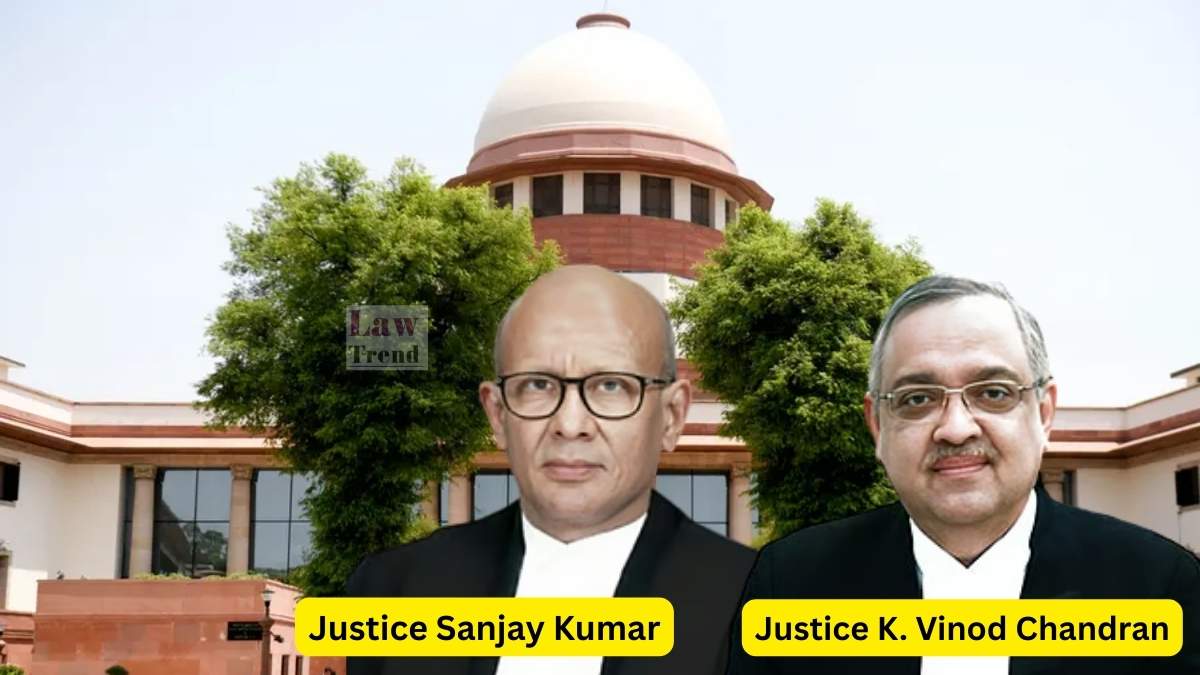
A Bench comprising Justice Sanjay Kumar and Justice K. Vinod Chandran set aside a judgment of the Appellate Tribunal for Electricity (APTEL) and restored a penalty order passed by the Punjab State Electricity Regulatory Commission (SERC) against the State Generating Station, Talwandi Sabo Power Limited (TSPL).

Background of the Dispute

The appeals were preferred by the Punjab State Load Despatch Centre (PSLDC) and the Punjab State Power Corporation Limited (PSPCL) against an APTEL judgment. The tribunal had reversed a penalty order of the Punjab SERC, which had found TSPL guilty of “misdeclaration of Declared Capacity” on four days in January 2017.

Initially, PSLDC detected misdeclarations on five days: August 10, 2015, and January 15, 17, 24, and 31, 2017. This led to a total penalty of ₹162,74,72,865/- via Memo No. 278 dated March 15, 2017. Out of this, ₹74,27,27,159/- was deducted from TSPL’s pending bills.

Following interventions by the High Court, the matter was referred first to the Commercial and Metering Committee, and then to the State Grid Code Review Committee. Dissatisfied with those proceedings, and again on the directions of the High Court, the dispute was referred to the SERC.

The SERC affirmed the PSLDC’s findings of misdeclaration for the four days in January 2017 but rejected the allegation for August 2015. On appeal, APTEL reversed the SERC’s order and deleted the entire finding of misdeclaration and the resultant penalty.

The Operational and Tariff Context

As noted in the judgment, the electricity demand in the State of Punjab varies significantly with seasonal requirements, peaking during the paddy season from May to September, and dropping in the remaining months.

Schedule-7 of the Power Purchase Agreement (PPA) between the parties dictates a “two-part tariff”:

  1. Fixed Capacity Charges: Calculated based on the generator’s Declared Capacity (DC), representing its declared availability to supply power.
  2. Variable Energy Charges: Paid on the actual energy scheduled for supply.

Under this structure, even if the actual drawal scheduled by the procurer (PSPCL) is lower than the declared capability, the procurer is obligated to pay fixed capacity charges. The difference between the declared capacity and the lower scheduled drawal is termed “deemed generation.”

The contract specifies a normative annual availability target of 80%, subject to financial incentives and disincentives:

  • Incentive: Under Clause 1.2.4 of Schedule 7, if annual availability exceeds 85%, an incentive at the rate of 40% of the Quoted Non-Escalable Capacity Charges (QNECC) is payable.
  • Disincentive: Under Clause 1.2.5, if annual availability falls below 75%, a penalty of 20% of the simple average capacity charge is applied to the energy corresponding to the difference.

Because these annual incentives and capacity charges are computed based on availability declarations, the generator has an economic incentive to declare the maximum possible capability. To curb unfair practices where a generator might declare capacity far exceeding its actual readiness, the Punjab State Grid Code, 2013 (SG Code) empowers the SLDC to monitor availability declarations and penalize misdeclarations.

The December 2016 Under-Generation Patterns

The dispute arose after PSLDC observed a regular pattern in December 2016 where TSPL’s actual power generation fell significantly below its scheduled declaration.

On December 19, 2016, following warning communications from PSLDC, TSPL lowered its declared capability. Again on December 30, 2016, a pattern was detected with a maximum under-injection of 27% recorded under one time log. Rather than increasing its actual generation, TSPL again lowered its declared capability.

READ ALSO  High Court Dismisses Plea to Quash FIR in Sexual Assault Case, Imposes Rs 50K Costs for Misleading Court

The SERC’s analysis showed that during December 2016, TSPL failed to deliver the requisite scheduled generation in 387 out of 459 total time blocks, representing under-generation in 84.13% of the monitored blocks. This systematic pattern led PSLDC to issue strict notices on four specific dates in January 2017 to verify if the generator could actually demonstrate its declared capacity.

Arguments of the Parties

For the Appellants (PSLDC & PSPCL)

Senior Advocate Shri M.G. Ramachandran, representing PSLDC, argued that under Section 32 of the Electricity Act, 2003, the SLDC exercises statutory powers to oversee, monitor, and control the availability schedule and despatch of electricity. He argued that the SG Code requires generators to declare their capabilities faithfully and maintain them throughout.

The appellants contended that a revision of schedules or a test of capability must become effective from the “4th time block,” with each block representing a 15-minute duration. They submitted that:

  • The penalty for failing to demonstrate capacity under Regulation 11.3.13 is a strict liability.
  • Relying on Union of India v. Dharamendra Textile Processors, they argued that a penalty arising out of a breach of a civil contract or regulatory code represents a civil liability where mens rea (guilty mind) is not an essential ingredient.

Shri Shubham Arya, representing PSPCL, adopted these arguments and pointed out that any penalty recovered is ultimately reflected in the tariff, directly benefiting consumers. He noted that the penalty had been paid with applicable interest/payment surcharge under protest, pending the final decision of the Supreme Court.

For the Respondent (Talwandi Sabo Power Limited)

Shri Sajan Poovayya, appearing for TSPL, argued that TSPL had maintained a clean regulatory record for nine years. He submitted that on all four disputed days, TSPL’s plant had generated power up to its declared capacity during multiple other time blocks, which demonstrated that the plant was physically capable and possessed sufficient coal.

TSPL argued that:

  1. No Time Limit: Regulation 11.3.13 does not explicitly specify a timeline or “time block” within which a demonstration must be achieved. Therefore, a generator could demonstrate its capability at any time on the day of the notice.
  2. Intent/Gaming Requirement: Misdeclaration leading to a penalty under the SG Code requires a finding of “gaming” under Regulation 11.3.12, which necessitates proof of an intentional, bad-faith attempt to make undue financial gains.
  3. Normative Values: The 1% per minute ramp-up rate declared by the generator is merely a normative value and has no relation to the actual operational requirements of capability demonstration.
  4. Citing Precedents: TSPL relied on the CERC decision in TPDDL v. PPCL, arguing that misdeclaration is established only when there is a physical constraint, such as an absence of coal or a plant shutdown due to faulty machinery. They also cited PSEB v. CERC to show that minor deviations (less than 1%) fall within practical operational limits and do not justify a finding of gaming.
  5. Discrimination Claim: TSPL raised an allegation of discrimination, citing the case of Nabha Power Limited, another generating station in Punjab, which had allegedly injected less than its declared capacity on multiple occasions but was not penalized.
  6. Rule of Dual Interpretation: Citing Excel Crop Care Ltd. v. CCI, they argued that if a penal provision is open to two reasonable interpretations, the court must lean toward the one that exempts the party from the penalty.

The Court’s Analysis

The Supreme Court examined the legal framework and systematically addressed the distinctions between different breaches under the SG Code, the relevance of the 4th time block, and the nature of civil liabilities.

1. Four Distinct Facets of Breach under the SG Code

The Court observed that the SG Code and scheduling regulations contemplate four distinct categories of breaches by a generator, each leading to different legal consequences:

  1. Over-injection and Under-injection: Covered under the Unscheduled Interchange (UI) Regulations.
  2. Deviation: Reckoned by the CERC (Deviation Settlement Mechanism and Related Matters) Regulations, 2014 (DSM Regulations).
  3. Gaming: Contemplated under Regulations 11.3.4, 11.3.12, and 11.3.20, which require proof of deliberate intent and a motive to earn undue commercial gain.
  4. Demonstration of Declared Capability: Governed by Regulation 11.3.13 read with Regulation 11.5(xi), which attracts strict liability.
READ ALSO  सुप्रीम कोर्ट औद्योगिक अल्कोहल के नियमन पर फैसला करेगा

The Court rejected the findings of both the SERC and APTEL, which had conflated the concepts of “gaming” and “demonstration of declared capability.” The Court held:

“The demonstration as required by Regulation 11.3.13 is a stand-alone provision, the penalty for which is ingrained therein. There is no reason to intermingle the concepts of gaming and demonstration of declared capability, even though both can be found literally to be misdeclarations leading to two different consequences, the former, requiring mens rea and the latter inviting strict liability.”

2. Relevance of the “4th Time Block”

The Court disagreed with APTEL’s conclusion that there is no time limit for demonstrating capability. The Court pointed out that under Regulation 11.5(xi), if the SLDC observes a need for the revision of schedules in the interest of “better system operation,” such revisions must become effective from the 4th time block, counting the block in which the notice is issued as the first.

The Court held that the demonstration of capability is a critical tool to test the efficiency of the system to respond to real-time grid contingencies. Therefore, the generator must demonstrate its declared capability within the 4th time block (within 45 minutes of the notice). The Court observed:

“The alacrity and expedition with which the SGS responds, is the hall mark of the integrity of its declaration.”

3. Civil Obligation and the Absence of Mens Rea

On the question of whether a penalty requires proof of intent (mens rea), the Court relied on the precedent in Chairman, SEBI v. Sri Ram Mutual Fund, which was approved in Union of India v. Dharamendra Textile Processors.

The Court held that when a penalty is imposed for a breach of a civil obligation, the state of mind of the defaulting party is irrelevant. Since the generator’s obligation to maintain its declared capability is a contractually bound civil obligation, any default attracts strict liability. The Court stated:

“The penalty as coming out from Regulation 11.3.13 of the SG Code is a civil liability since the obligation of the SGS to generate power in accordance with its declared capability flows from the contract, a civil obligation. A default therein as coming out from a failure to demonstrate declared capability attracts penalty, without anything more, making its imposition imperative, as per the statutory scheme.”

The Court clarified that the tribunal had misread the decision in TPDDL v. PPCL, stating that a misdeclaration could occur even if the plant is functional and has coal, should the generator declare a higher capability than it can actually deliver.

4. Distinguishing the Precedents Cited by TSPL

  • The TPDDL v. PPCL Case: The Court held that both TSPL and APTEL had misread this decision. The observations in that case—that availability is declared based on fuel and machinery—were merely general observations and did not mean that a misdeclaration enquiry is restricted only to verifying fuel stocks or machinery repairs. A misdeclaration also occurs when a generator declares a higher capability despite knowing it cannot deliver, regardless of whether it has coal or functional machinery.
  • The PSEB v. CERC Case: The Court held this precedent was completely inapplicable. That case involved dual-fuel plants where the generator substituted gas with liquid fuel, and the alleged 1% excess generation was found to be within physical limits related to the daily variations in the gross calorific value of the gas. This had no relevance to TSPL’s failure to demonstrate capacity.
  • Governor Action / Ramp Rate: The Court clarified that the 1% ramp-up rate under Regulation 5.3.8 of the SG Code relates to “Governor Action” under restricted governor mode, which was not the regulatory standard applicable to capability demonstration under Regulation 11.3.13.
READ ALSO  निर्देश का उल्लंघन कर नाबालिग बेटे को भारत लाने पर NRI पिता को सुप्रीम कोर्ट ने सुनाई 6 महीने की जेल और 25 लाख का जुर्माना

Factual Evaluation of the Four Disputed Days

The Court conducted a meticulous day-by-day review of the operational spreadsheets containing the declared capacity, scheduled generation, actual generation, and deviations:

  • January 15, 2017: One of TSPL’s three units was on a reserve shutdown. The day commenced with a declared capacity of 1563.80 MW. TSPL later revised its declared capability upward to 1841.40 MW. The SLDC issued a demonstration notice during the 09:30 to 09:45 block. TSPL failed to achieve this capability on that day, and specifically failed to do so in the 4th time block from the receipt of the notice.
  • January 17, 2017: Only one unit was running, the second was on reserve shutdown, and the third was on scheduled shutdown due to a plant fault. The initial declared capacity of 1229.80 MW was revised by TSPL. The SLDC issued a demonstration notice at 08:15 hours. Instead of achieving the target in the 4th block, TSPL sought a downward revision to 250 MW at 08:58 hours (the second time block after the notice) and subsequently to 150 MW. The Court noted that TSPL not only failed to demonstrate capacity but sought to lower its declaration after receiving the notice.
  • January 24, 2017: The day began with a declared capacity of 1600 MW, which was revised nine times by the SLDC. Finding no positive response, the SLDC issued a demonstration notice at 14:48 hours. The declared capacity and scheduled generation of 1650 MW were neither achieved in the 4th time block nor at any time thereafter.
  • January 31, 2017: The declared capacity was 1473.12 MW. The SLDC issued two demonstration notices, at 08:20 hours and 09:23 hours. TSPL failed to achieve the capacity within the 4th block of the first notice, only managing to achieve it by the 7th block.

The Court concluded:

“The finding of misdeclaration insofar as the failure to demonstrate the declared capacity, on each of these days thus stands established unequivocally.”

The Verdict

The Supreme Court allowed the appeals, set aside the judgment of the APTEL, and restored the order of the Punjab SERC.

The Court modified the restored order of the SERC to the extent of reversing its findings that:

  1. Regulation 11.3.13 provides the procedure to deal with “gaming” under Regulations 11.3.4 and 11.3.12 (with the Court holding them to be distinct misdemeanors).
  2. “Deliberate intention and motive to make money” are necessary ingredients to impose a penalty for a failure to demonstrate declared capability.

The Court ordered that the consequences of this reversal, including the affirmation of the penalty and any resultant interest liability, shall follow. Any surcharge paid on the bills by PSPCL due to deductions made from the penalty shall be refunded to PSPCL, along with interest/surcharge at the same rate, as TSPL had enjoyed the benefit of those funds following the APTEL order.

Case Details

  • Case Title: Punjab State Power Corporation Limited v. Talwandi Sabo Power Limited & Ors.
  • Case No.: Civil Appeal No. 7432 of 2025
  • Bench: Justice Sanjay Kumar and Justice K. Vinod Chandran
  • Date of Judgment: May 20, 2026

Law Trend
Law Trendhttps://lawtrend.in/
Legal News Website Providing Latest Judgments of Supreme Court and High Court

Related Articles

Latest Articles

