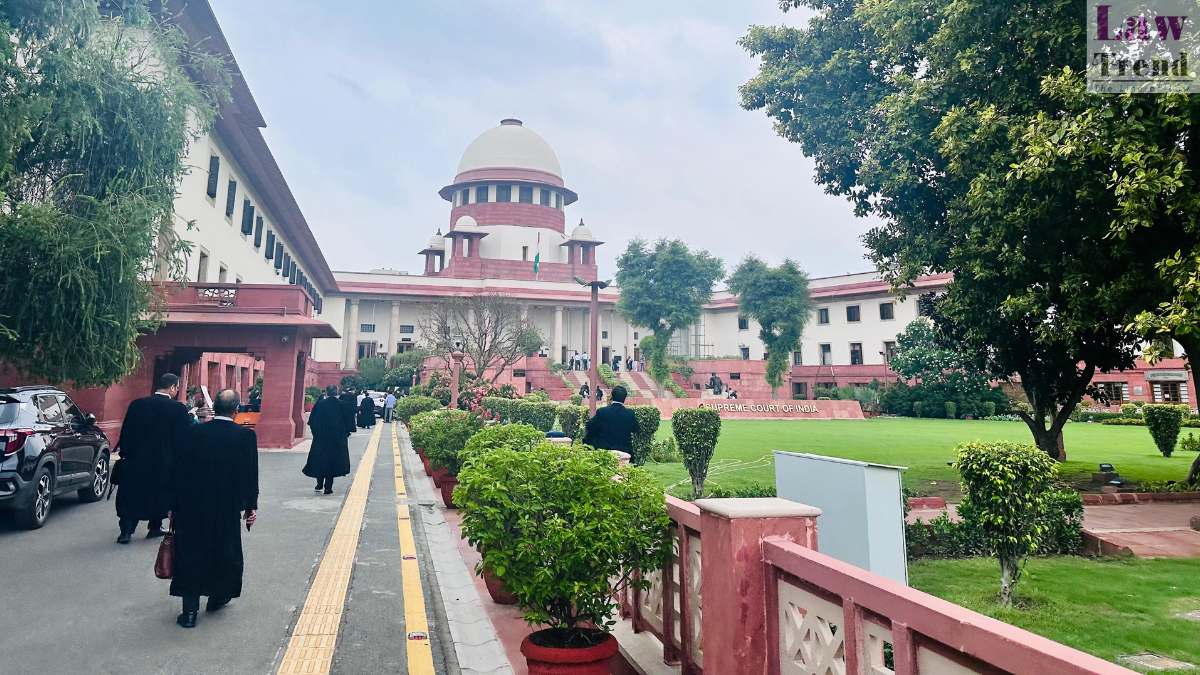
Reprimanding the state administration for aligning with a candidate in violation of statutory provisions, the Supreme Court of India has declared that public authorities are not expected to support any party contrary to the law. While dismissing an appeal filed by an applicant seeking an unauthorized college posting under the repealed Uttar Pradesh Higher Education Services Commission Act, 1980 (the “Old Act”), a Division Bench comprising Justice J.K. Maheshwari and Justice Atul S. Chandurkar held that the State and its officers must act as objective model litigants, providing “real assistance” to the court based strictly on facts and correct legal positions, rather than defending legally untenable personal interests.
The apex court upheld the decisions of the Allahabad High Court, ruling that a candidate from a waitlist has no right to demand a fresh recommendation or change of posting after failing to join the initially allotted institution. The Court held that upon the enforcement of the Uttar Pradesh Education Service Selection Commission Act, 2023 (the “New Act”), the Old Act stood repealed, and any waitlist prepared under the old statutory framework automatically lapsed, stripping the authorities of any jurisdiction to issue fresh placement orders.
Background of the Case
The Uttar Pradesh Higher Education Service Selection Commission (the “Commission”) issued Advertisement No. 49 of 2019, inviting applications for the post of Principal in Post-Graduate (PG) and Under-Graduate (UG) non-Government Aided Colleges in the State of Uttar Pradesh. Following selection proceedings, a final select list of 290 candidates along with a list of 73 waitlisted candidates was published on October 5, 2021. The appellant, Dr. Manoj Kumar Rawat, found place at Serial No. 59 in the list of waitlisted candidates.
In the primary select list, one Dr. Sachidanand Sharma (Serial No. 3) was appointed as the Principal of Meerut College, Meerut, and joined the post on October 23, 2021. After working for approximately one year and ten months, Dr. Sharma resigned on May 28, 2023. Following his resignation, Dr. Anjali Mittal, the senior-most teacher at the college, was appointed as Officiating Principal until her retirement on June 30, 2024. Thereafter, Respondent No. 6, Yudhveer Singh, the next senior-most teacher, was appointed as Officiating Principal on June 14, 2024.
Meanwhile, on August 3, 2022, the Director of Higher Education recommended the appellant, Dr. Rawat, for appointment as Principal of Shri Bajrang P.G. College, Dadar Ashram Sikandarpur, Ballia (“Ballia College”). Under the provisions of the Old Act, the Management of Ballia College was required to issue an appointment letter to the appellant within thirty days. However, due to personal and family circumstances, Dr. Rawat did not contact the Management or take any steps to join Ballia College. Instead, on June 26, 2023—nearly ten and a half months after the initial recommendation—the appellant submitted a representation to the Director requesting to be appointed on vacant posts in other colleges, which included Meerut College.
On August 17, 2023, the Director submitted comments to the Special Secretary, Higher Education Section-2, Government of Uttar Pradesh, stating that the compliance of the recommendation dated August 3, 2022, had already been made, and that there existed no provision under the applicable laws or government instructions to change a candidate’s place of posting once a recommendation had been issued.
Four days later, on August 21, 2023, the New Act came into force, repealing the Old Act. Despite the repeal and the Director’s previous stance, the Director subsequently issued a letter on December 13, 2023, stating that due to exceptional circumstances (such as marital policy and disability of certain Assistant Professors), the placement of one Principal had been changed, and fifteen other cases of change of posting were being sent for decision. Following this, on January 12, 2024, the Joint Secretary, Government of Uttar Pradesh, directed the change of posting of the appellant to Meerut College. Consequently, on January 15, 2024, the Director directed the Management of Meerut College to appoint the appellant as Principal.
Respondent No. 6 (the Officiating Principal of Meerut College) challenged these orders before the Allahabad High Court. A learned Single Judge of the High Court allowed the writ petition on February 17, 2025, quashing the change-of-posting orders. This decision was affirmed by a Division Bench of the High Court on May 5, 2025, prompting the appellant to approach the Supreme Court.
Arguments of the Parties
Appellant’s Submissions
The appellant contended that:
- Respondent No. 6, being only an Officiating Principal, lacked the locus standi to challenge the regular appointment of a candidate who was properly selected under the process contemplated by the Old Act.
- The power of appointment in this case was legitimately exercised by the Director under Section 13(4) of the Old Act, making the recommendation and subsequent placement order fully legal.
Respondent No. 6’s Submissions
Counsel for Respondent No. 6 argued that:
- The procedure under Sections 12, 13, and 14 of the Old Act did not permit a change of posting once a candidate had been recommended to a specific college.
- The appellant had voluntarily failed to assume charge at Ballia College, despite the Director’s recommendation of August 3, 2022.
- Upon the commencement of the New Act on August 21, 2023, the Old Act was repealed, and the select list of October 5, 2021, automatically lapsed. Any subsequent appointment must follow the procedure outlined in Sections 10 and 11 of the New Act.
- The orders passed by the Director and Joint Secretary in December 2023 and January 2024 were entirely without jurisdiction. On the issue of locus standi, it was argued that where an administrative action is ex-facie illegal and void, locus standi ceases to be a germane issue.
State Government’s Submissions
The State of Uttar Pradesh actively supported the appellant, claiming that the Director’s order dated December 13, 2023, was within his competence. The State argued that similar benefits of changing placement had been granted to other candidates in the past. Although a factual inquiry conducted by the Director revealed that the appellant himself had failed to contact the Ballia College Management for an appointment order, the State still filed an affidavit trying to convey that there was no fault on the part of the appellant.
The Court’s Analysis and Observations
The Supreme Court examined the statutory provisions of both Acts to determine whether a waitlisted candidate’s place of posting could be changed under Section 13(4) of the Old Act, and whether such an action could survive the enforcement of the New Act.
Scope of Section 13(4) and the Meaning of “Otherwise”
Under Section 13(4) of the Old Act, the Director is empowered to recommend a name from the select list if a vacancy arises due to “death, resignation or otherwise” during the validity of the list.
The Court observed that the appellant’s failure to join Ballia College and his subsequent wait for a vacancy at Meerut College did not fall within the scope of Section 13(4). Relying on its previous decision in Kamlesh Kumar Sharma v. Yogesh Kumar Gupta and others (1998) 3 SCC 45, the Court reiterated that the term “otherwise” must be read ejusdem generis (of the same kind) with “death” and “resignation,” referring strictly to unforeseen, unexpected vacancies. It cannot be interpreted broadly to allow candidates to manipulate placements. The Court observed:
“Therefore, after the recommendation dated 03.08.2022, if the appellant was not willing to join due to his family circumstances and on finding vacancy at Meerut College, submitted a representation to post him at some other place with the intent to compel the authorities to bring his case within the ambit of Section 13(4) of the Old Act, such action will superseding the earlier recommendation and frustrate the purpose of Section 13(3) of the Old Act.”
Impact of the Repeal and Savings Clause
The Supreme Court analyzed Section 31 of the New Act, which repeals the Old Act, and Section 6 of the Uttar Pradesh General Clauses Act, 1904. The Court held that the repeal of the Old Act could not revive the old waitlist or validate subsequent placement actions:
“…after commencement of the New Act, the validity of the list/panel under the Old Act will automatically lapse and the authorities are duty bound to follow the procedure under Sections 10 and 11 of the New Act to take steps for appointment on the post of Principal.”
Directives Concerning the Conduct of UP State Officials
The Court delivered a severe reprimand regarding the conduct of the state officials of Uttar Pradesh, who filed counter-affidavits in an attempt to protect the appellant’s invalid appointment. The Court emphasized the fundamental ethical boundaries governing how public departments and their bureaucrats must conduct litigation, stressing that the state must remain objective and law-abiding.
The Litigative Duty of the State: Unbiased Assistance Over Partisan Support
Under Paragraph 26 of the judgment, the Court explicitly detailed the constitutional and administrative responsibilities of state officials when filing affidavits and presenting cases before a court of law. The Bench laid down the expectation that state litigants must act with candor and integrity:
“It is necessary to observe that the duty of the State and its officials while filing their counter-affidavit and arguing the case before the Court is to provide real assistance. Such assistance ought to be based on the facts, and by applying the law applicable to the case at hand. It is not expected from the authorities to support any party contrary to the law or by filing affidavit which does not disclose the facts in conformity with the law.”
The Court pointed out the direct contradiction in the State’s actions, noting that just four days before the New Act came into force, the Director had acknowledged that there was no legal provision to change the appellant’s posting. Yet, after the repeal of the Old Act, the officials completely reversed their stance. The Bench observed:
“As analysed above, it is clear that after commencement of the New Act on 21.08.2023, it was not open to the authorities to act in terms of the list prepared under the Old Act, even after reflecting on their intention to not grant appointment to the appellant i.e., a waitlisted candidate only four days prior to the commencement of the New Act. Thereafter, there was absolutely no occasion for the Director to get the old list revived and write in favour of the appellant on 13.12.2023.”
Directive to the Chief Secretary
The Court expressed deep disapproval of the “unlawful” and “impermissible” stands taken by public servants to favor a private party, directing the Chief Secretary of Uttar Pradesh to investigate the officers responsible:
“It is suffice to say that the Chief Secretary of the State of Uttar Pradesh may look into the conduct of the officers who have filed the affidavit taking such unlawful stand before the High Court and even before this Court, which is completely impermissible under the law and contrary to the finding of the High Court.”
Because the individual officers were not parties to the case in their personal capacities, the Court refrained from issuing direct adverse directions against them but left it open for the State to initiate appropriate disciplinary recourse:
“Since the concerned officers are not a party to this case, therefore, we are not inclined to issue any adverse direction, however, we leave it open to the State of Uttar Pradesh to look into the above observations and take the recourse in accordance with the law, if necessary.”
Issue of Locus Standi
Addressing the challenge to the locus standi of the Officiating Principal (Respondent No. 6), the Court cited Anand Sharadchandra Oka v. University of Mumbai and Others and Ayaaubkhan Noorkhan Pathan v. State of Maharashtra and Others. The Court ultimately concluded:
“…when the illegality of the authorities is writ large and the act done was completely illegal, the issue of locus standi may not be germane to be dealt with in the facts of this case. Therefore, we leave the said issue open for decision in an appropriate case.”
The Decision
The Supreme Court concluded that the findings of both the Single Judge and the Division Bench of the Allahabad High Court were correct. Holding that the arguments of the appellant were entirely contrary to the spirit of both the Old and New Acts, the Supreme Court dismissed the appeal. The parties were directed to bear their own costs, and all pending applications were disposed of.
Case Details
- Case Title: Dr. Manoj Kumar Rawat v. State of UP & Ors.
- Case No.: Special Leave Petition (C) No. 15989 of 2025)
- Bench: Justice J.K. Maheshwari and Justice Atul S. Chandurkar
- Date: May 19, 2026