

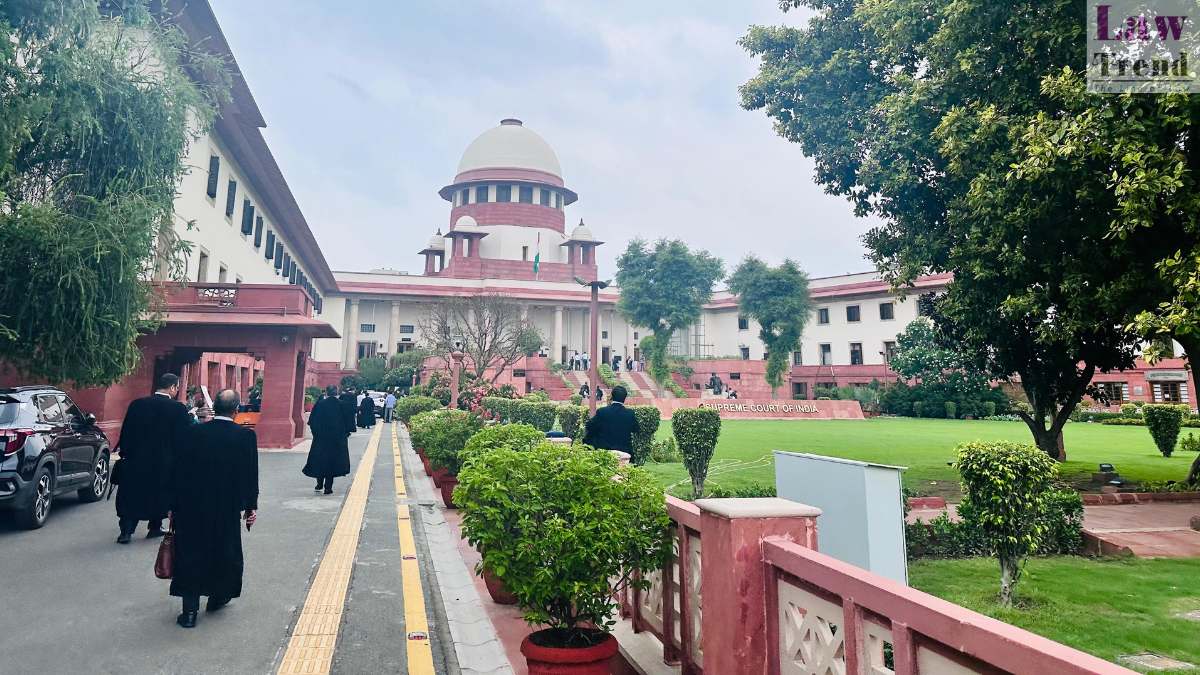
The Supreme Court has raised concerns over the continued failure to enforce solid waste management laws across India, observing that inadequate sanitation is undermining the country’s achievements in other sectors despite its growing economic strength.
A Bench of Justices SVN Bhatti and NV Anjaria, in an order dated November 17, said India possessed sufficient resources to overcome its sanitation challenges, but the absence of effective implementation and coordination among authorities remained a major obstacle.
The Court was considering appeals concerning municipal corporations’ compliance with the Solid Waste Management (SWM) Rules, 2016 and 2026, arising from proceedings before the National Green Tribunal (NGT).
Implementation Remains Inadequate Despite Existing Laws
The Bench noted that although authorities had initiated the process of implementing the 2026 rules and established an administrative framework for monitoring compliance, progress remained considerably below the intended objectives.
The Court expressed concern that poor sanitation continued to affect the country’s overall development and public image, even as comparable economies in India and abroad had achieved better standards of hygiene and waste management.
It emphasised that the existing legal framework, including the Environment (Protection) Act, 1986, provided sufficient authority to address these problems. However, enforcement by statutory bodies and compliance by citizens remained inadequate.
The judges also identified poor coordination between different branches of government as a significant concern, noting that public authorities appeared to be working independently rather than towards a common objective.
District Collectors Asked to Develop Local Strategies
The Supreme Court placed particular responsibility on district collectors to improve implementation of waste management regulations.
It directed district-level authorities to formulate strategies according to local requirements and coordinate with chief secretaries and the Supreme Court Monitoring Committee (SCMC).
The Court explained that its intervention through the SCMC was intended to secure effective implementation of environmental laws and protect the constitutional right to a pollution-free environment.
However, it stressed that continuous judicial monitoring should not become a permanent arrangement. The objective was to establish a system in which authorities, businesses and citizens independently fulfilled their responsibilities.
Court Identifies Gaps in Monitoring Report
Examining the SCMC’s report, the Bench found that several important areas of waste management had not been adequately addressed.
In particular, the report lacked sufficient information about compliance in unorganised residential, commercial and business establishments, which contribute substantially to waste generation.
The Court also sought greater clarity regarding enforcement measures against defaulters, including notices issued and the identification of areas where temporary disconnection of electricity and water supplies could be considered to secure compliance.
Another concern related to the absence of clear proposals for public-private partnerships and the utilisation of corporate social responsibility (CSR) funds for waste management infrastructure.
The Bench questioned the approach of industries that contribute to pollution in one location while directing their CSR expenditure towards unrelated activities elsewhere.
Nationwide Proceedings Originated From Bhopal Dispute
The proceedings initially arose from a challenge filed by the Bhopal Municipal Corporation concerning its municipal solid waste management obligations. The Supreme Court subsequently expanded the matter to examine compliance across the country.
In its earlier order dated August 18, the Court had required authorities to identify bulk waste generators and improve infrastructure for collection, processing and disposal of municipal waste.
It had also highlighted the need to change public attitudes towards waste disposal, particularly the tendency to generate waste without accepting responsibility for its environmental consequences.
After identifying shortcomings in the monitoring process, the Supreme Court issued further directions to strengthen implementation and coordination among the authorities concerned.
The matter will be heard next on January 12.


