

Normal Presumptions Applicable to Layperson Accused Do Not Apply to Wayward Police Officers: Supreme Court Cancels Anticipatory Bail
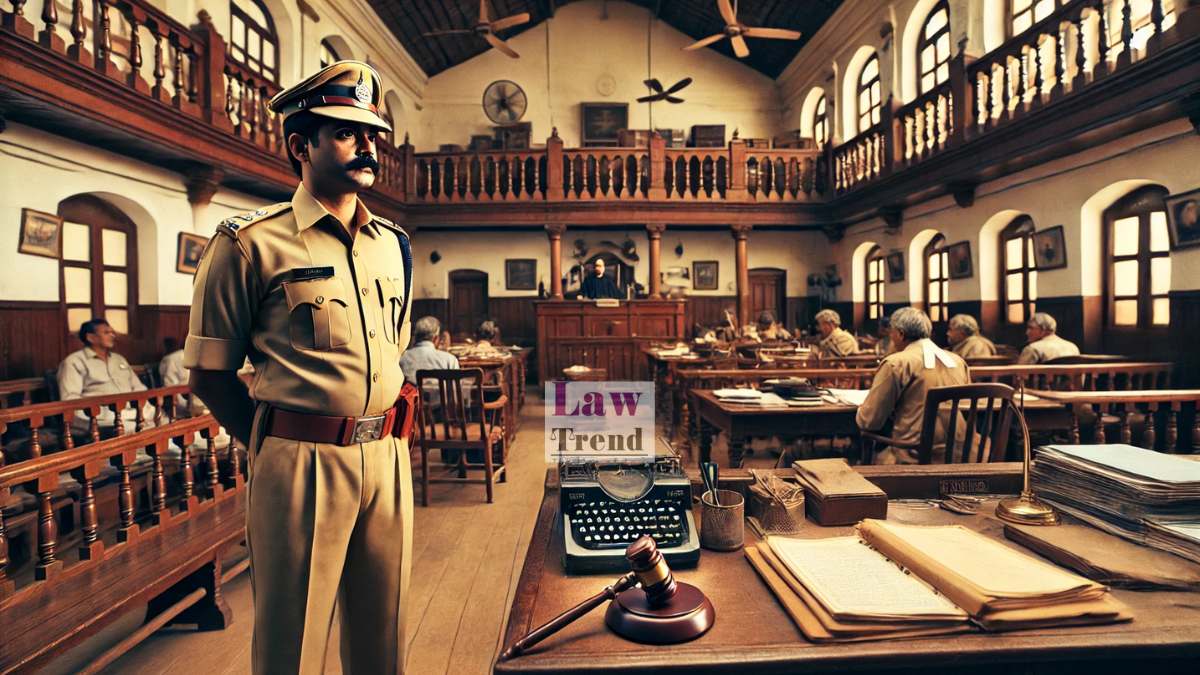
The Supreme Court has cancelled the anticipatory bail granted to three Maharashtra police personnel accused of abusing their authority and extorting money from a passenger and his minor daughter after a gold bar was found in their baggage, holding that the High Court failed to properly consider the gravity of the allegations and the standards governing anticipatory bail for law enforcement officers.

A Bench of Justice Sanjay Kumar and Justice K. Vinod Chandran allowed the State of Maharashtra’s appeal and set aside the Bombay High Court’s order granting anticipatory bail to the accused officers. The Court observed that the allegations, if found true, would erode public trust in the police force and warrant custodial interrogation.

Background of the Case

The case arose from FIR No. 451/2025 dated August 17, 2025, registered at Mumbai Central Railway Police Station. According to the prosecution, the de facto complainant was travelling from Mumbai with his daughter on the Hapa Duronto Express when police personnel attached to a sabotage-detection unit stopped and searched their baggage.

During the search, a 14-gram gold bar and cash amounting to ₹31,900 were found. The FIR alleged that despite receiving a satisfactory explanation, one of the officers took the complainant, his minor daughter, and his brother-in-law to a nearby room, where they were intimidated and verbally abused. It was alleged that they were compelled to part with cash in exchange for the return of the gold and to avoid further action.

The Additional Sessions Judge rejected the officers’ plea for anticipatory bail. However, the High Court later granted them anticipatory bail, relying on CCTV footage, the absence of visible distress on the complainant and his daughter, the delay in lodging the FIR, and the officers’ previously unblemished service records.

READ ALSO  आतंकी फंडिंग केस में शब्बीर शाह की 6 साल से अधिक की हिरासत पर सुप्रीम कोर्ट सख्त, NIA से मांगा जवाब

Arguments Before the Supreme Court

Appearing for the State, counsel argued that established guidelines required search and seizure operations to be properly video-recorded. It was pointed out that the complainant and those accompanying him had been taken to an enclosed room where no cameras were installed. The State contended that even the short period spent inside the room was sufficient to support the allegation that the complainant was intimidated into paying money.

The State further informed the Court that all three officers had been dismissed from service following a departmental inquiry. It argued that while a criminal trial requires proof beyond reasonable doubt, the findings recorded in the departmental proceedings established a sufficient basis for custodial interrogation and demonstrated that the grant of anticipatory bail was improper.

Senior Advocate Sudhanshu S. Choudhary, appearing for the respondents, contended that the allegations were fabricated and that the State was acting vindictively against officers who had rendered more than twenty years of unblemished service. He highlighted the delay in lodging the complaint and argued that the complainant had been taken to the sabotage room only because a gold bar had been discovered and no credentials supporting its possession had initially been produced. The respondents also emphasized that the gold was ultimately returned, which according to them undermined the allegation of extortion.

Court’s Analysis

The Supreme Court examined the CCTV footage that had been relied upon by the High Court and disagreed with its conclusions. The Bench noted that the complainant, another adult, and the child were taken into a room after the baggage search and emerged only after spending a few minutes inside.

The Court observed:

“We are surprised that the High Court observed that there is no sign of distress on them, especially when their expressions are not clear in the footage. We also notice that the two adults were moving ahead, one of them gesturing frantically with his hands while the child was trailing behind: a definite indication of distress.”

The Bench further noted that the time spent inside the closed room was sufficient for the alleged acts to have occurred, while clarifying that those allegations would ultimately have to be proved during trial.

Addressing the respondents’ argument that their identity cards were clearly displayed, the Court remarked that ordinary citizens confronted by uniformed officers cannot realistically be expected to note the names displayed on identity cards.

READ ALSO  सात वर्ष के वकालती अनुभव वाले न्यायिक अधिकारी ‘बार कोटा’ से जिला जज बनने के पात्र: सुप्रीम कोर्ट

The Court stated:

“Yet again, to read the fine print on a name plate or an identity card, a person detained would have to crane their neck, which the uniformed personnel would take affront to as an act of confrontation.”

Return of Gold Bar Did Not Favour the Accused

The Court also rejected the argument that the return of the gold bar disproved the allegation of extortion. It observed that the respondents had not claimed that any documents validating possession of the gold had been produced. Instead, their case was that the complainant was released after his identity became known.

According to the Bench, if the officers genuinely believed that the possession of the gold required verification, the appropriate course would have been to initiate action in accordance with law and inform the competent authorities. The Court found that the release of the complainant after his identity was revealed tended to support the prosecution’s allegations rather than undermine them.

READ ALSO  सुप्रीम कोर्ट ने विवादास्पद यूपी मदरसा शिक्षा अधिनियम पर अंतिम सुनवाई की तिथि निर्धारित की

SOP Violations and Concern for the Child

The Court also referred to the Standard Operating Procedures governing searches involving valuable items. These procedures required verification of a jeweller’s identification card and accompanying documents and contemplated proper recording of the inspection process.

The Bench noted that the complainant had instead been taken to a room without CCTV coverage. It further observed that the search register maintained by the Mumbai Railway Commissionerate did not contain the complainant’s name.

Expressing concern over another aspect of the incident, the Court observed:

“One other aspect which disturbs us considerably, is the total insensitivity displayed by the police men to the child accompanying the persons detained.”

Decision

Setting aside the High Court’s order, the Supreme Court cancelled the anticipatory bail granted to the respondents and allowed the State’s appeal.

The Court clarified that its observations were only prima facie and confined to the issue of whether anticipatory bail ought to have been granted in the facts of the case. It emphasized that those observations would not influence the criminal trial.

The Bench observed that allegations of the nature involved in the case, if established, would erode the credibility of the police force and undermine public trust in those entrusted with maintaining law and order.

Case Details

Case Title: The State of Maharashtra v. Rahul Datta Bhosale & Ors.

Case No.: Criminal Appeal arising out of Special Leave Petition (Crl.) No. 1760 of 2026

Bench: Justice Sanjay Kumar and Justice K. Vinod Chandran

Date: May 27, 2026

Law Trend
Law Trendhttps://lawtrend.in/
Legal News Website Providing Latest Judgments of Supreme Court and High Court

Related Articles

Latest Articles
