

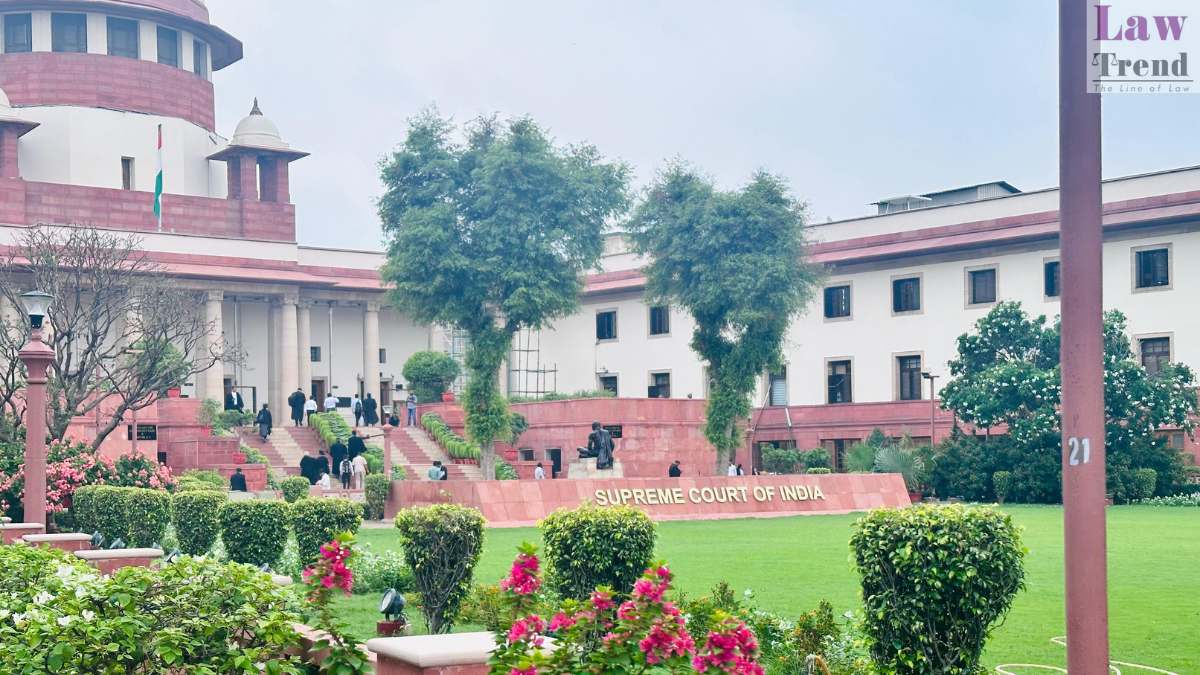
The Supreme Court on Monday (November 16) declined to interfere with a Maharashtra government rule that resets the rotation of seats reserved for Scheduled Castes (SCs) and Scheduled Tribes (STs) in Zilla Parishad and Panchayat Samiti elections, holding that voters and candidates cannot claim a vested right to have a particular constituency designated as reserved.
A bench of Justices Joymalya Bagchi and V Mohana dismissed an appeal filed by Sau. Rupali Indrabhushan Sonde against the Bombay High Court’s September 19, 2025, judgement, which had upheld the validity of the reservation rotation provision.
The Court observed that determining how reserved seats should rotate falls within the government’s policy domain and that a candidate cannot insist upon a particular method of implementing the rotation system.
However, after considering submissions made by senior advocate Vipin Sanghi on behalf of Sonde, the bench allowed the petitioner to submit a representation to the Maharashtra government seeking reconsideration of the relevant rules.
Dispute Over Resetting Reservation Rotation
The controversy concerned Rule XII of the Maharashtra Zilla Parishads and Panchayat Samitis (Manner and Rotation of Reservation of Seats) Rules, 2025.
Under the provision, the first general election conducted after the rules came into force would serve as the starting point for calculating the rotation of reserved seats.
The petitioners challenged this arrangement on the ground that restarting the rotation cycle would interfere with the existing reservation system and affect candidates intending to contest elections from constituencies reserved for SCs and STs.
They argued that the provision was arbitrary, contrary to Article 14 of the Constitution and beyond the authority conferred by the Maharashtra Zilla Parishads and Panchayat Samitis Act, 1961.
The challenge also raised concerns that resetting the rotation process would affect the right to contest elections.
State Cites Fresh Delimitation of Constituencies
Before the Bombay High Court, the Maharashtra government defended the 2025 rules as measures intended to implement Section 12 of the 1961 Act.
The state referred to an amendment empowering it to divide districts into electoral divisions with the approval of the State Election Commission.
According to the government, the revised exercise involved changing electoral constituency boundaries for the first time. Such changes could alter the geographical composition, population distribution and reservation status of individual constituencies.
The state relied on these circumstances to justify treating elections held under the new rules as the beginning of a fresh reservation rotation cycle.
Bombay High Court Had Rejected Constitutional Challenge
On September 19, 2025, a division bench of Justices Rajnish R Vyas and Anil S Kilor of the Nagpur bench of the Bombay High Court dismissed a batch of petitions questioning Rule XII.
The High Court found that the petitioners had failed to demonstrate that the provision was arbitrary or unconstitutional.
While recognising the need to follow the principle of rotation in reserving electoral seats, the High Court distinguished the earlier judicial decisions cited by the petitioners.
It held that those decisions did not govern the present circumstances because the state had undertaken a fresh delimitation exercise under Section 12(1) of the 1961 Act.
The Supreme Court subsequently refused to disturb that judgement, leaving the challenged rule undisturbed while permitting the petitioner to approach the state government with a request for reconsideration.


