

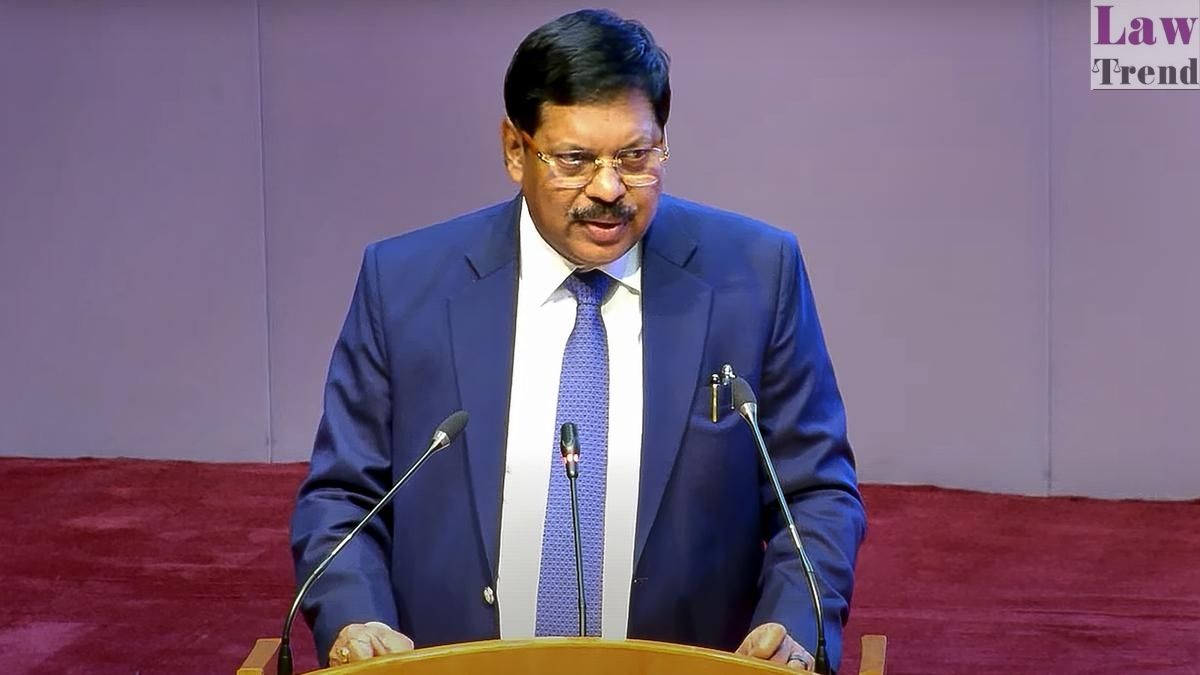
Chief Justice of India B.R. Gavai has said he faced strong criticism — even from within his own community — for his judgment allowing sub-classification of Scheduled Castes for reservation benefits, but stressed that his decisions are shaped by the law and his conscience, not public opinion.
Speaking at a felicitation ceremony organised by the Goa High Court Bar Association, Justice Gavai referred to the August 2024 seven-judge Constitution Bench ruling, delivered by a 6:1 majority, which held that Scheduled Castes are not a socially homogeneous group and can be sub-classified by states to prioritise the most disadvantaged among them.
“I have been widely criticised for the said judgment from people belonging to my own community, but I always believed that I have to write my judgment not by the demands of the people or desires of the people, but as the law as I understand and as per my own conscience,” he said.
On his view that the ‘creamy layer’ principle should apply to SC and ST reservations, the CJI questioned whether children of senior officials studying in elite urban schools could be equated with children of agricultural labourers in rural government schools. “Article 14 does not mean equality amongst all equals… unequal treatment to unequals so that they become equal, is what our Constitution promises,” he said, noting that three other judges on the Bench had concurred with his reasoning.
Turning to the Supreme Court’s recent verdict on demolition of properties, CJI Gavai said the court was “perturbed” by instances where homes were being razed without due process, punishing even family members not accused of any wrongdoing. “Even if a person is convicted, still he is entitled to the rule of law… we could prohibit the executive not to become a judge,” he observed, underlining that the Constitution’s separation of powers must be preserved.
Reflecting on his over two decades on the Bench, Justice Gavai said he was “happy that… I could contribute a bit in the march of the Indian Constitution… towards social and economic justice.”


