

Long Silence and Failure to Cancel GPA Undermines Claim That Property Transfers Were Fraudulently Made Through Loan Security Documents: Supreme Court
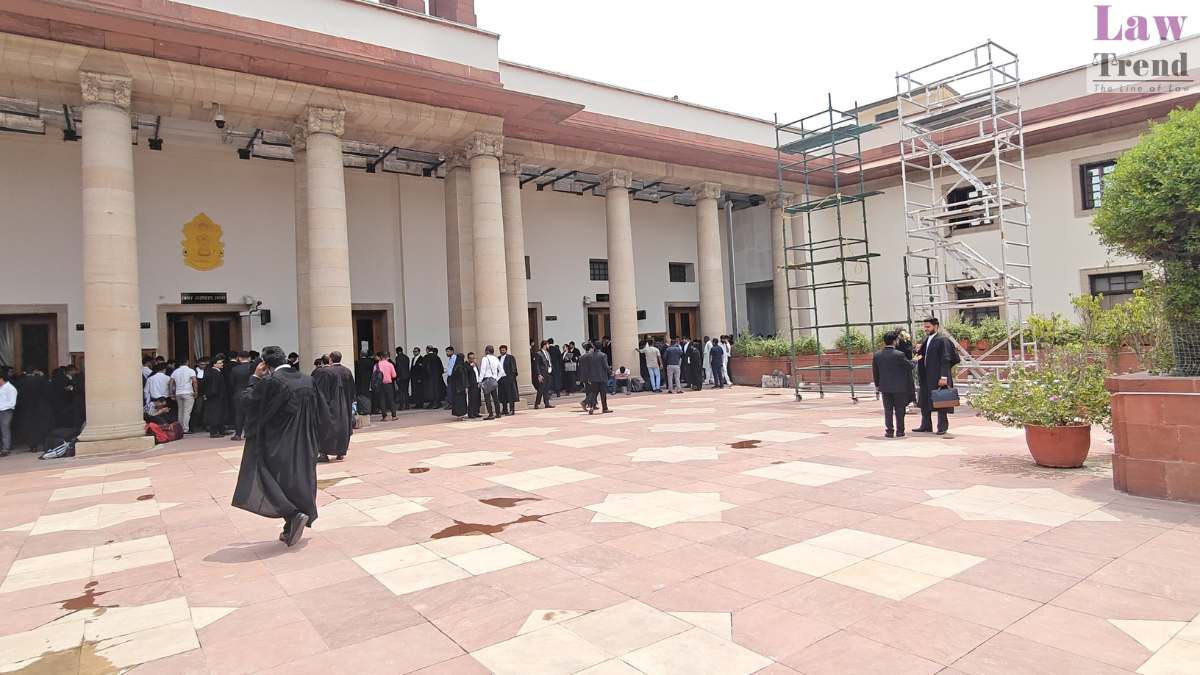

The Supreme Court of India has dismissed a civil appeal challenging a judgment of the Madras High Court, which had affirmed the First Appellate Court’s decision to reverse a trial court’s decree in a property dispute.

The division bench of Justice Ujjal Bhuyan and Justice Vipul M. Pancholi ruled on several key legal questions, including the scope of substantial compliance with Order XLI Rule 31 of the Code of Civil Procedure (CPC), the shifting of the burden of proof in allegations of fraud, the legitimacy of drawing adverse inferences when a plaintiff abstains from entering the witness box, and the evidentiary relevance of long-standing, unchallenged mutation entries.

Background of the Case

The dispute centers on two pieces of agricultural land located in Kalapatty Village, Coimbatore Taluk, purchased by the appellant, Mallika, in 1996 through registered sale deeds:

  • Item No. 1: Punja Acre 1.66 (Doc. No. 6369/1996, Ex. A1/B2)
  • Item No. 2: Punja Acre 0.37½ (Doc. No. 6370/1996, Ex. A2/B3)

The appellant claimed absolute ownership over approximately 2.032 acres across S.F. Nos. 437/2B and 438/3B.

In 1997 and 1998, the appellant executed two registered General Powers of Attorney (GPAs) (Doc. No. 416/1997, Ex. A3/B5 and Doc. No. 465/1998, Ex. A4/B4) in favor of Respondent Nos. 1 and 2, who are brothers. The appellant asserted that these GPAs were executed solely as collateral security for loans of ₹2 lakhs and ₹5 lakhs carrying an 18% annual interest rate, and that the original title deeds were handed over as collateral security.

According to the appellant, Respondent Nos. 1 and 2 misused these GPAs to execute sale deeds (Doc. No. 29/1998, Ex. A5/B8 and Doc. No. 3189/1998, Ex. A6/B6) in favor of close relatives and family members. Receipts acknowledging consideration (Ex. B7 and Ex. B9) were issued, but the appellant alleged they did not specify the amounts paid, were not proved by attesting witnesses, and used stereotyped language. The properties were subsequently transferred multiple times among relatives and eventually to third parties.

The appellant contended that she discovered these transactions only in 2008 after inspecting records at the Sub-Registrar’s office, having fully repaid the loans through installments. The respondents, conversely, maintained that the transactions were genuine sales rather than loan-security arrangements, and that possession was voluntarily handed over.

In August 2008, the appellant instituted Original Suit No. 472 of 2008 before the Principal Subordinate Court, Coimbatore, seeking a declaration that the sale deeds (Exs. A5 to A9) executed pursuant to the GPAs were null and void, alongside a permanent injunction protecting her possession and restraining further alienation.

Lower Courts’ Findings

  • The Trial Court (Judgment dated March 22, 2012): Decreed the suit in favor of the appellant, holding that the GPAs were executed only as security for a loan, and that the respondents failed to satisfactorily establish the receipts (Exs. B7 and B9).
  • The First Appellate Court (Court of IVth Additional District Judge, Coimbatore – Judgment dated March 8, 2016): Reversed the Trial Court’s decree. It held that the burden of proof had been wrongly cast upon the respondents, and that the appellant had failed to prove loan repayment or continued possession. It placed reliance on mutation entries and revenue records in the names of the respondents and subsequent purchasers.
  • The High Court of Judicature at Madras (Judgment dated January 3, 2017 in Second Appeal No. 714 of 2016): Dismissed the appellant’s second appeal under Section 100 of the CPC, holding that no substantial question of law arose. The High Court observed that the appellant had not entered the witness box, failed to prove loan discharge, and approached the court after a considerable lapse of time despite registered documents and revenue mutations.
READ ALSO  HC Directs Madras Bar Association to Pay Rs 5 Lakh Compensation to Senior Advocate For Denial of Drinking Water to his Non-Member Son

Aggrieved by the High Court’s dismissal, the appellant filed the present appeal before the Supreme Court.

Arguments of the Parties

Arguments on behalf of the Appellant

Mr. Sivagnanam Karthikeyan, learned counsel appearing for the appellant, assailed the judgments of both the First Appellate Court and the High Court on the following grounds:

  1. Violation of Order XLI Rule 31 of the CPC: The First Appellate Court failed to comply with mandatory statutory requirements. Instead of framing proper points for determination and independently analyzing the issues, the court merely reproduced the reliefs sought in the suit. Reliance was placed on H. Siddiqui (dead) by LRs v. A. Ramalingam to argue that this non-compliance vitiated the entire judgment.
  2. Nature of Transactions & Fiduciary Abuse: The GPAs were executed only as collateral security. The respondents, being professional money lenders, obtained signed blank papers and registered documents to create sham transfers within their family circle. Because the GPA holders stood in a fiduciary position, the burden lay heavily upon them to prove the bona fides of the transactions. Counsel cited Subhra Mukerjee v. Bharat Coking Coal Ltd. to assert this principle.
  3. Defective Receipts: The receipts (Exs. B7 and B9) lacked details of the paid consideration, did not involve the examination of attesting witnesses, and appeared to be fabricated from signed blank papers.
  4. No Adverse Inference: The non-examination of the appellant was not fatal as her husband (PW-1) and a neighbor (PW-2) had testified, sufficiently establishing her continued possession and the suspicious nature of the transactions.
  5. Revenue Records: Mutation entries, patta, chitta, and adangal records are for fiscal purposes only and do not confer title or establish possession.

Arguments on behalf of the Respondents

Mr. V. Chitambaresh and Mr. Jayanth Muth Raj, learned senior counsel appearing for the respondents, opposed the appeal, arguing:

  1. Strictly Factual Dispute: The controversy is factual. Under Section 100 CPC, the High Court correctly declined to interfere, as there was no perversity in the First Appellate Court’s findings of fact.
  2. Substantial Compliance: The First Appellate Court framed points for determination in paragraph 7 of its judgment and analyzed the evidence issue-wise, satisfying the requirements of Order XLI Rule 31 CPC.
  3. Failure to Establish Loan Discharge: The appellant produced no documentary evidence showing loan transactions, interest payments, or debt discharge. Even the Trial Court found that the appellant failed to prove repayment.
  4. Adverse Inference: The appellant intentionally avoided entering the witness box and withheld attesting witnesses (who were her relatives). Citing Vidhyadhar v. Manikrao, counsel argued that an adverse inference must be drawn against a party who has personal knowledge but refuses to testify.
  5. Limitation and Delay: The suit was filed in 2008—nearly ten years after the execution of the GPAs and sale deeds in 1998. The prolonged silence and failure to cancel the GPAs or raise objections within the three-year limitation window barred the suit.
READ ALSO  सुप्रीम कोर्ट ने सीबीआई को पूर्व सांसद विवेकानंद रेड्डी की हत्या के मामले में दायर आरोपपत्र को रिकॉर्ड पर पेश करने का निर्देश दिया

The Court’s Analysis and Observations

The Supreme Court examined each of the legal contentions raised by the appellant:

1. Compliance with Order XLI Rule 31 of the CPC

The Court addressed the appellant’s argument regarding the First Appellate Court’s framing of points for determination. While acknowledging that compliance with Order XLI Rule 31 CPC is mandatory as reiterated in H. Siddiqui v. A. Ramalingam, the Court clarified the scope of this requirement:

“However, it is pertinent to note that the requirement of Order XLI Rule 31 of the CPC is one of substantial compliance and not one of mere technical formality. The substance of the judgment and the manner in which the appellate court has dealt with the controversy are of greater significance than the form in which points are framed.”

The Supreme Court found that since the First Appellate Court had undertaken a detailed reappreciation of the oral and documentary evidence, including the loan transactions, possession, mutation, and limitation, its judgment could not be set aside on this technicality.

2. Burden of Proof and Fiduciary Duty

On the appellant’s claim that the respondents bore the burden of proving the transactions’ bona fides due to their fiduciary duty, the Court observed:

“The burden of establishing that the transactions were not genuine sale transactions, but merely security arrangements for loans, rested upon the appellant and mere allegations of fraud or misuse of fiduciary position are not sufficient unless supported by reliable and cogent evidence.”

Referring to Subhra Mukerjee v. Bharat Coking Coal Ltd., the Court pointed out that:

“before the burden can shift upon the respondents, the appellant was required to first establish foundational facts constituting fraud or fiduciary misuse.”

READ ALSO  Ban on Donor Gametes for Gestational Surrogacies Contrary to Surrogacy Act: Supreme Court

Because the appellant failed to produce any documentary evidence of the loans, interest, or repayment, and did not challenge the Trial Court’s factual finding that loan discharge remained unproven, she failed to establish those foundational facts.

3. Non-Examination of the Appellant and Adverse Inference

A critical factor in the Court’s analysis was the appellant’s failure to personally testify. Citing the established precedent in Vidhyadhar v. Manikrao, the Supreme Court noted:

“where a party possessing special knowledge of facts fails to enter the witness box, an adverse inference may legitimately be drawn against such party.”

The Court upheld the adverse inference drawn by the lower appellate courts, noting that both the appellant and her husband were engaged in the real estate business and were not illiterate, making her decision to abstain from the witness box highly suspicious. Furthermore, she failed to examine the attesting witnesses to the receipts and GPAs, who were her own relatives, and offered no expert evidence to support her claims of forgery.

4. Evidentiary Value of Mutation Entries and Unexplained Delay

Regarding the transition of revenue entries and the delay in filing the suit, the Supreme Court made a significant observation regarding how long-term unchallenged records impact property disputes:

“We are conscious of the fact that mutation entries alone do not create or transfer ownership rights. However, when such revenue records continue for many years, are supported by registered sale transactions and remain unchallenged for a long period (a decade in the present case), they become relevant factors while considering possession and the conduct of the parties.”

The Court highlighted the appellant’s unexplained delay of nearly ten years (from 1998 to 2008) in instituting the suit. It held that leaving the GPAs uncancelled and allowing mutation entries and subsequent sales to proceed for a decade without objection was:

“inconsistent with the conduct normally expected from a person alleging fraudulent and unauthorized alienation of immovable property.”

Decision of the Court

The Supreme Court concluded that the High Court of Madras had properly exercised its jurisdiction under Section 100 CPC, as the First Appellate Court had reversed the trial court’s findings with well-reasoned factual determinations. Finding no perversity, patent illegality, or jurisdictional error, the division bench dismissed the appeal. All pending applications were ordered to be disposed of.

Case Details

  • Case Title: Mallika v. R. Nallathambi & Ors.
  • Case No.: Civil Appeal No. 9837 of 2017
  • Bench: Justice Ujjal Bhuyan and Justice Vipul M. Pancholi
  • Date: May 22, 2026

Law Trend
Law Trendhttps://lawtrend.in/
Legal News Website Providing Latest Judgments of Supreme Court and High Court

Related Articles

Latest Articles

