

“Log Toot Jaate Hain Ek Ghar Banane Mein”: Allahabad HC Invokes Bashir Badr While Framing Anti-Bulldozer Guidelines
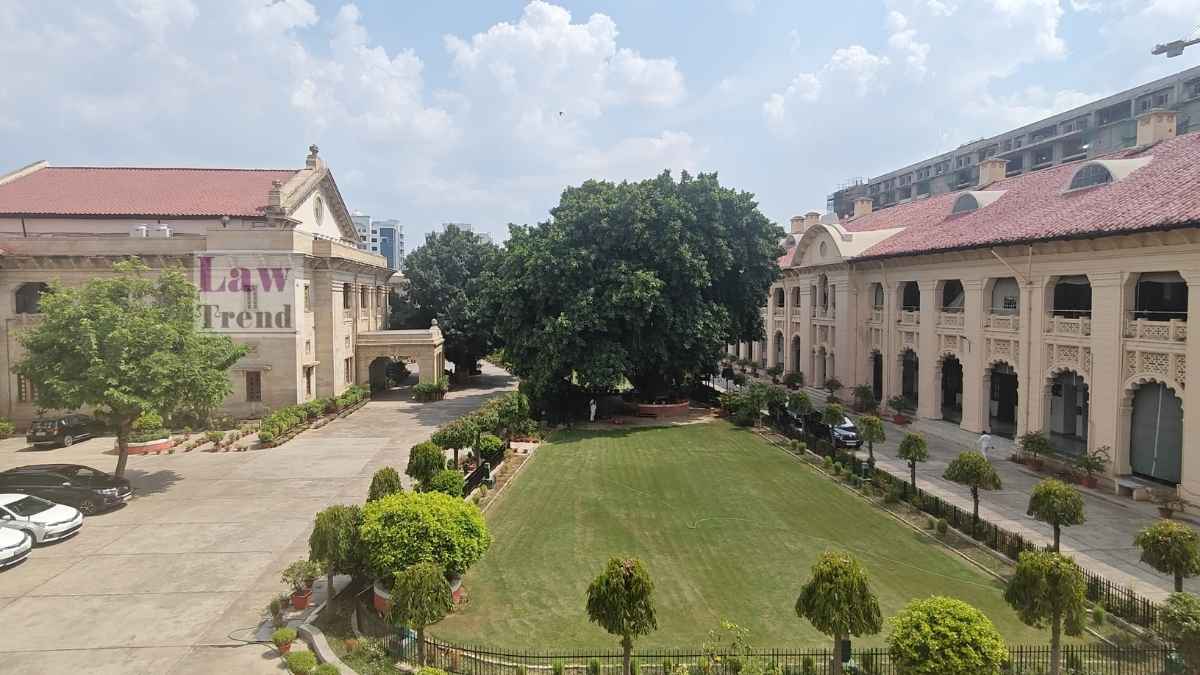
Beginning with the poignant couplet of poet Bashir Badr— “Log toot jaate hain ek ghar banane mein…. Tum taras nahi khaate bastiyan jalane mein”— the High Court of Judicature at Allahabad, through a division bench comprising Justice Atul Sreedharan and Justice Siddharth Nandan, quashed demolition proceedings against the residence and lodge of petitioners following an FIR against their relative. Terming swift demolitions immediately after an offence as an impermissible “retributive exercise of executive discretion,” the Court held that no action to demolish the dwelling place of a person accused of an offence under the guise of municipal law violations can be taken for a period of two years from the registration of an FIR. The Court adopted and supplemented directions previously issued by the Supreme Court to strictly regulate demolition drives across Uttar Pradesh.

Background of the Case

The writ petition was filed by Faimuddeen along with his parents (Petitioners 1, 2, and 3), residing at 386 Thokchand, Ward No. 11, Bharua Sumerpur in District Hamirpur. Petitioner No. 2 claimed ownership of the residential property purchased through an agreement to sell dated December 11, 2001, and subsequent sale deeds dated December 11, 2001, and January 27, 2009, executed by seller Maiya Deen.

On January 16, 2026, an FIR (Crime No. 20/2026) was registered against one Aafan Khan—the nephew of Petitioners 2 and 3 and cousin of Petitioner 1—under Sections 64(1), 62/351(3), and 61(2) of the Bharatiya Nyaya Sanhita (BNS), Section 67(A) of the IT Act, Sections 3 and 4 of the POCSO Act, and Sections 3 and 5(1) of the U.P. Prohibition of Unlawful Religious Conversion Act. Following the FIR, authorities issued a notice regarding the residential house, while commercial properties owned by the family—”Indian Lodge” (registered under Petitioner 3) and a saw mill (licensed under Petitioner 2)—were sealed. The petitioners approached the High Court apprehending the mechanical demolition of their residential and commercial properties. (During the pendency of the petition, Petitioner No. 1 was also included as a co-accused in the FIR).

Arguments of the Parties

Senior Counsel S.M.A. Naqvi, representing the petitioners, argued that the petitioners are law-abiding citizens who have resided in the house since 2001 without any prior municipal objections regarding title, construction, or land use. It was contended that the accused relative did not share the same roof or business interests with the petitioners. The petitioners submitted that sealing their properties and threatening demolition without due procedural formalities violated Articles 14, 19(1)(g), 21, and 300-A of the Constitution of India, as well as the doctrine of separation of powers.

Additional Advocate General Anoop Trivedi, appearing for the State, contended that the petition was premature as only notices had been issued. The State gave an oral assurance that no demolition or sealing of the residence or lodge would occur without adhering to the procedure established by law. Regarding the saw mill, the State submitted that it was sealed by the Forest Department following the recovery of prohibited wood (Neem and Dhaak), leading to Case Crime No. 22/2026 under Sections 69, 41, 42, and 77 of the Indian Forest Act, 1927, and Sections 3 and 28 of the U.P. Transit of Timber and Other Forest Produce Rules, 1978, along with a show-cause notice issued on January 20, 2026.

READ ALSO  SC To Hear Gyanvapi Mosque Case Tomorrow at 3 PM

Court’s Analysis

Examining the interplay between the Right to Life, Livelihood, and Shelter under Article 21, the High Court emphasized that shelter is an integral component of the right to life. Citing the Supreme Court’s landmark ruling in In re: Directions in the Matter of Demolition of Structures, the Bench quoted:

“For an average citizen, the construction of a house is often the culmination of years of hard work, dreams, and aspirations. A house is not just a property but embodies the collective hopes of a family or individuals for stability, security, and a future. Having a house or a roof over one’s head gives satisfaction to any person. It gives a sense of dignity and a sense of belonging….”

The Court reviewed established precedents including Olga Tellis v. Bombay Municipal Corporation, Chameli Singh v. State of U.P., Shiv Sagar Tiwari v. Union of India, Mansi Brar Fernandes v. Shubha Sharma, and Zulfiquar Haider v. State of U.P. In Chameli Singh, the Supreme Court had observed:

“Shelter for a human being, therefore, is not a mere protection of his life and limb. It is home where he has opportunities to grow physically, mentally, intellectually and spiritually. Right to shelter, therefore, includes adequate living space, safe and decent structure, clean and decent surroundings, sufficient light, pure air and water, electricity, sanitation and other civic amenities like roads etc. so as to have easy access to his daily avocation. The right to shelter, therefore, does not mean a mere right to a roof over one’s head but right to all the infrastructure necessary to enable them to live and develop as a human being. Right to shelter when used as an essential requisite to the right to live should be deemed to have been guaranteed as a fundamental right”

In Zulfiquar Haider, where structures were razed shortly after the Supreme Court’s directives, the Apex Court had remarked that “these cases shock our conscience” and affirmed:

“The authorities, especially the development authority, must remember that the right to shelter is also an integral part of Article 21 of the Constitution of India. This right can be taken away only by following due process of law. Moreover, our country is governed by the rule of law, which is an integral part of the basic structure of the Constitution. The residential structures of citizens cannot be demolished in such a summary manner without following the principles of natural justice…”

Addressing the issue of selective executive action, Justice Sreedharan noted that when municipal authorities target specific properties immediately after a crime while ignoring surrounding non-compliant structures, it reflects malice in law. The Court quoted the Supreme Court’s observation:

“when a particular structure is chosen all of a sudden for demolition and the rest of the similarly situated structures in the same vicinity are not even being touched, mala fide may loom large. In such cases, where the authorities indulge into arbitrary pick and choose of the structures and it is established that soon before initiation of such an action an occupant of the structure was found to be involved in a criminal case, a presumption could be drawn that the real motive for such demolition proceedings was not the illegal structure but an action of penalising the accused without even trying him before the court of law”

The High Court observed that punitive demolition is not a prescribed punishment under the Bharatiya Nyaya Sanhita, and executive actions driven by a desire to satisfy public anger constitute a “retributive exercise of executive discretion”—the vilest form of colourable exercise of power. Relying on S.M.D. Kiran Pasha v. Government of A.P., the Court rejected the State’s argument that the petition was premature, holding that a citizen can seek pre-violation protection under Article 226 when there is a reasonable apprehension of infringement of fundamental rights. Referring to Indira Nehru Gandhi v. Raj Narain, the Bench highlighted that separation of powers forms part of the basic structure of the Constitution.

The Bench also noted that municipal authorities often connive in allowing unauthorized constructions to come up due to systemic corruption. Citing G.N. Khajuria v. D.D.A. and K. Ramadas Shenoy v. Town Municipal Council, Udipi, the Court ruled that when proceedings are initiated against citizens for building violations, erring officials must also face action. Furthermore, citing Rajendra Kumar Barjatya v. U.P. Avas Evam Vikas Parishad, the Court affirmed that while long occupancy does not perfect an illegal right, reasonable time and fair process must be afforded before taking extreme measures.

READ ALSO  Man gets life term for sexually assaulting stepdaughter

Court Decision and Directions

The High Court adopted all directions issued by the Supreme Court in In re: Directions in the Matter of Demolition of Structures and Rajendra Kumar Barjatya v. U.P. Avas Evam Vikas Parishad, laying down key binding directives for Uttar Pradesh:

  1. Two-Year Hiatus for Accused’s Dwelling: No action to demolish the dwelling place of a person accused of an offence under the guise of municipal law violations shall be taken for a period of two years from the date of registration of the FIR.
  2. Public Purpose Exception: If removal of structures is required for reclaiming land for a bona fide public purpose and is not restricted to the accused’s house alone, demolition may proceed in accordance with law without waiting for two years, subject to full compliance with Supreme Court directives.
  3. One-Year Advance Notice for Long-Term Occupants: For illegal constructions occupied for three years or more, authorities must intimate the violator one year before initiating municipal law procedures to allow time for resettlement, unless there is a “compelling urgency” of larger public need.
  4. Mandatory Action Against Erring Officials: Notices issued for construction norm violations shall only be valid if simultaneous proceedings are initiated against erring officers under the Prevention of Corruption Act, 1988, and disciplinary proceedings completed within six months.
  5. Protection Against Selective Action: Actions must not selectively target individuals while ignoring similar violations in the vicinity; aggrieved persons may approach the High Court alleging ‘retributive exercise of executive discretion’.
  6. Ruling on Petitioners’ Properties: Demolition proceedings against the petitioners’ residence and lodge were quashed under the two-year bar. Proceedings under the Forest Act regarding the saw mill were allowed to continue unaffected.
READ ALSO  Laws on Preventive Detention are Necessarily Harsh, Procedure Needs to be Strictly Adhered to: SC

The Court directed that any violation of these directions would render the concerned officer liable for contempt before the High Court.

Case Details:

Case Title: Faimuddeen and 2 others Versus State of U.P. and 7 others
Case No.: WRIT-C No. 2229 of 2026
Bench: Justice Atul Sreedharan and Justice Siddharth Nandan
Date: July 20, 2026

Law Trend
Law Trendhttps://lawtrend.in/
Legal News Website Providing Latest Judgments of Supreme Court and High Court

Related Articles

Latest Articles
