

Lack of Evidence and Investigative Lapses: Chhattisgarh High Court Upholds Acquittal in 2010 Tadmetla Encounter Case
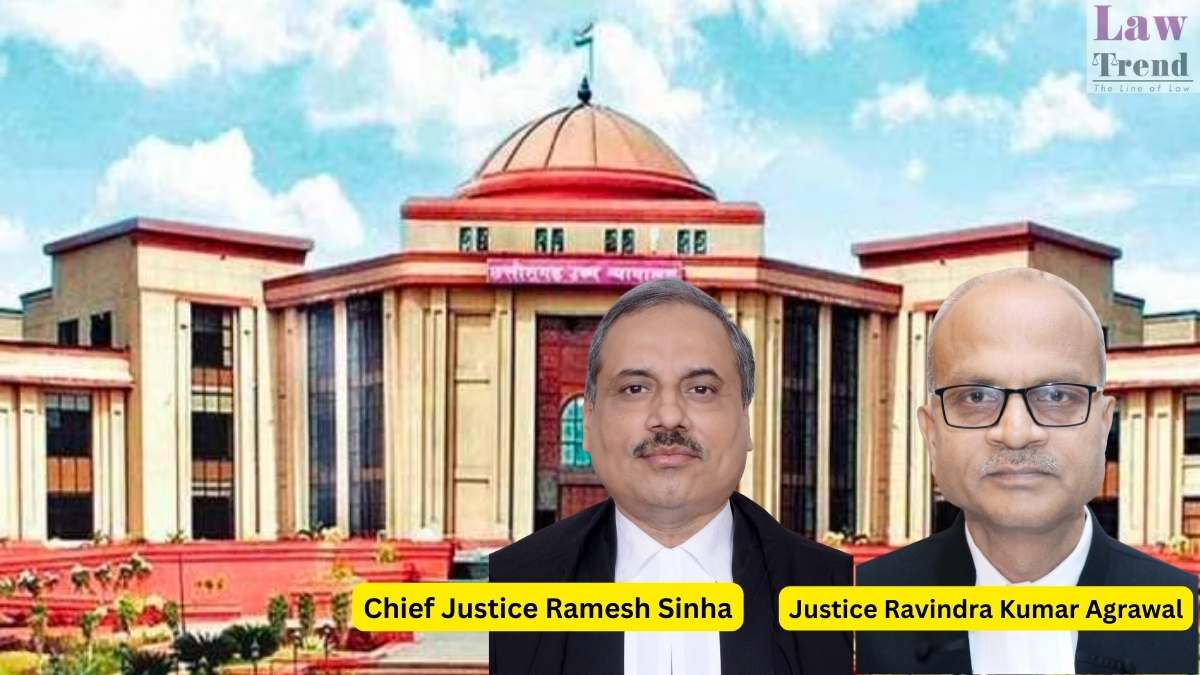

The High Court of Chhattisgarh has upheld the acquittal of several individuals accused in a mass attack on CRPF personnel, citing a lack of direct evidence, incomplete circumstantial proof, and significant procedural lapses in the investigation. Despite the gravity of the offence—the deaths of 76 security personnel—a Division Bench of Chief Justice Ramesh Sinha and Justice Ravindra Kumar Agrawal ruled that the prosecution failed to establish guilt beyond reasonable doubt.

Background of the Case

The case stems from an incident between April 4 and April 7, 2010. A 82-member force from the 62nd Battalion of the CRPF, accompanied by state police, was conducting an Area Domination Patrol in the hilly forests of Chintalnar. On the morning of April 6, 2010, the force was ambushed by Naxalites in the forest of village Tadmetla.

The attackers allegedly utilized heavy gunfire and explosive devices, resulting in the deaths of 75 CRPF personnel and one state police officer. The prosecution claimed that the attackers looted weaponry and planted tiffin bombs at the site. A charge sheet was subsequently filed under Sections 148, 120B, and 396 (76 counts) of the IPC, Sections 25 and 27 of the Arms Act, and Sections 3 and 5 of the Explosive Substances Act. On January 7, 2013, the Additional Sessions Judge, South Bastar, acquitted the accused, leading the State to file this acquittal appeal.

Arguments of the Parties

State/Appellant: Advocate General Mr. Vivek Sharma, assisted by Deputy Advocate General Dr. Saurabh Pande, argued that the Trial Court failed to appreciate a confessional statement made by respondent Barse Lakhma under Section 164 Cr.P.C. He further contended that the court ignored the seizure of pipe bombs and explosives defused by the Bomb Disposal Squad. The State also challenged the rejection of an application under Section 311 Cr.P.C. to examine seven injured CRPF personnel who were eyewitnesses.

Respondents: Defense counsel Mr. Ishwar Jaiswal supported the Trial Court’s judgment, maintaining that the evidence available on record was insufficient and that the acquittal was justified due to a lack of incriminating material.

READ ALSO  Mere Exhortation "Maro Sale Ko" Without Overt Act Insufficient to Prove Common Intention for Murder, Allahabad High Court Acquits Man After 41 Years

The Court’s Analysis

The High Court noted that the prosecution examined 43 witnesses and exhibited 156 documents. However, the Bench observed several critical deficiencies:

  1. Hostile Witnesses: The Court observed that “all the prosecution witnesses have turned hostile” and the accused were not identified by any witness as the perpetrators.
  2. Circumstantial Evidence: Following the principles in Sharad Birdhichand Sarda v. State of Maharashtra, the Court held that the chain of evidence remained incomplete. It stated, “the chain of circumstantial evidence remained incomplete and failed to conclusively establish the requisite mens rea or any direct or indirect nexus of the accused with terrorist organizations.”
  3. Flawed Seizures: Although explosives were found at the scene, they were not recovered from the possession of the accused. Crucially, the “FSL report, certifying the seized materials as explosives, has not been produced, rendering the seizure evidence ineffective.”
  4. Investigative Lapses: The Court pointed out the absence of a required prosecution sanction under the Arms Act and the failure to conduct a Test Identification Parade (TIP).
READ ALSO  No Judicially Laid Criteria to Test Governor's Satisfaction: Chhattisgarh High Court Upholds State's Authority in University Administration Case

The Court expressed significant lamentation over the investigation:

“It is very lamented that the State did not take effective steps to collect cogent and reliable evidence against the accused… The investigation appears flawed, as there is no record of the required prosecution sanction under the Arms Act, and no Test Identification Parade (TIP) of the accused was conducted.”

The Decision

The High Court dismissed the State’s appeal, emphasizing that while the loss of 76 lives is a “matter of profound tragedy,” a conviction cannot be sustained in the absence of clear and legally admissible evidence.

READ ALSO  PIL Filed by Party to Dispute Already Pending Before Court Is Mala Fide: Chhattisgarh HC Imposes ₹50,000 Cost

The Court issued a series of directives to the Chief Secretary and the Director General of Police, Chhattisgarh, to ensure high standards in future investigations of serious crimes. These include the prompt collection of forensic and technical evidence, proper maintenance of the chain of custody, and timely Test Identification Parades.

Case Details:

  • Case Title: State of Chhattisgarh Vs. Oyami Ganga & Others
  • Case No.: ACQA No. 85 of 2014
  • Bench: Chief Justice Ramesh Sinha and Justice Ravindra Kumar Agrawal
  • Date: 05.05.2026

Law Trend
Law Trendhttps://lawtrend.in/
Legal News Website Providing Latest Judgments of Supreme Court and High Court

Related Articles

Latest Articles

