

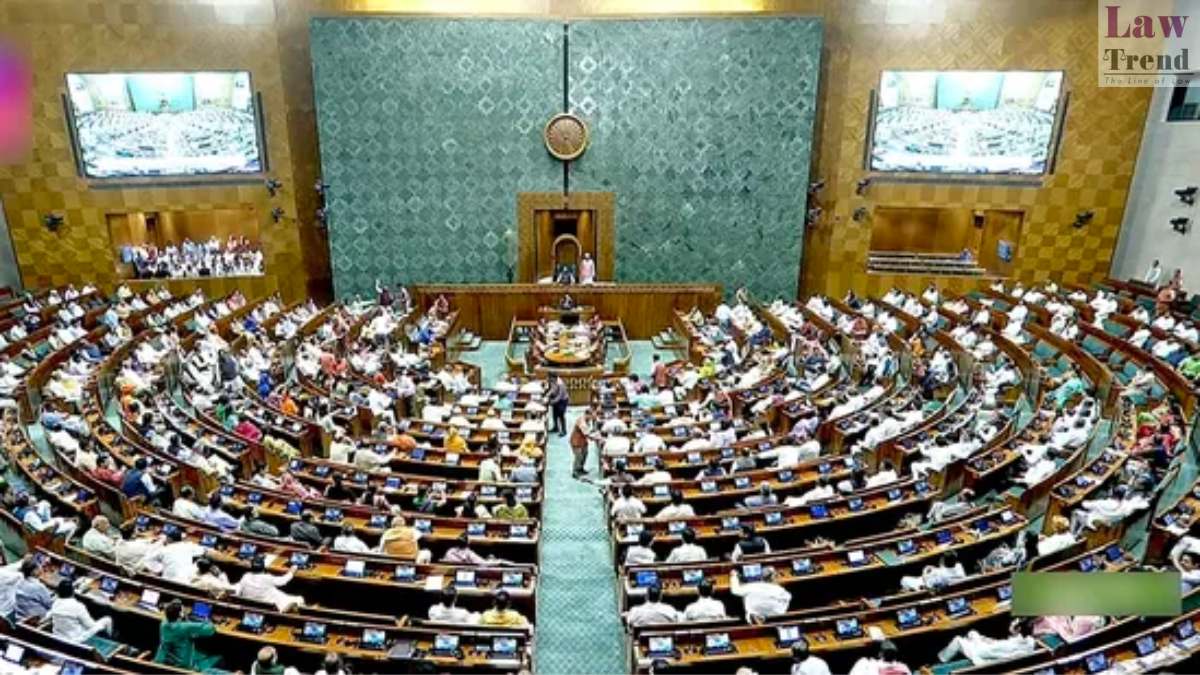
NEW DELHI – The Union government is set to introduce a series of transformative bills in Parliament this Thursday aimed at significantly increasing the strength of the Lok Sabha from 543 to 850 members. The move, which follows weeks of political speculation, seeks to overhaul India’s electoral landscape by conducting a delimitation exercise based on the 2011 Census, effectively bypassing a previous freeze on seat allocation that was slated to last until 2026.
Breaking the 550-Seat Cap
The proposed legislation seeks to amend Article 82 of the Constitution, which currently governs the allocation of Lok Sabha seats. While the House currently operates with 543 elected members, the Constitution formally caps the strength at 550. The new proposal envisions a House of 850 members, with 815 seats allocated to States and 35 to Union Territories.
Draft copies of the legislation were shared with Members of Parliament on Tuesday, ahead of a special three-day session beginning April 16.
Shift to 2011 Census Data
A critical component of the bill is the removal of the proviso in Article 82 that froze constituency boundaries based on the 1971 Census. Under the 84th Amendment Act of 2001, these boundaries were not to be altered until the results of the first census after 2026 were published.
However, the government argues that the country’s demographic profile has seen “substantial changes” over the last five decades. The Statement of Objects and Reasons accompanying the bill cites “significant inter-state and intra-state population shifts, rapid urbanisation and migration, and disproportionate growth in certain regions” as primary reasons for the immediate need for delimitation. By amending the law, the government intends to use the 2011 Census—the latest published data—to redraw boundaries immediately, rather than waiting for the conclusion of the ongoing census process, which is expected to finish in 2027.
Operationalising Women’s Reservation
The expansion is also intrinsically linked to the 2023 Women’s Reservation Act, which mandates a 33% quota for women in the Lok Sabha and state Assemblies. Currently, the implementation of this quota is legally tied to the completion of a delimitation exercise following a new census.
The government stated that waiting for the next census and subsequent delimitation would “take considerable time and thus, delay the effective and dedicated participation of women in our democratic polity.” By triggering delimitation based on the 2011 figures now, the 33% reservation can be operationalised much sooner.
Political and Regional Concerns
The proposal has already sparked significant debate. On Monday, Congress leader Sonia Gandhi emphasized that any increase in the strength of the Lok Sabha must be “politically, and not just arithmetically, equitable.”
The most vocal concerns come from Southern states. Having successfully implemented population control measures, these states fear that a strictly population-based delimitation will penalize them. Since northern and central states have experienced higher population growth, a re-allocation based purely on headcount would see a disproportionate increase in seats for the North, potentially diminishing the political influence of the South in the Union Parliament.
Parliament will reconvene on Thursday to deliberate on these amendments, which represent one of the most significant changes to India’s democratic structure since the 1970s.


