

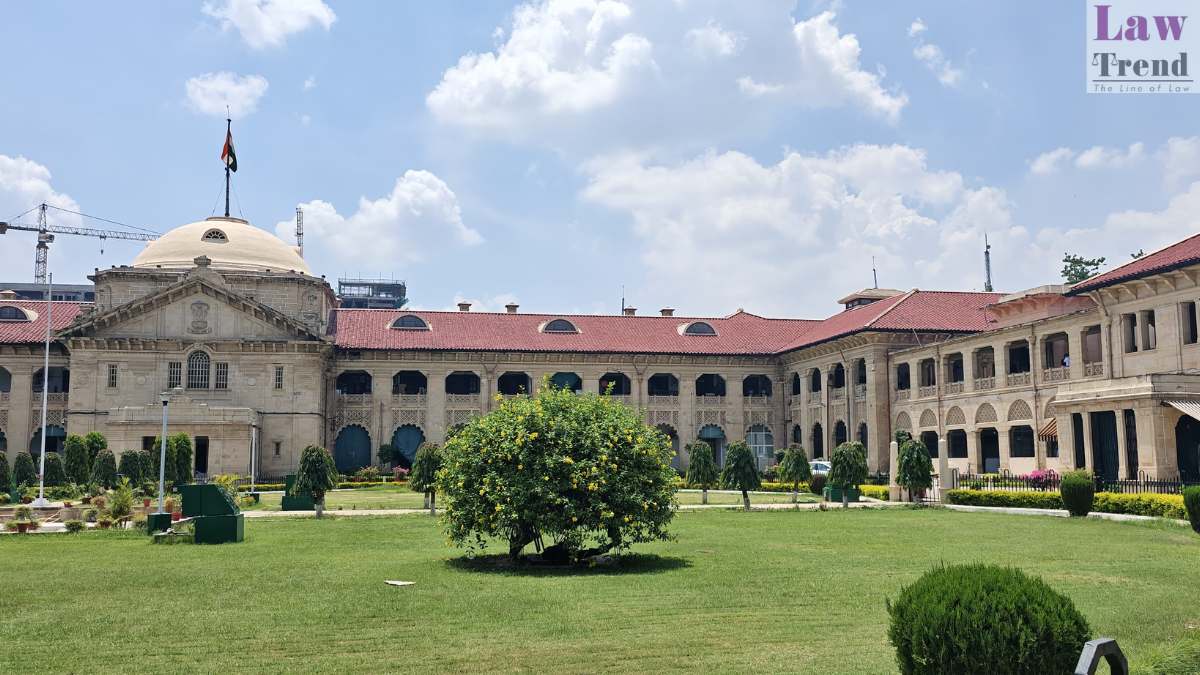
The Allahabad High Court has ruled that the government retains its sovereign power to acquire religious properties, including places of worship, for public infrastructure projects. The ruling came as the court dismissed a series of petitions challenging the acquisition of six ancient mosques in Varanasi for the expansion of the Kashi Vishwanath Dham Corridor.
A two-judge bench comprising Justice J J Munir and Justice Arun Kumar clarified that the Places of Worship (Special Provisions) Act of 1991 does not block the government’s right of eminent domain. Under the Right to Fair Compensation and Transparency in Land Acquisition, Rehabilitation and Resettlement Act of 2013, the state has the authority to acquire any land for public welfare purposes such as constructing roads, highways, and other public infrastructure.
Dalmandi Street Beautification Project
The legal challenge was brought by a group of shopkeepers and tenants operating in the Dalmandi Market area, situated roughly 800 meters east of the Kashi Vishwanath temple. They sought to block the demolition of their business premises and residences, arguing that taking over and altering the character of the six historic mosques would violate the protections established by the 1991 law.
The state government’s acquisition is part of a major urban development plan. According to official orders issued on March 31, 2025, and July 30, 2025, the state has allocated Rs 21,588.24 lakh for the widening and beautification of Dalmandi Street.
Scope Of The Places Of Worship Act
The petitioners asserted that the six affected mosques—Anjuman Intezamia Masjid, Masjid Rangile Shah, Masjid Ali Raza Khan, Masjid Karimullah Baig, Masjid Nisaran, and Masjid Sangamarmar—pre-dated India’s independence and were therefore protected under the 1991 Act. The law froze the religious status of all places of worship as they existed on August 15, 1947.
However, the High Court rejected this argument, calling it a misinterpretation of the statute. The bench agreed with the government’s position that the 1991 Act does not strip the state of its paramount ownership rights over all land within Indian territory. The state retains the right to acquire and use land for public utility, provided the owners are given just and fair compensation under the doctrine of eminent domain.
Petitioners Lack Legal Standing
In its final determination, the bench threw out the pleas on the grounds that the petitioners, as tenants of the land, did not have the legal standing to challenge the land acquisition process.
The judges noted that the ruling was made without prejudice to the legal rights of the state, the Waqf Board, or the Mutawallis (trustees) of the mosques. These entities remain free to assert their rights through appropriate legal proceedings in the future if the situation arises. The court concluded that the current petitioners had no right to the legal remedies they requested.




