

Executive Subvention Scheme Terminated With TMA Pai Ruling: Supreme Court Reverses High Court Order Granting 5-Year Subvention Post 2002
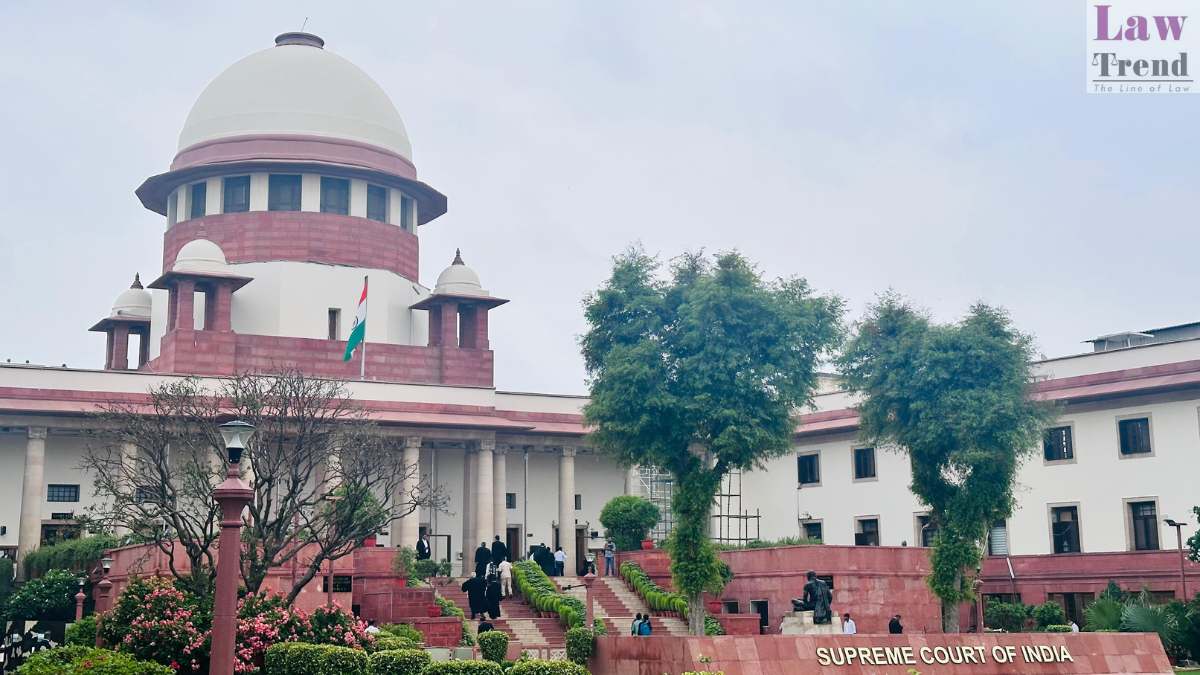

A Supreme Court Bench comprising Justice Dipankar Datta and Justice Sheel Nagu has held that medical colleges cannot claim annual subvention payments for the full five-year course duration once the underlying scheme was declared unconstitutional by an 11-Judge Bench on October 31, 2002. Partially allowing an appeal filed by the Government of India and the Government of Karnataka against Sri Devraj Urs Medical College, the apex court set aside the Karnataka High Court’s directions mandating subvention payments for the entire five-year course for students admitted during the 2002–03 academic session.

Background of the Case

The dispute traces back to an interim order dated August 11, 1995, passed in TMA Pai Foundation and Ors. v. State of Karnataka and Ors., which established a subvention scheme aimed at eliminating capitation fees and ensuring merit-based admissions to professional courses. Under this scheme, the Central Government provided an annual subvention of ₹5,000 per student (excluding NRIs) for up to five years or until completion of the course, effective from the 1995–96 academic year.

On May 13, 2005, the Central Government issued a communication denying subvention payments for the academic year 2002–03 and onwards. Sri Devraj Urs Medical College challenged this communication in the Karnataka High Court.

A Single Bench of the Karnataka High Court quashed the government’s communication and issued a writ of mandamus directing the Central Government to pay the subvention amount for students admitted up to the 2002–03 academic year for five years or until course completion. The Single Bench held that a vested right was created in favor of the college, which could not be taken away retrospectively by the final judgment in TMA Pai Foundation, pronounced on October 31, 2002. A Division Bench of the High Court subsequently upheld the Single Bench order on July 3, 2009, prompting the Government of India and the State Government to appeal to the Supreme Court.

Arguments and High Court’s Findings

The Single Bench of the High Court had relied on a clarificatory decision dated April 1, 2003, in State of Karnataka v. TMA Pai Foundation and Ors., concluding that the declaration of law in the 11-Judge Bench judgment was prospective and saved actions taken pursuant to the interim order dated August 11, 1995.

READ ALSO  Bombay HC Issues Notice on Plea Challenging Religious Reservation in State Wakf Board for Legal Assistant Post

However, before the Supreme Court, the Central and State Governments contended that once the 11-Judge Bench declared the overarching scheme unconstitutional, no further subvention obligations survived post-October 31, 2002.

Court’s Analysis and Observations

The Supreme Court examined the scope of the 11-Judge Bench judgment in TMA Pai Foundation & Ors. vs. State of Karnataka, which overruled the scheme formulated in Unni Krishnan, J.P. And Ors. Etc. Etc vs State Of Andhra Pradesh And Ors. Etc. Etc. The 11-Judge Bench had answered Question No. 9 as follows:

“The scheme framed by this Court in Unni Krishnan’s case and the direction to impose the same, except where it holds that primary education is a fundamental right, is unconstitutional. However, the principle that there should not be capitation fee or profiteering is correct. Reasonable surplus to meet cost of expansion and augmentation of facilities does not, however, amount to profiteering.”

Evaluating the High Court’s reasoning, Justice Sheel Nagu, writing for the Bench, noted that the subvention scheme was an annual commitment rather than a lump-sum grant. The Court observed that executive schemes died upon being declared unconstitutional:

READ ALSO  Sec 395 CrPC | Accused Not Getting Proper Legal Assistance and His Counsel Being Threatened Can’t be a Ground to Refer Case to HC: J&K HC

“However, the schemes or executive instructions, particularly the subvention scheme, died its own death on 31.10.2002 when the scheme was declared unconstitutional by the final decision in TMA Pai Foundation (supra) case by 11-Judge Bench.”

Addressing the prospectivity argument, the apex court clarified that the Division Bench’s clarificatory order of April 1, 2003, did not make the main ratio prospective for executive schemes. Relying on P.V. George v. State of Kerala, the Court affirmed the settled principle regarding judicial declarations:

“The law declared by a Court will have a retrospective effect if not otherwise stated to be so specifically……”

The Court explained that a conjoint reading of the 11-Judge Bench judgment and the April 1, 2003 clarificatory order made it clear that prospective application was intended only for statutory provisions requiring reworking to enable institutions to revise fee structures, not for executive subvention schemes.

Furthermore, during proceedings, the Supreme Court inquired whether the respondent-college had provided data showing whether tuition fees and other revenues fell short of operational expenses for 2002–03. As no such data was produced, the Court drew inspiration from Bharat Singh and Others vs. State of Haryana and Others, emphasizing that parties in writ proceedings must plead and prove facts with evidence:

“While in a pleading, that is, a plaint or a written statement, the facts and not evidence are required to be pleaded, in a writ petition or in the counter-affidavit not only the facts but also the evidence in proof of such facts have to be pleaded and annexed to it.”

The Court also took judicial notice of the fact that only two colleges had challenged the stoppage of subvention funds despite it affecting numerous institutions, holding that this fact carried persuasive force.

Final Decision

The Supreme Court partly allowed the appeal, setting aside the Karnataka High Court orders to the extent that they directed payment of subvention for the full five-year course duration for students admitted in the 2002–03 academic session. The Court held that directing such payment beyond October 31, 2002, was impermissible once the subvention scheme was declared unconstitutional.

READ ALSO  सुप्रीम कोर्ट ने राजनीतिक दलों को आरटीआई के दायरे में लाने वाली याचिकाओं पर सुनवाई टाली

The connected appeal arising out of SLP (C) No. 9079 of 2011 was disposed of on identical terms.

Case Details:

Case Title: Government of India & Anr. VS. Sri Devraj Urs Medical College
Case No.: Civil Appeal No. 10669 of 2010 (with Civil Appeal arising out of SLP (C) No. 9079 of 2011)
Bench: Justice Dipankar Datta, Justice Sheel Nagu
Date: August 04, 2026

Law Trend
Law Trendhttps://lawtrend.in/
Legal News Website Providing Latest Judgments of Supreme Court and High Court

Related Articles

Latest Articles

