

Exclusion of Natural Heirs Alone Does Not Invalidate a Will; Affidavits Denying Signature Aren’t ‘Evidence’ Without Cross-Examination: Supreme Court
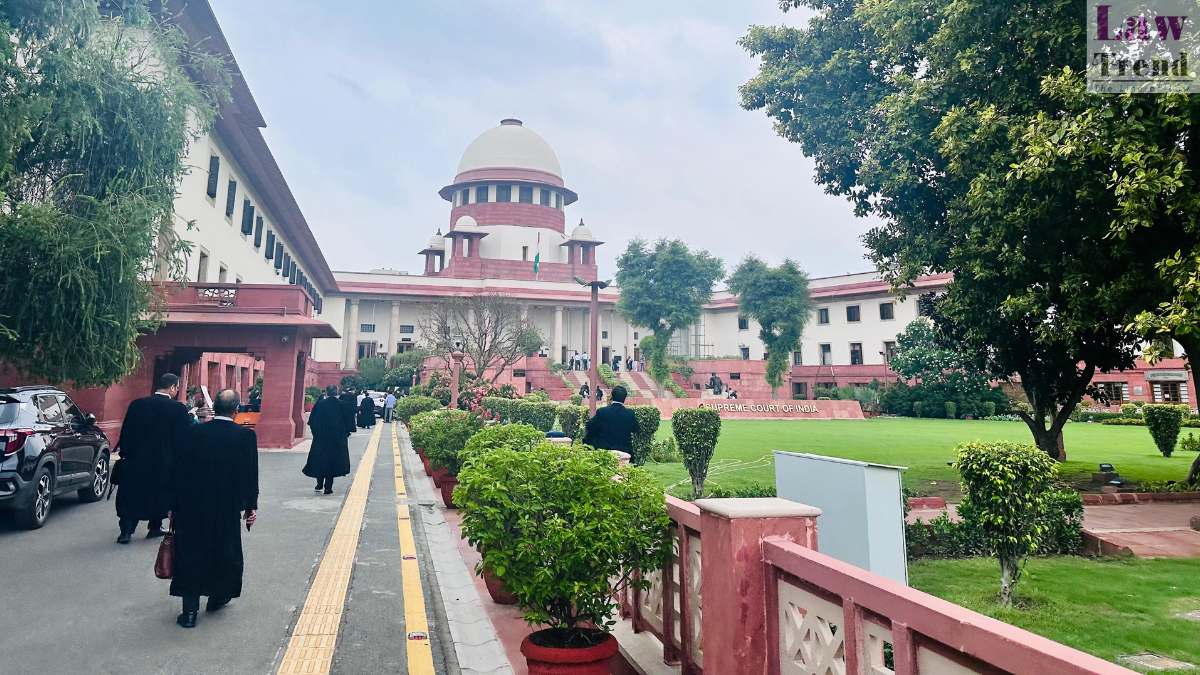

The Supreme Court of India has held that the mere exclusion of natural heirs from inheriting a testator’s property does not constitute a suspicious circumstance sufficient to invalidate a Will. The Court also clarified that affidavits filed by attesting witnesses denying their signatures do not qualify as “evidence” under the Indian Evidence Act unless the deponents are subjected to cross-examination.

A Bench of Justice Ujjal Bhuyan and Justice Vijay Bishnoi delivered this ruling while dismissing a civil appeal challenging a final judgment of the High Court of Karnataka, which had concurrently affirmed the decisions of both the Trial Court and the First Appellate Court upholding the validity of a disputed Will.

Background of the Case

The dispute arose over the estate of late B. Sheena Nairi, a Chartered Accountant and permanent resident of Bombay who owned substantial properties in Bombay as well as ancestral and agricultural lands in Brahmavar and Chanthar Village, Udupi Taluk, Karnataka.

Nairi, who passed away on November 30, 1983, at the age of 69 in Delhi, was survived by his wife, Parvathi Nairthi (Appellant No. 1), and five children. During his lifetime, he had executed Powers of Attorney (POA) in 1960 and 1961 in favor of his brother-in-law, Krishnayya Nairi, to manage certain properties.

However, on May 15, 1983, Nairi executed his last Will, bequeathing all the schedule properties to his younger sister, Laxmi Nairthy (Respondent No. 1/Plaintiff), and revoking the POA. Following his demise, the Tehsildar of Udupi mutated the properties in favor of the testator’s wife on April 6, 1984.

On November 22, 1990, Laxmi Nairthy instituted a civil suit (O.S. No. 186 of 1990) before the Additional Civil Judge (Senior Division), Udupi, seeking a declaration of absolute ownership under the Will, perpetual injunction, and recovery of possession of certain items from the POA holder. The wife and children of the testator contested the suit, claiming the Will was a false, fabricated document created by the testator’s brothers in collusion.

The Trial Court allowed the Plaintiff’s suit on December 16, 2008, finding that the Will was duly proved through an attesting witness, B. Jagannatha Nairi (PW2). The Trial Court also compared the disputed signature on the Will with the admitted signature on the POA, concluding they matched. This decision was upheld by the Fast Track Court, Udupi (First Appellate Court) on August 6, 2012, and subsequently by the High Court of Karnataka on November 15, 2012.

READ ALSO  COVID19 Takes Life of Another High Court Judge

Arguments of the Parties

Submissions on Behalf of the Appellants

Ms. Meenakshi Arora, learned Senior Counsel appearing for the Appellants, argued:

  1. There was an unexplained delay of seven years by the Plaintiff in producing the Will and seeking its enforcement.
  2. The Plaintiff did not object to the mutation of the properties in favor of the Appellants before the Tehsildar in 1984.
  3. No explanation was offered as to why the testator would exclude his own wife and children to bequeath properties solely to his sister.
  4. The testimony of the attesting witness, B. Jagannatha Nairi, incorrectly identified the place of death of the testator as Bombay and showed he did not know the contents of the Will.
  5. The First Appellate Court failed to formulate proper points for determination under Order XLI Rule 31 of the Code of Civil Procedure (CPC).

Submissions on Behalf of the Respondents

Mr. Vinay Navare, learned Senior Counsel appearing for the Respondents, countered:

  1. Once execution of the Will was proved, the burden shifted to the Appellants to prove their plea of forgery, which they failed to do by not examining any handwriting expert.
  2. The wife and children of the testator remained passive and never stepped into the witness box to deny the execution of the Will.
  3. The proceedings on behalf of the defendants were driven solely by the son of the POA holder to protect his possession of the property.
  4. The testator explicitly recorded in the Will that he had already provided “enough and more” to his wife and children residing in Bombay, thus justifying the disposition.
  5. The delay in filing the suit was explained by the fact that the Plaintiff filed the suit in 1990 only when the POA holder’s son attempted to threaten her and cut standing crops.

The Court’s Analysis

The Supreme Court framed the central issue as whether sufficient grounds existed to warrant interference with the concurrent findings of fact validating the Will.

1. Principles Governing Proof and Validity of a Will

The Court referred to Section 68 of the Indian Evidence Act, 1872 and the judgment in Meena Pradhan v. Kamla Pradhan (2023 SCC OnLine SC 1198), noting:

READ ALSO  Wife Can Seek CCTV Footage of Hotel to Prove Adultery by Husband- No Violation of Right to Privacy of Husband: Delhi HC

“A Will is an instrument of testamentary disposition of property. It is a legally acknowledged mode of bequeathing a testator’s property during his lifetime to be acted upon on his/her death and carries with it an element of sanctity… statutory requisites for the proof thereof have been statutorily enjoined to rule out the possibility of any manipulation.”

Evaluating landmark judgments like H. Venkatachala Iyengar v. B.N. Thimmajamma, Bhagwan Kaur v. Kartar Kaur, and Shivakumar v. Sharanabasappa, the Court summarized the core principles. It found that the Will had been validly proved because at least one attesting witness (PW2) testified that the testator voluntarily signed the Will in his presence, and that they both signed in the presence of each other.

2. Mutation Entries and Non-Registration of Will

Regarding the mutation entries in 1984 and the unregistered status of the Will, the Bench clarified:

  • Mutation: Relying on Balwant Singh v. Daulat Singh (1997) 7 SCC 137, the Court reiterated that mutation entries are only for fiscal purposes and do not confer title.
  • Non-Registration: Citing Ishwardeo Narain Singh v. Kamta Devi (1953) 1 SCC 295, the Court observed:
    “… There is nothing in law which requires the registration of a will and wills are in a majority of cases not registered at all. To draw any inference against the genuineness of the will on the ground of its non-registration appears to us to be wholly unwarranted.”

3. Exclusion of Natural Heirs as “Suspicious Circumstances”

The Court addressed whether excluding natural heirs constitutes a suspicious circumstance. Referencing Indu Bala Bose & Ors. v. Manindra Chandra Bose (1982) 1 SCC 20, the Court noted:

“Needless to say that any and every circumstance is not a ‘suspicious’ circumstance. A circumstance would be ‘suspicious’ when it is not normal or is not normally expected in a normal situation or is not expected of a normal person.”

The Court stated that while Ram Piari v. Bhagwant (1990) 3 SCC 364 requires a prudent reason for denying inheritance to natural heirs, the Will in question explicitly mentioned that the testator had already given enough to his wife and children in Bombay.

The Bench ruled:

“Mere exclusion of the natural heirs from the property of the testator, by itself, cannot be construed as a suspicious circumstance so as to invalidate a Will outrightly. A testator is legally entitled to dispose of his property according to his own wishes, and unless the exclusion is accompanied by suspicious circumstances affecting the genuineness or due execution of a Will, such exclusion alone does not render a Will invalid.”

READ ALSO  पालक अधिकार क्षेत्र में न्यायालय को माता-पिता की कड़वाहट और वैमनस्य से ऊपर उठकर बच्चे के हित को प्राथमिकता देनी चाहिए: सुप्रीम कोर्ट

4. Compliance with Order XLI Rule 31 of CPC

On the technical objection regarding the First Appellate Court’s framing of “general” points of determination, the Supreme Court relied on G. Amalorpavam v. R.C. Diocese of Madurai (2006) 3 SCC 224. It held that if an appellate court has thoroughly analyzed the evidence, discussed details, and provided reasons, the judgment is not vitiated merely by the absence of formally structured points. Technical rules should not compromise substantial justice.

5. Evidentiary Value of Attesting Witnesses’ Affidavits

The Appellants relied heavily on affidavits from the attesting witnesses denying their signatures. The Supreme Court rejected this contention, pointing to Ayaaubkhan Noorkhan Pathan v. State of Maharashtra (2013) 4 SCC 465, and held:

“…an affidavit is not an ‘evidence’ within the meaning of Section 3 of the Indian Evidence Act, 1872 and the same can be used as ‘evidence’ only if, for sufficient reasons, the Court passes an order under Order XIX of CPC…”

The Court noted that since the deponents were not subjected to cross-examination, and the affidavits were mysteriously filed even before the defendants filed their written statement without any court notice, they could not be relied upon as sufficient evidence.

Decision of the Court

The Supreme Court concluded that the concurrent findings of all the lower courts were well-reasoned and legally sound. Finding no grounds to interfere with the concurrent decisions upholding the validity of the Will, the Supreme Court dismissed the appeal. All pending applications were disposed of, with no order as to costs.

Case Details

  • Case Title: Parvathi Nairthi (Dead) and Ors. v. Laxmi Nairthy (Dead) through LRs. and Ors.
  • Case No.: Civil Appeal No. 6859 of 2014 (Arising out of SLP (Civil) No. 12822 of 2013)
  • Bench: Justice Ujjal Bhuyan, Justice Vijay Bishnoi
  • Date of Judgment: May 21, 2026

Law Trend
Law Trendhttps://lawtrend.in/
Legal News Website Providing Latest Judgments of Supreme Court and High Court

Related Articles

Latest Articles

