

Detailed ‘Blow-by-Blow’ Dying Declaration by Seriously Injured Victim Can Raise Doubt Considering Nature of Injuries: Supreme Court
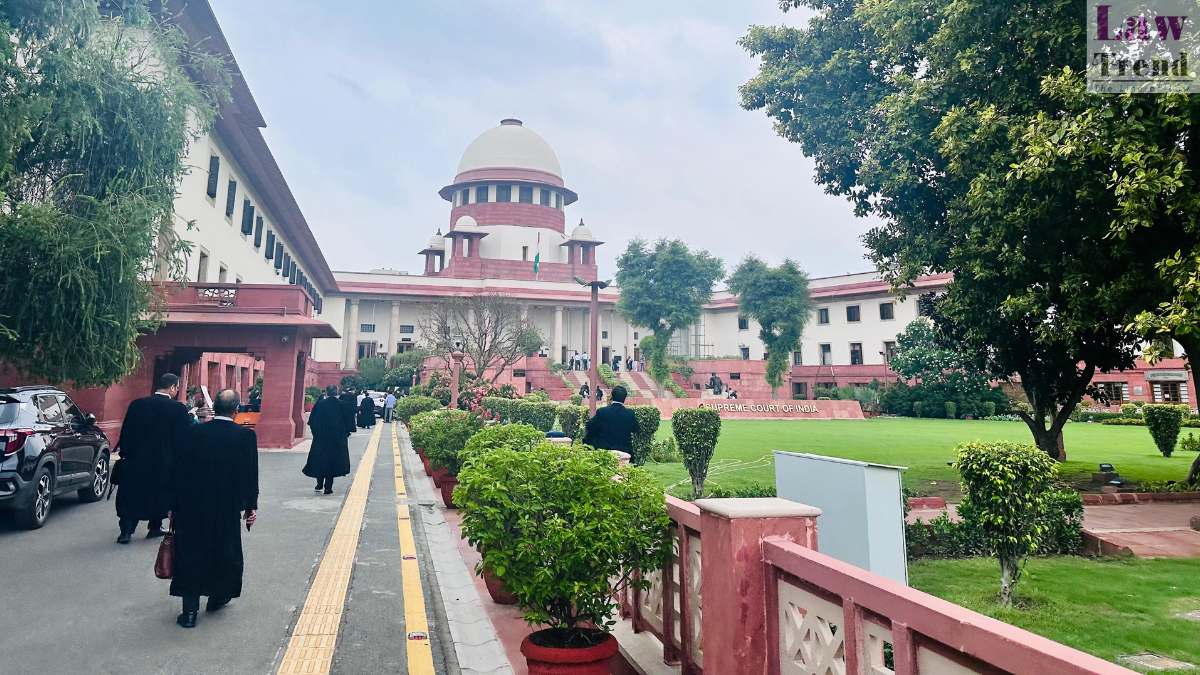

The Supreme Court of India, comprising Justice Ujjal Bhuyan and Justice Atul S. Chandurkar, has held that a detailed, “blow-by-blow” dying declaration provided by a severely injured victim can raise serious doubt regarding its authenticity. Dismissing an appeal filed by the State of Andhra Pradesh, the court refused to restore the murder conviction of four men under Section 302 read with Section 34 of the Indian Penal Code, 1860 (IPC), citing material inconsistencies in the prosecution’s evidence and the unreliability of the victim’s recorded statement. Although the apex court disapproved of the High Court of Andhra Pradesh using surmises and conjectures to alter the conviction to Section 304 Part II IPC, it concluded that the evidence on record remained insufficient to reinstate a Section 302 IPC conviction.

Background of the Case

The dispute originates from long-standing enmity between the family of the victim, Atla Siva Govinda Reddy, and Ponthati Siva Rami Reddy (A1) along with his brother Ponthati Dasthagiri Reddy (A2). The rivalry traced back to 1997, when the victim’s father was allegedly murdered by A1’s father.

According to the prosecution, on the intervening night of March 8–9, 2006, the victim accompanied PW1 to their agricultural fields to water crops. The four accused—Ponthati Siva Rami Reddy (A1), Ponthati Dasthagiri Reddy (A2), and two others (A3 and A4)—armed with sickles and iron pipes, allegedly launched an attack on the victim. PW1 informed the victim’s family, after which he was shifted to a Government Hospital.

Between 6:00 AM and 6:45 AM on March 9, 2006, a police officer (PW10) recorded the statement of the victim, which was certified by a medical officer (PW8). The victim succumbed to his injuries shortly after at 7:30 AM. Following the investigation, the II Additional Sessions Judge, Kadapa, convicted all four accused under Section 302 read with Section 34 IPC and sentenced them to life imprisonment with a fine of ₹5,000 each.

Upon appeal, a Division Bench of the High Court of Andhra Pradesh modified the conviction to Section 304 Part II IPC, reducing the sentence to six years of rigorous imprisonment with a ₹5,000 fine each. The State of Andhra Pradesh subsequently appealed to the Supreme Court seeking restoration of the Sessions Court judgment.

READ ALSO  Supreme Court Orders CBI Probe into Advocate’s Degree Amid Forgery Allegations

Arguments of the Parties

Counsel representing the State of Andhra Pradesh argued that the High Court erred in altering a well-reasoned conviction under Section 302 read with Section 34 IPC. It was contended that the High Court overlooked key evidence, specifically the voluntary dying declaration of the victim (Exhibit P10) certified by PW8 confirming the victim was conscious, coherent, and mentally fit. The prosecution highlighted the post-mortem report showing 22 injuries to demonstrate the brutality of the assault and urged that the High Court’s observations were unsupported by evidence.

Senior Counsel appearing for the respondents submitted that all four accused had already completed the six-year sentence imposed by the High Court. It was submitted that PW1, the key eyewitness cited by the prosecution, had turned hostile. Defense counsel argued that the dying declaration (Exhibit P10) was highly doubtful due to unexplained overwriting regarding the time of receipt of medical intimation, absence of necessary endorsements, and the fact that a victim suffering 22 serious injuries could not have given such a detailed narration.

The Court’s Analysis

Upon evaluating the depositions and exhibits, the Supreme Court pointed out several key contradictions and deficiencies in the prosecution’s case:

  1. Doubts Surrounding the Dying Declaration: The court closely examined Exhibit P10, which ran into a page and a half and provided a detailed account of the history of enmity as well as the incident itself. The Supreme Court observed: “It is in fact a ‘blow by blow’ account given by the victim vividly describing the attack in detail. Considering the nature of injuries suffered by the victim, which were twenty-two in number with many of them being grievous, such detailed narration by a seriously injured victim does raise a serious doubt.” The court further noted medical admissions that tranquilizers and head injuries could cause loss of consciousness or memory, alongside an unexplained overwriting in Exhibit P6 where the police officer changed the time of receiving medical intimation from ‘06.50 a.m.’ to ‘05.50 a.m.’
  2. Inconsistencies Regarding Crime Scene and Transport: PW1 testified that the assault occurred in the fields, after which he and another person carried the victim to a graveyard and then to his residence. In contrast, PW3 (the victim’s brother) and PW4 (the victim’s widow) claimed the assault took place at the graveyard and that the victim was transported directly to the hospital in a jeep. Neither PW1 nor PW2 acknowledged the presence of PW3 or a jeep at the graveyard.
  3. Investigative Omissions: The Investigating Officer (PW17) failed to explain why there were no bloodstains on the clothes of the witnesses who allegedly moved the victim, nor did he make inquiries regarding who transported the victim to the hospital.
  4. Disapproval of High Court’s Reasoning: The Supreme Court specifically expressed disapproval of the High Court’s reliance on conjectures to modify the conviction. The High Court had observed: “Though no witness spoke on these lines, what appears to this Court is that, on the eventful night, the farmers went to the field for irrigating their crops, may be on account of shortage of power or water; and in a scuffle, the deceased received serious injuries in the hands of the accused. Had there been a clear intention, or plan for the accused to kill the deceased, there would not be an occasion for the deceased being shifted to the hospital, and is being in a position to speak. If four persons, armed with deadly weapons, attack an individual, with an objective of killing him, normally, they would leave the spot, only after confirming that the attacked person breathed his last.”

Rebuking these remarks, the Supreme Court stated: “The High Court having itself noted that no witness had deposed on the aforesaid lines, there was no reason at all for it to comment further on the matter. The aforesaid observations are based purely on surmises and conjectures.”

Decision

The Supreme Court concluded that while the High Court’s reasoning was grounded in surmises, the prosecution’s evidence was nevertheless insufficient to restore the conviction under Section 302 read with Section 34 IPC. Observing that the accused had already served their six-year sentence and had not challenged their modified conviction under Section 304 Part II IPC, the Bench held that the matter deserved a quietus and dismissed the appeal.

Case Details:

READ ALSO  Waitlisted Candidate Has No Vested Right to Job After Vacancies Are Filled: Supreme Court

Case Title: The State of Andhra Pradesh v. Ponthati Siva Rami Reddy and Others

Case No.: Criminal Appeal No. 2120 of 2017

Bench: Justice Ujjal Bhuyan and Justice Atul S. Chandurkar

Date: August 10, 2026

Law Trend
Law Trendhttps://lawtrend.in/
Legal News Website Providing Latest Judgments of Supreme Court and High Court

Related Articles

Latest Articles

