

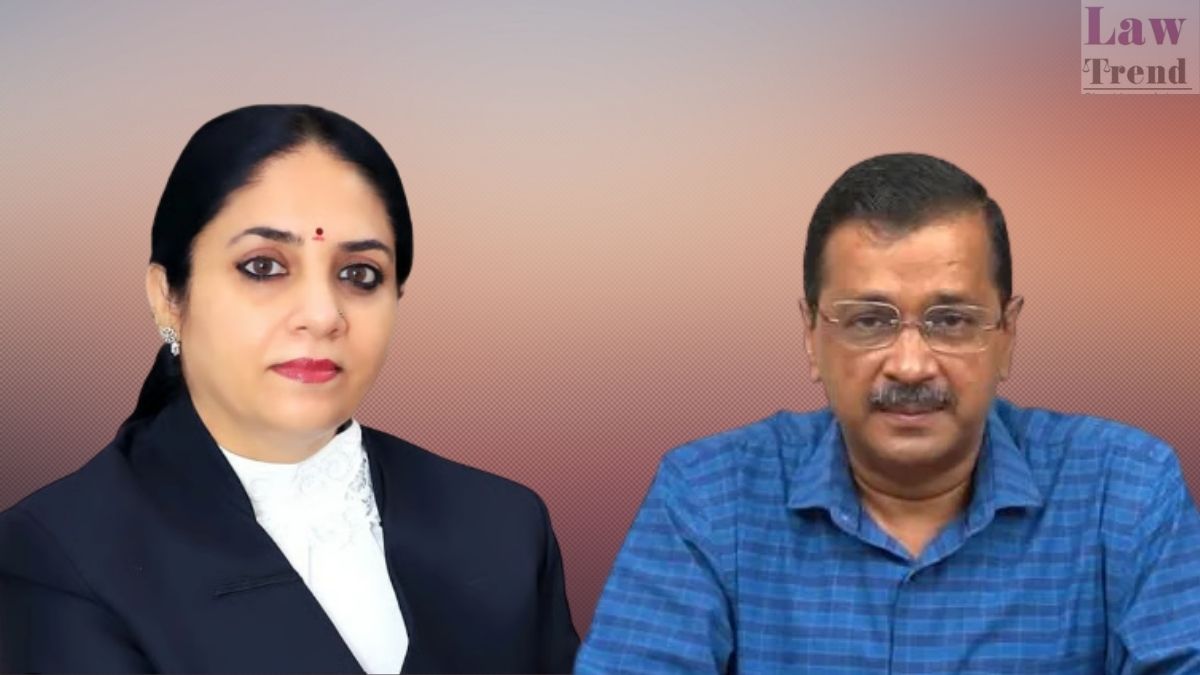
Justice Swarana Kanta Sharma of the Delhi High Court on Thursday initiated criminal contempt proceedings against Aam Aadmi Party (AAP) leaders, including Arvind Kejriwal, Manish Sisodia, and Sanjay Singh, citing a “calculated campaign of vilification” directed at the judiciary.
The court’s decision follows a series of digital posts and letters that the judge characterized as an attempt to exert organized public pressure on the adjudicatory process. Consequently, Justice Sharma announced she would no longer hear the Central Bureau of Investigation’s (CBI) revision plea regarding the discharge of Kejriwal and others in the high-profile excise policy case.
The Contemptuous Conduct
While pronouncing the order, Justice Sharma observed that the campaign was not merely a personal attack but an assault on the entire institution.
“Arvind Kejriwal orchestrated a calculated campaign of vilification,” the judge remarked. She further noted that the “unfortunate statements and conduct” of the respondent appeared to fall within the definition of criminal contempt under Section 2(C) of the Contempt of Courts Act.
The court extended these observations to other senior AAP leaders. Manish Sisodia and Durgesh Pathak were also found to have written letters and posted content deemed contemptuous on similar grounds. The judge specifically pointed to the circulation of “edited” videos of her delivering a lecture at a university in Varanasi as part of the defamatory material.
“Extremely vilifying, extremely contemptuous, and defamatory material is being posted by some of the respondents against me and against this court, and I cannot stay silent,” Justice Sharma stated.
Institutional Integrity vs. Public Pressure
The court emphasized that failing to take notice of such actions could send a dangerous message that the judiciary is susceptible to organized public pressure.
The contempt action marks a sharp escalation in the legal friction between the AAP leadership and the court. Previously, Kejriwal had written to Justice Sharma stating he had “lost hope of getting justice” from her and would not participate in the proceedings, choosing instead to follow what he termed the “path of Satyagraha.” Sisodia and Pathak had similarly informed the court they would go unrepresented.
Prior to these developments, Justice Sharma had refused to recuse herself from the case, stating that accepting such applications based on “unproven and unfounded accusations of bias” would set a “troubling precedent.”
The initiation of contempt proceedings has immediately stalled the progress of the CBI’s revision plea. Justice Sharma noted that she had intended to appoint senior advocates as amicus curiae to represent the AAP leaders—who had claimed they would go unrepresented—but the discovery of the vilifying material forced a change in course.
“The court will stand up for itself and for the institution when such standing is required, though it may appear difficult,” the judge asserted.




