

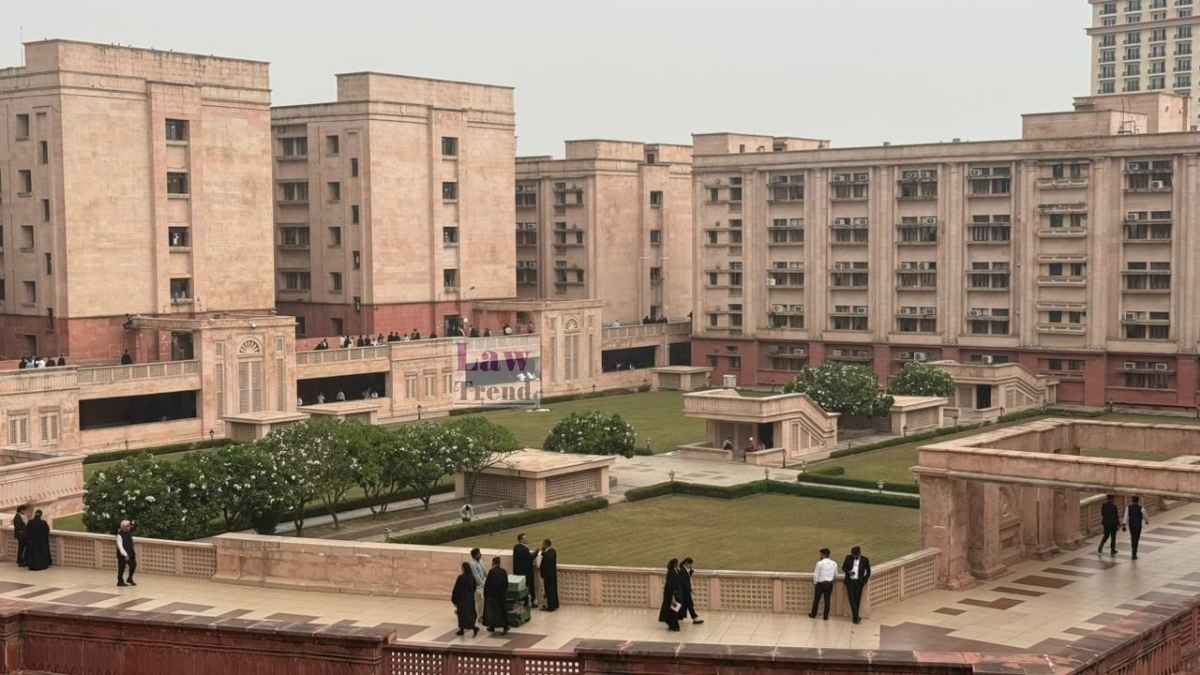
The Allahabad High Court, Lucknow Bench, has directed the State to pay 12% annual interest on the delayed retiral dues of a Sub-Divisional Magistrate who retired in 1997. It held that the delay could not be attributed to him, as he had submitted all the required documents well before retirement.
Justice Anish Kumar Gupta observed that the authorities’ repeated demands for documents already on record were an attempt to fill the gap after the officer moved the Court.
Background
Adya Prasad Misra retired on 31.07.1997 as Sub-Divisional Magistrate, Utraula, in Balrampur district. According to him, he submitted all documents, including Form 425-A, to the District Magistrate, Gonda, about a year and a half before retirement. On 25.05.1997, shortly before retiring, he was transferred to the newly created Balrampur district, and disputes then arose over whether his documents had been submitted.
His dues were released in stages over several years. Pension arrears, gratuity and commuted pension were paid on 27.03.1999, about 20 months after retirement. Leave encashment, supplementary dues, revised pay arrears and group insurance followed between 2000 and 2001. Ninety per cent of his GPF, ₹93,000, was paid on 26.06.2002, and the balance 10%, ₹24,436, only on 29.03.2004, with interest computed only up to August 1998.
He filed the writ petition in 2003 seeking interest on the delayed payments. On 20.02.2023, the petition was disposed of with liberty to file a representation before the State. On 24.04.2023, a Division Bench set aside that order and restored the petition. It said that sending him back to the State after 20 years was not appropriate and asked that the case be decided early, as he was about 84 years old.
Arguments
Advocate Rajat Rajan Singh, appearing for the petitioner, argued that the documents had been submitted on time and that the delay was entirely on the part of the State authorities. Standing Counsel Ritesh Kumar Singh appeared for the State. The respondents’ later communications sought to show that the petitioner had not submitted Form 425-A and other documents on time.
Court’s Findings
The Court relied on a letter dated 21.07.1997 from the District Magistrate, Gonda, to the Assistant Accounts Officer, Board of Revenue, Faizabad Zone. The letter admitted that all documents, including Form 425-A, had already been forwarded for release of the petitioner’s pensionary benefits.
In light of this letter, the Court held that the later demands from the ADM, Balrampur, for the same documents had no basis. It observed that the “further demand for the same documents, which have already been submitted by the petitioner much before his age of retirement was just an eyewash to fill-up the gap after filing of this writ petition by the petitioner.”
It further held that “by no stretch of imagination it can be said that there was delay in submission of the documents on behalf of the petitioner.” The Court noted that “all retiral dues are required to be paid within three months from the date of retirement”, and held the respondents liable to pay interest on the delayed amounts.
Outcome
The Court directed respondent No. 3 to pay interest at 12% per annum on the delayed payment of pension, gratuity, GPF and other dues, from the date of retirement until actual payment, within eight weeks. The writ petition was allowed.
Case Title: Adya Prasad Misra v. State of U.P. Through Secy. Revenue and 8 Ors.
Case No.: Writ-A No. 2000061 of 2003
Bench: Justice Anish Kumar Gupta
Date: 27.10.2026


