

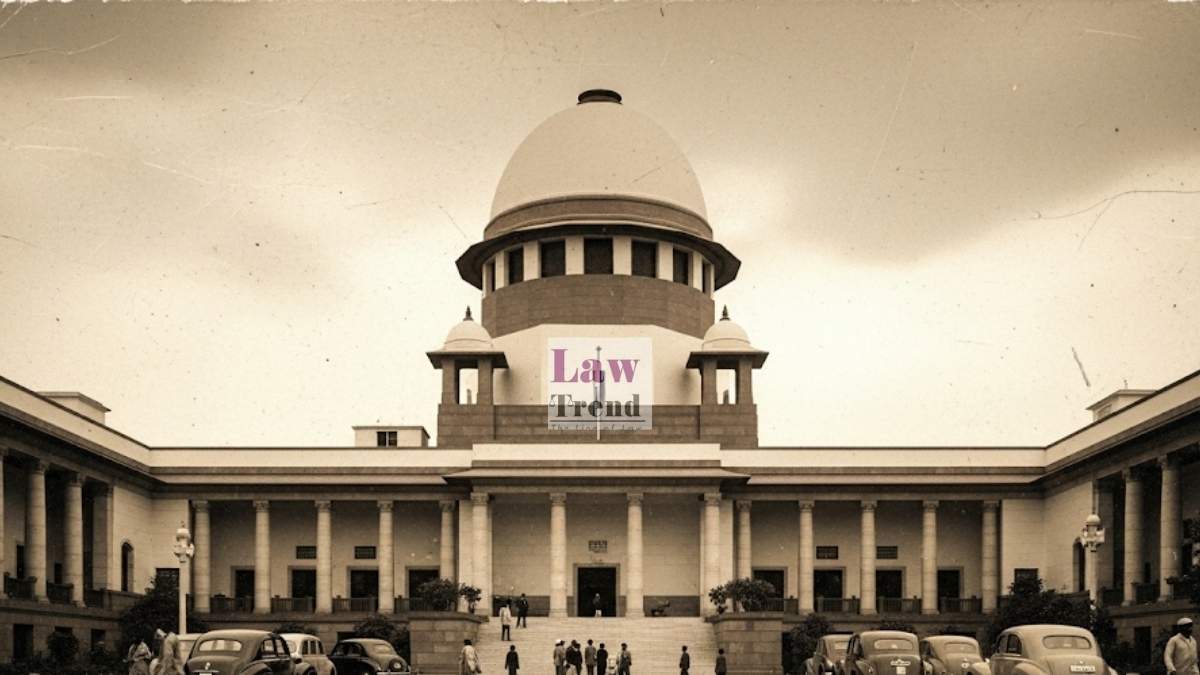
The Supreme Court has upheld the State of Telangana’s title over disputed lands in Survey Nos. 100 and 101 of Miyapur Village, holding that the revenue entries relied upon by private claimants were bogus and the result of fraud in collusion with revenue officials.
A Bench of Justice M.M. Sundresh and Justice Satish Chandra Sharma dismissed a batch of appeals against the Andhra Pradesh High Court’s judgment dated 16.04.2003, which had declared the claimants land grabbers and the State the rightful owner.
Background
The lands, in Serilingamapally Mandal, Ranga Reddy District, span 550 acres and 39 guntas and were classified as Sarkari poramboke after the 1912 survey. In 1927, the Reilly Commission recommended that Miyapur village be restored to Rafi-un-nisa Begum. The Nizam’s Firman Isfandar 1338 Fasli followed, barring sale, mortgage or gift of Paigah properties without his sanction.
The Andhra Pradesh (Telangana Area) (Abolition of Jagirs) Regulation, 1358 Fasli abolished all jagirs from 15.08.1949, and administration of the lands was transferred to the State from 15.09.1949. Rafi-un-nisa Begum’s son, Nawab Mohammad Khaisaruddin Khan, later received commutation awards in 1957 and 1958. His son’s request for release of the villages was rejected on 30.03.1995.
Meanwhile, the name of one Raheemunissa Begum appeared as pattedar in the pahanies of 1950-53, and the Tahsildar permitted the alienation of 140 acres in Survey No. 100 on that basis.
Three groups of claimants traced title through Khaisaruddin Khan, through Raheemunissa Begum, wife of Abdul Salam, and through Raheemunissa Begum, wife of Nawab Moinuddowla Bahadur. The Special Court under the Andhra Pradesh Land Grabbing (Prohibition) Act, 1982 decided LGC Nos. 21 and 22 of 1994 without the State as a party. In LGC Nos. 110 of 1994, 131 of 1995 and 136 of 1995, where the State was a party, the lands were held to belong to the State. The High Court upheld the latter and set aside the former.
Arguments
Senior Counsel for the claimants through Khaisaruddin Khan argued that his status as jagirdar was admitted and relied on an oral gift and a House Committee report of the Andhra Pradesh Legislative Assembly. Those claiming through Raheemunissa Begum, wife of Abdul Salam, relied on the revenue records and the State’s conduct in permitting alienation, and raised adverse possession. They also argued for the first time that the land was bought at auction and bequeathed to her by will. The third group claimed that the lands were the personal property of Raheemunissa Begum, wife of Nawab Moinuddowla Bahadur.
Senior Counsel for the State of Telangana argued that vesting under the Regulation was undisputed and that, having received the commutation amount, the jagirdar’s successors could not claim title.
Court’s Findings
The Court explained that a jagir was only a grant of rights over land revenue, observing:
“Therefore, a grant of jagir is not to be misconstrued as one of title over the property.”
It held that Khaisaruddin Khan’s successors were estopped from claiming title, given the concluded Atiyat proceedings and the receipt of commutation. It added that the unchallenged rejection of his son’s application was “the final nail in the coffin”.
On the revenue entries, the Bench noted there was no order of transfer or mutation, and no corresponding entry in the faisal patti or pucca book. It held that the entries were made without authority and constitute a nullity, observing:
“There is absolutely no power to record the name of an individual as a pattedar, through a mere entry, sans any proceedings.”
The Court held that the Tahsildar’s permission to alienate was a nullity, and that the House Committee report created no rights. It rejected the auction-and-will plea, raised for the first time, finding its veracity doubtful. It also upheld the High Court’s rejection of the “Zat Jagir” plea for the third group. The Bench concluded:
“An act of fraud vitiates all solemn acts. These appeals depict a clear case of fraud committed to usurp the lands vested in the State.”
Declining to invoke equities, the Court said it was a clear-cut case of attempts to grab valuable lands vested in the State. It clarified that the decision in LGC Nos. 21 and 22 of 1994 will have no bearing since the State was not a party, and noted that it was not going into the inter se dispute among the claimants.
Outcome
The appeals were dismissed without costs, and all applications for impleadment and intervention were also dismissed.
Case Title: Bandari Ramchander & Ors. v. Maitri Coop. Housing Society Ltd. & Ors.
Case No.: Civil Appeal No. 10699 of 2013 and connected appeals
Bench: Justice M.M. Sundresh and Justice Satish Chandra Sharma
Date: 29.10.2026


