

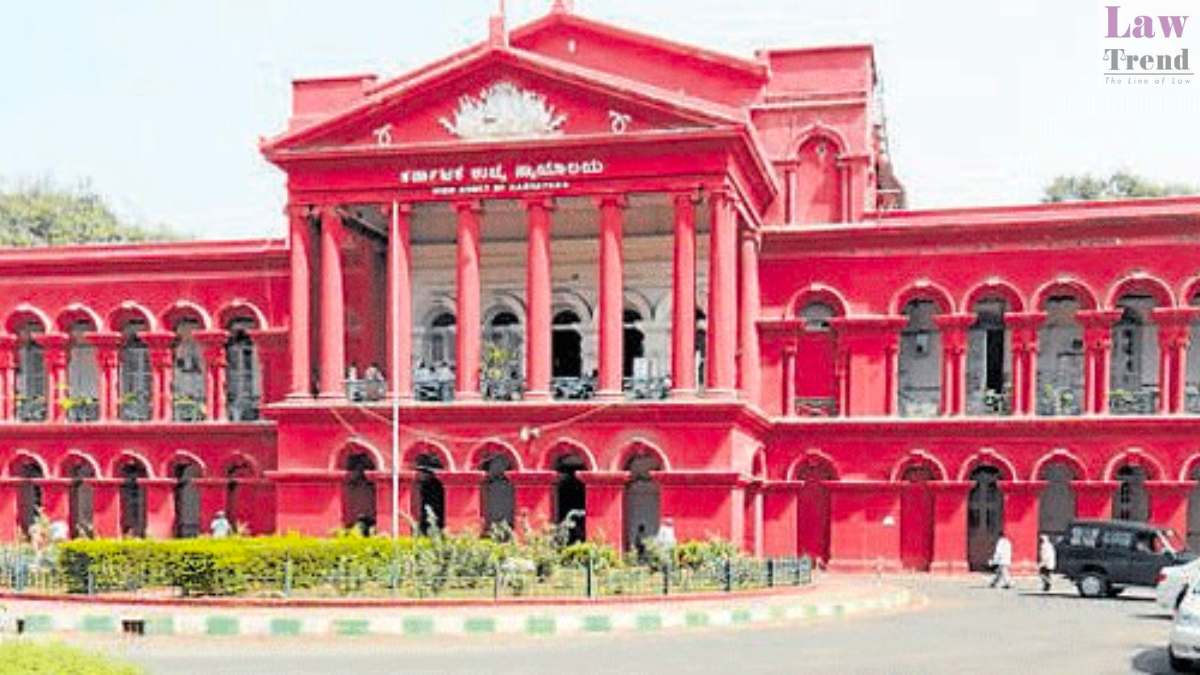
The Karnataka High Court has quashed criminal proceedings against 13 people accused of displaying posters in Mangaluru criticising the Supreme Court’s 2019 Ayodhya judgment. The Court held that expressing disagreement with a judicial decision and demanding justice falls within the constitutional protection of freedom of speech and does not, by itself, constitute an offence under Sections 153A and 295A of the Indian Penal Code (IPC).
Justice H P Sandesh, in an order dated October 15, observed that the posters merely conveyed dissatisfaction with the Supreme Court’s verdict and called for justice. The Court found no material suggesting that the expressions were intended to create disharmony or promote hostility.
The High Court held that the statements were protected under Articles 19 and 21 of the Constitution and that continuing the criminal proceedings would not be justified.
Court Finds No Ingredients of Criminal Offence
Examining the allegations, the High Court noted that the posters questioned the outcome of the Ayodhya dispute and conveyed a sense of denial of justice. However, the language used did not satisfy the legal requirements for prosecution under Sections 153A and 295A of the IPC.
The Court observed that although the slogans reflected dissatisfaction with the Supreme Court judgment, such expressions could not automatically be treated as promoting disharmony.
While examining Section 153A, Justice Sandesh stated that the provision required the necessary ingredients of an offence and that the expressions in question did not establish them.
The Court further clarified that the possibility of some individuals developing hatred or ill will was insufficient to attract Section 153A(1)(a) of the IPC.
Finding that the posters amounted to dissent rather than an attempt to disturb harmony, the High Court concluded that the proceedings deserved to be quashed.
Police Registered Case Over Posters in November 2019
The proceedings originated from a suo motu case registered by Mangalore South police on November 16, 2019, against Mahammed Hanif and 12 others.
According to the prosecution, the accused had displayed posters suggesting that the Supreme Court’s judgment in the Babri Masjid-Ayodhya dispute had resulted in a denial of justice.
Police invoked Sections 153A and 295A of the IPC, alleging that the posters had created disharmony in the country.
The posters appeared following the Supreme Court’s November 2019 verdict in the Ayodhya title dispute.
A five-judge Constitution Bench had unanimously directed that the entire disputed land be transferred to a trust for the construction of a Ram temple. The Supreme Court had also directed that five acres of land be allotted to Muslims at a suitable location in Ayodhya for the construction of a mosque.
Petitioners Invoke Constitutional Right to Dissent
Advocate Ismail Muneeb Musba, representing the petitioners, argued that displaying posters questioning a judicial decision was an exercise of the fundamental right to freedom of speech guaranteed under Article 19 of the Constitution.
He submitted that the slogans did not amount to sedition and that citizens were entitled to express disagreement with decisions of public authorities through lawful means.
The petitioners relied on the Supreme Court’s 2024 judgment in Javed Ahmad Hajam vs State of Maharashtra, which examined freedom of expression under Article 19(1)(a) and the right to live with dignity under Article 21.
Counsel also argued that determining whether an expression attracts criminal liability requires consideration of its overall impact on a significant number of reasonable people, rather than the reaction of a few individuals.
He maintained that peaceful dissent was an essential feature of democracy and enjoyed constitutional protection.
High Court Quashes Proceedings Against All 13 Accused
Accepting the petitioners’ submissions, the High Court found that the disputed posters contained only a demand for justice and criticism of the Supreme Court’s decision.
Justice Sandesh concluded that the allegations did not disclose the ingredients necessary to sustain prosecution under Sections 153A and 295A of the IPC.
Holding that the expressions remained within the protection afforded by Articles 19 and 21 of the Constitution, the Court exercised its power to quash the criminal proceedings against all 13 accused.


