

Appointment Without Sanctioned Post And Requisite Qualification Is Illegal Ab Initio; Long Service Cannot Grant Equity: Allahabad High Court
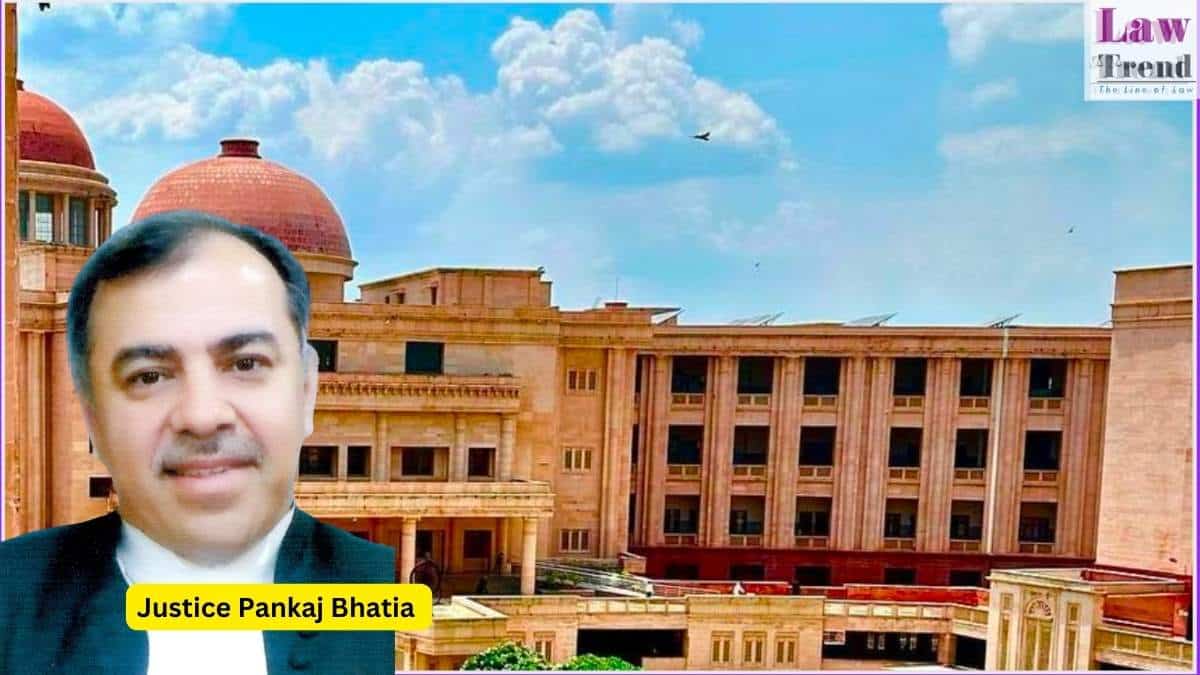

The Lucknow Bench of the High Court of Judicature at Allahabad, presided over by Justice Pankaj Bhatia, has held that an appointment made without a sanctioned post and without the candidate possessing statutory educational qualifications is illegal ab initio, ruling that long teaching experience alone cannot create equity or entitle an individual to regularisation and salary from the State Treasury. The Court dismissed two writ petitions filed by a teacher seeking regularisation and State salary, while clarifying that the petitioner remains entitled to claim salary directly from the school’s Committee of Management.

Background of the Case

The petitioner, Vinod Kumar Singh, was appointed on November 23, 1999, by the Committee of Management (Respondent No. 5). At the time of his appointment, he possessed a B.Sc. in Mathematics along with a degree of ‘Shiksha Alankar’ issued by Rashtriya Patrachar Sansthan, Kanpur. When the State did not disburse his salary, the petitioner approached the High Court in Writ Petition No. 708 (SS) of 2000, obtaining an interim order on April 19, 2000. A Special Appeal (No. 319 of 2001) filed by the State Government against the interim order was subsequently dismissed on October 27, 2009.

Following the dismissal of the appeal, guidance was sought from the Director of Education. In July 2010, an order was passed directing the payment of salary to the petitioner until a regularly appointed candidate in Hindi was selected pursuant to a requisition sent by the management. The petitioner received salary from July 2010 up to August 14, 2013, after which disbursement was stopped.

On October 22, 2020, the authority rejected the petitioner’s claim for salary and regularisation. The rejection was based on two grounds: first, the post was not sanctioned in terms of Rule 9 of the Uttar Pradesh High Schools and Intermediate Colleges (Payment of Salaries of Teachers and Other Employees) Act, 1971; and second, the petitioner lacked the requisite ‘trained’ qualification prescribed under Appendix-A, Chapter-II of the UP Education Manual, as the ‘Shiksha Alankar’ certificate from Rashtriya Patrachar Sansthan, Kanpur was unrecognised and not equivalent to a Bachelor of Education (B.Ed.) degree. The petitioner challenged this rejection in Writ A No. 14526 of 2021. Subsequently, he filed Writ A No. 7109 of 2026, seeking to restrain the respondents from making fresh requisitions or appointments to the post of Assistant Teacher (L.T. Grade Mathematics) until his regularisation claim was decided.

Arguments of the Parties

Counsel for the petitioner contended that when the State introduced Science and Mathematics subjects in schools without sanctioned posts, the Management appointed the petitioner based on his B.Sc. Mathematics and ‘Shiksha Alankar’ qualifications. Relying on communications dated September 6, 2000, and June 25, 2002 (issued by the Samaj Kalyan Vibhag), the petitioner argued that the State had treated ‘Shiksha Alankar’ as equivalent to B.Ed. It was further submitted that since the petitioner had been serving continuously since 1999, his long experience warranted regularisation and payment of salary.

READ ALSO  "Disturbing Factor": Supreme Court Orders Inquiry into its Registry's 3-Year Delay in Listing Bail Cancellation Plea

To support these submissions, the petitioner’s counsel relied on Ram Chandra Dwivedi vs. Director of Education (Civil Misc. Writ Petition No. 47873 of 1999), where the Court observed that long service should not be disturbed after a lapse of time, as well as an order of the Supreme Court in Special Leave to Appeal (C) No. 14907 of 2009.

Conversely, the State Counsel submitted that the petitioner lacked statutory qualifications right from the inception and that no sanctioned post existed, violating Section 9 of the Payment of Salaries Act, 1971. The State relied on Gulam Rasul Warsi vs. State of U.P. (Writ Petition No. 26807 of 2004) and Writ Petition No. 29888 of 2011, which explicitly held that the ‘Shiksha Alankar’ degree is unrecognised and not equivalent to B.Ed. The State also cited Section 33-G of the UP Secondary Education (Services Selection Boards) Act, 1982, which mandates that regularisation requires fulfilling qualifications under the Intermediate Education Act, 1921, and referred to a Full Bench decision in Special Appeal Defective No. 673 of 2014 establishing that no appointment can be valid without a sanctioned post.

READ ALSO  इलाहाबाद हाई कोर्ट के मुख्य न्यायाधीश बने संजय यादव, कॉलेजियम ने की सिफारिश

Court’s Analysis

Examining the statutory framework under the Intermediate Education Act, 1921, the UP Secondary Education (Services Selection Boards) Act, 1982, and the Payment of Salaries Act, 1971, the Court observed that statutory qualifications and prior approval for post creation are non-negotiable prerequisites.

The Court rejected the petitioner’s claim of equivalence, noting that neither the communication dated September 6, 2000, nor the letter dated June 25, 2002, established ‘Shiksha Alankar’ as equivalent to a Bachelor of Education degree as required under Appendix-A. Consequently, the Court held that the appointment was made without a sanctioned post and without the requisite professional training.

Addressing the argument regarding length of service and experience, the Court held that working for a long duration does not create any equity in favor of an candidate appointed illegally. Citing the Supreme Court judgment in Shesh Mani Shukla vs. District Inspector of Schools, Deoria and others [(2009) 15 SCC 436], the Court quoted:

“It is true that the appellant has worked for a long time. His appointment, however, being in contravention of the statutory provision was illegal, and, thus, void ab initio. If his appointment has not been granted approval by the statutory authority, no exception can be taken only because the appellant had worked for a long time. The same by itself, in our opinion, cannot form the basis for obtaining a writ of or in the nature of mandamus; as it is well known that for the said purpose, the writ petitioner must establish a legal right in himself and a corresponding legal duty in the State. (See Food Corpn. of India v. Ashis Kumar Ganguly.) Sympathy or sentiments alone, it is well settled, cannot form the basis for issuing a writ of or in the nature of mandamus. (See State of M.P. v. Sanjay Kumar Pathak.)”

Decision of the Court

The Court concluded that in the absence of a sanctioned post and valid qualifications, no interference was warranted with the order dated October 22, 2020.

Accordingly, the Court dismissed Writ Petition No. 14526 of 2021, while holding that the petitioner remains entitled to claim salary directly from the Committee of Management.

READ ALSO  एक बार जब आधार मामलों की कार्यवाही रद्द कर दी जाती है, तो यूपी गैंगस्टर्स अधिनियम के तहत कार्यवाही को भी रद्द किया जा सकता है: इलाहाबाद हाईकोर्ट

Further, as the petitioner was found ineligible from the very first day, the Court held that he was not entitled to restrain fresh requisitions or appointments, and dismissed Writ Petition No. 7109 of 2026 as well.

Case Details:

Case Title: Vinod Kumar Singh Versus State of U.P. Thru. Secy. Secondary Edu. Lko. and 4 others
Case No.: Writ A No. 7109 of 2026 (Along with Writ A No. 14526 of 2021)
Bench: Justice Pankaj Bhatia
Date: August 6, 2026

Law Trend
Law Trendhttps://lawtrend.in/
Legal News Website Providing Latest Judgments of Supreme Court and High Court

Related Articles

Latest Articles

