

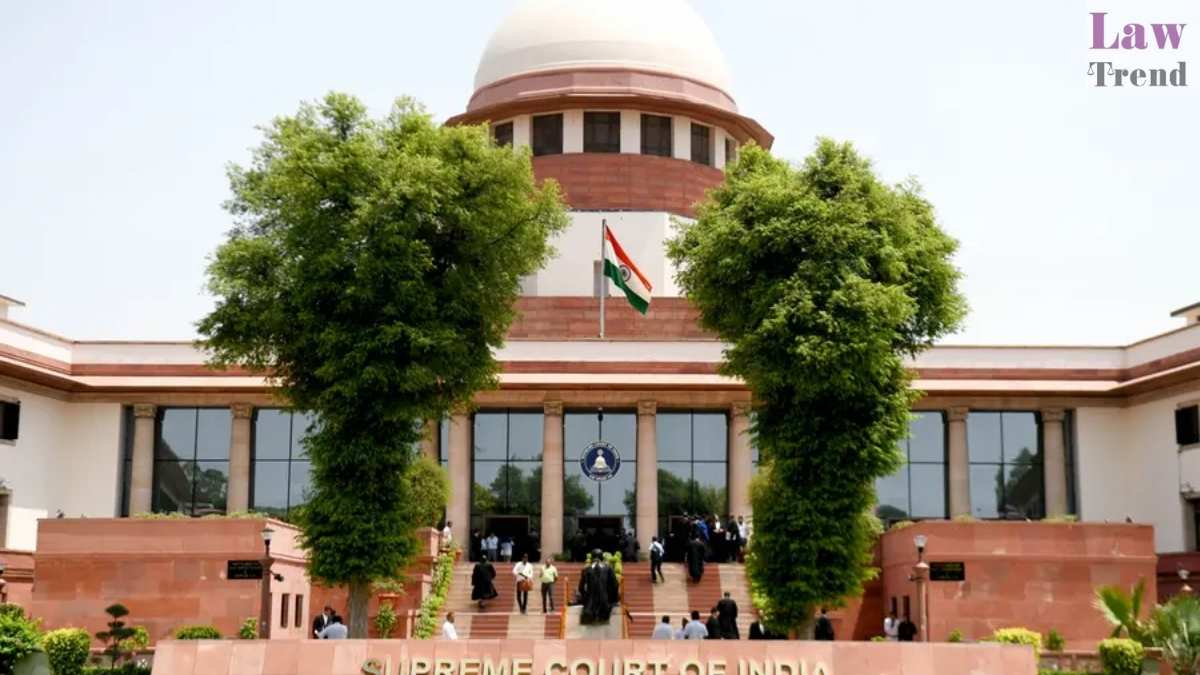
The Supreme Court has held that Order XIV Rule 2(2) of the Code of Civil Procedure cannot be invoked to isolate and decide one issue as a preliminary issue after the court has already commenced trial on all the issues in the suit. A Bench of Justice K.V. Viswanathan and Justice Arun Palli clarified that while the mere framing of all issues does not exhaust the power under Order XIV Rule 2(2), that power ceases once the court has embarked upon a common trial of the issues generally.
The Court explained that the provision permits a court to prospectively direct that a qualifying legal issue be tried first. It does not permit retrospective severance of one issue from an ongoing composite trial for separate preliminary adjudication.
Background
The dispute arose from a suit instituted in 2013 by T. Oommen Panicker seeking, among other reliefs, a declaration that a sale deed dated May 25, 2005 was void, declaration of his title over the suit property and recovery of possession.
The plaintiff had executed a General Power of Attorney in favour of Biju John on May 21, 2005. According to the plaintiff, the GPA authorised Biju John to manage the agricultural property and execute specified documents in circumstances where the plaintiff was obliged to execute them.
The plaintiff, however, alleged that the GPA holder had no authority to independently settle the terms of sale or convey the property. He claimed that the property was nevertheless transferred to John Mathew through the sale deed dated May 25, 2005 without his consent and without consideration being paid to him.
The defendants disputed the allegations. They maintained that the property had been validly transferred with the plaintiff’s full knowledge and consent for a consideration of ₹4 lakh and that the GPA authorised the transaction.
They also raised a plea that the suit was barred by limitation.
The Trial Court framed the issues on July 8, 2015, including an additional issue as to whether the suit was barred by limitation. The suit thereafter proceeded to the stage of evidence.
The plaintiff completed his entire evidence. The defendants then entered upon their evidence and evidence-in-chief had already been adduced on their behalf when, in 2018, John Mathew moved an application seeking determination of limitation as a preliminary issue.
The Trial Court accepted the plea and dismissed the suit as barred by limitation. It applied Article 59 of the Limitation Act after noting that the plaintiff claimed knowledge of the sale deed on May 22, 2009, while the suit was instituted on June 10, 2013.
On appeal, the First Appellate Court affirmed the finding on limitation but modified the order by treating it as rejection of the plaint under Order VII Rule 11(d) CPC.
The Kerala High Court subsequently held that the Trial Court had erred in deciding limitation as a preliminary issue. It, however, went on to conclude that Article 65 of the Limitation Act governed the case and that the suit was within limitation.
Arguments Before Supreme Court
Senior Advocate V. Chitambaresh, appearing for John Mathew, argued that the GPA expressly authorised the execution of sale agreements and sale deeds.
It was submitted that the allegation that the sale deed was void was therefore untenable and that the primary relief in substance was cancellation of the sale deed.
On that basis, Article 59 of the Limitation Act was argued to be applicable. Since the plaintiff stated that he acquired knowledge of the sale deed on May 22, 2009 but instituted the suit only on June 10, 2013, it was contended that the suit was barred by the three-year limitation period.
Senior Advocate V. Giri, appearing for the legal representatives of the plaintiff, disputed the extent of authority conferred under the GPA.
The respondents argued that the plaintiff had specifically pleaded that the sale was made without his consent, that no consideration was paid to him and that the GPA holder had no authority to independently settle the terms of sale.
They submitted that the question whether Article 59 or Article 65 applied would depend upon whether the sale deed was ultimately found to be void or voidable.
When Can An Issue Be Tried As A Preliminary Issue?
The Supreme Court examined the scheme of Order XIV Rule 2 CPC and said that three cumulative requirements must be satisfied before an issue can be tried first under sub-rule (2).
The issue must be an issue of law only, it must relate either to the jurisdiction of the court or to a statutory bar to the suit, and the court must form the opinion that the case or a part of it may be disposed of on that issue.
Even where these requirements are satisfied, the use of the expression “may try that issue first” makes the exercise of the power discretionary.
The Court referred to Ramesh B. Desai v. Bipin Vadilal Mehta and Major S.S. Khanna v. Brig. F.J. Dillon to reiterate that mixed questions of law and fact cannot ordinarily be tried as preliminary issues.
It also relied on Nusli Neville Wadia v. Ivory Properties, where the Supreme Court had held that separate full-fledged evidentiary trials, one for a preliminary issue and another for the remaining issues, are not contemplated by the CPC.
The Court clarified that limitation may in some cases be a pure question of law and in others a mixed question of law and fact. The determining factor is whether disputed facts need to be adjudicated before the legal issue can be answered.
Framing All Issues Does Not Exhaust Power Under Order XIV Rule 2
The Supreme Court drew a distinction between framing an issue and trying an issue.
It said that Order XIV Rule 2(2) does not require the remaining issues to remain unframed before a qualifying issue can be tried first.
A court may frame all issues and simultaneously direct that one qualifying issue be tried first. The power may also remain available after all issues have been framed and the matter has been listed for evidence, provided trial on the issues generally has not actually commenced.
The Court observed:
“The relevant dividing line is, therefore, not whether all issues have been framed, but whether trial of the issues generally has been undertaken. Framing all issues does not exhaust the discretion under Order XIV Rule 2(2); embarking upon their trial does.”
The Court said that the provision authorises a prospective ordering of trial and not a retrospective rearrangement of a trial already underway.
Power Ends Once Common Trial Has Commenced
The Supreme Court identified four procedural situations in which Order XIV Rule 2 may operate.
A court may frame only the qualifying legal issue and postpone settlement of the others. It may frame all issues but direct that a qualifying issue be tried first. It may also invoke Rule 2(2) after framing all issues but before trial on the issues generally has commenced.
However, once the court has already embarked upon trial of the issues generally, the power to direct that one issue be “tried first” is no longer available.
The Court clarified that the word “first” is relational and refers to the position of the trial of the selected issue in relation to the trial of other issues. Once all issues have already entered a common trial, one of them cannot subsequently be treated as an issue yet to be tried first.
Application Seeking Preliminary Decision Came Too Late
Applying the principle to the present dispute, the Supreme Court noted that the plaintiff had already completed his evidence and the defendants had entered upon theirs when the application for deciding limitation as a preliminary issue was filed.
By that stage, the limitation issue was already undergoing trial along with the remaining issues.
The Court observed:
“What Rule 2(2) authorises is a prospective ordering of trial; it does not authorise the Court retrospectively to sever from an ongoing composite trial one issue, and deem it to have been tried first.”
The Bench therefore held that the power under Order XIV Rule 2(2) had already exhausted itself before the application seeking preliminary determination of limitation was moved.
Section 151 CPC Cannot Be Used To Revive The Power
The Court further held that the fact that the application invoked Section 151 CPC did not change the legal position.
It said that the nomenclature of an application cannot determine the source or extent of the court’s power.
Since the CPC specifically regulates the course of trying an issue first through Order XIV Rule 2, the inherent power under Section 151 cannot be invoked to bypass the conditions, sequence or temporal limits attached to that provision.
Supreme Court Clarifies Prithvi Raj And Sathyanath Rulings
The Supreme Court also examined the Full Bench decision of the Himachal Pradesh High Court in Prithvi Raj Jhingta v. Gopal Singh.
It approved the decision to the extent it held that once all issues have been taken up for trial together, the court cannot subsequently sever one of them for prior adjudication.
However, the Supreme Court did not approve the wider proposition that Order XIV Rule 2(2) can be invoked only where the qualifying legal issue alone was framed at the outset and settlement of all other issues was postponed.
The Court also clarified its earlier ruling in Sathyanath v. Sarojamani. It said that Sathyanath reaffirmed the general rule requiring adjudication of all issues where the exception under Order XIV Rule 2(2) was unavailable, but did not extinguish the statutory exception itself.
High Court Should Not Have Decided Limitation On Merits
The Supreme Court held that although the Kerala High Court correctly found fault with the preliminary adjudication of limitation, it should not have proceeded to determine whether Article 59 or Article 65 of the Limitation Act applied.
Once it was held that the limitation issue could not have been segregated from the ongoing trial, the proper course was to restore that issue for adjudication along with the remaining issues.
The Court therefore left open the applicability of the relevant provision of the Limitation Act, the legal character of the disputed transaction and the ultimate determination on limitation.
It also clarified that the observations made by the High Court on those questions would not govern the further proceedings.
Suit Restored, Trial Court Asked To Decide Within Three Months
The Supreme Court set aside the order of the Trial Court, the judgment of the First Appellate Court and the decision of the Kerala High Court.
The application seeking determination of limitation as a preliminary issue was dismissed and the suit was restored to the file of the Munsiff Court, Kottarakara.
The Trial Court was directed to resume proceedings from the stage immediately preceding the interruption caused by the application.
Noting that the suit had been instituted in 2013 and that the issues had been framed in 2015, the Supreme Court requested the Trial Court to decide the suit within three months from receipt of the judgment.
The Court also made it clear that its judgment did not amount to an expression of opinion on the merits of either party’s case and that the Trial Court must decide the suit independently in accordance with law.
Case Title: John Mathew v. Santha Paul & Ors.
Case No.: Civil Appeal arising out of SLP (C) No. 34086 of 2025
Bench: Justice K.V. Viswanathan and Justice Arun Palli
Date: September 21, 2026




