

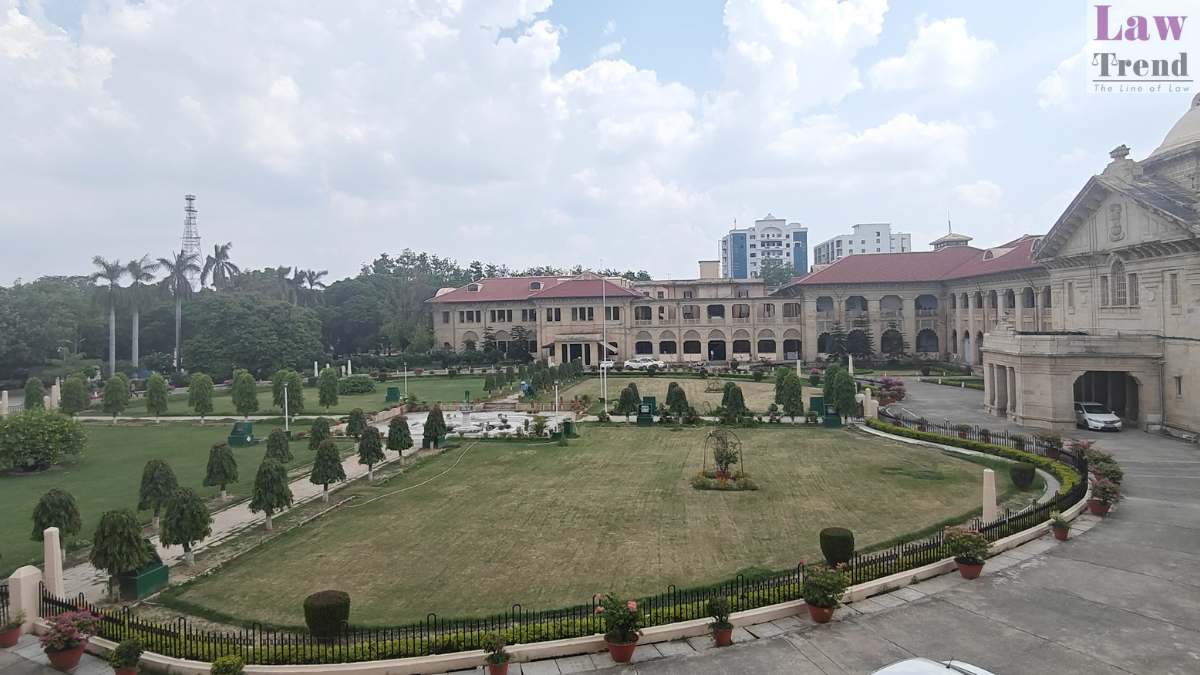
The Allahabad High Court has nullified the detention of Delhi University student activist Akriti Chaudhary under the National Security Act, directing the Uttar Pradesh administration to pay her Rs 5 lakh in compensation to be deducted directly from the salaries of the Gautam Buddha Nagar district magistrate and responsible police personnel.
In a 15-page ruling delivered on September 2, a division bench comprising Justice Atul Sreedharan and Justice Achal Sachdev determined that Chaudhary’s imprisonment infringed upon her fundamental right to life and personal liberty guaranteed under Article 21 of the Constitution. The judges observed that the detention directive was issued without due consideration of facts and lacked any substantiate material.
Judicial Rebuke And Penalties For Bureaucracy
The court directed that the Rs 5 lakh compensation awarded to Chaudhary be recovered from the personal salary of Gautam Buddha Nagar District Magistrate Medha Roopam, along with every involved officer down to the station house officer who initiated the dossier. The bench further instructed the state to log its judicial displeasure directly into the service records of the district magistrate and the police officers implicated in drafting the detention proposal.
Issuing a stern warning against authoritarian administrative actions, the bench observed that unchecked despotic behaviour by an errant civil service threatened to transform the state into an Orwellian dystopia. The judges reiterated that administrative and police authorities are public servants whose primary allegiance lies with the Constitution rather than the political executive. The court cautioned that when functionaries discard their constitutional obligations, the public may come to regard them as oppressive remnants of the colonial era, fostering civil unrest.
The judges also held that where police dossiers present bare allegations devoid of corroborating evidence, district magistrates are legally required to scrutinise the records thoroughly before sanctioning preventive detention. The bench described the district magistrate’s conduct in Chaudhary’s case as worthy of derision, concluding that the authority appeared intent on making an example of the young activist to discourage citizens from exercising their constitutional freedoms in support of industrial workers.
Procedural Irregularities In Custody Records
The court uncovered significant anomalies regarding the sequence of Chaudhary’s arrest. While official records claimed she was taken into custody on April 12, she had in fact been apprehended around 5:30 p.m. on April 11 near the Botanical Garden Metro Station in Noida.
To justify the arrest, state authorities presented a notice issued under Section 130 of the Bharatiya Nagarik Suraksha Sanhita, which pertains to security bonds for good behaviour. However, the document cited General Diary Entry No. 37, a log that was only registered at 10:20 a.m. on April 12.
The court noted that an authentic pre-arrest notice could not have incorporated a subsequent diary entry number. Justice Sreedharan observed that the inclusion of the entry confirmed Chaudhary was already in custody when the paperwork was drafted, branding the post-arrest notice a sham and noting that the deliberate omission of a timestamp was intended to conceal the manipulation.
Background Of The Noida Protests
Chaudhary, a 25-year-old history graduate from Delhi University with no criminal antecedents, was originally detained alongside other demonstrators following peaceful demonstrations organised by Noida factory workers demanding higher wages in April 2026.
On May 13, the Uttar Pradesh Police invoked the National Security Act against both Chaudhary and activist-journalist Satya Verma.
Reviewing the grounds cited for her continued detention, the high court dismissed them as repetitive, speculative, and grounded purely in official opinion without supporting evidentiary material. The bench emphasised that the National Security Act represents an exceptional legal measure that administrative authorities cannot deploy as a shortcut or substitute for ordinary criminal procedure.
Defence Of Democratic Agitation
Affirming the right to public protest, the high court held that the constitutional guarantee of free expression encompasses the right of citizens to assemble peacefully on public streets to demand their rights.
The bench cautioned administrative agencies against suppressing public demonstrations on speculative assumptions of potential disorder, remarking that banning public assemblies simply out of fear of unrest amounted to throwing the baby out with the bathwater. The judges stressed that collective expression cannot be compromised or curtailed based merely on the subjective impressions of the state.


