

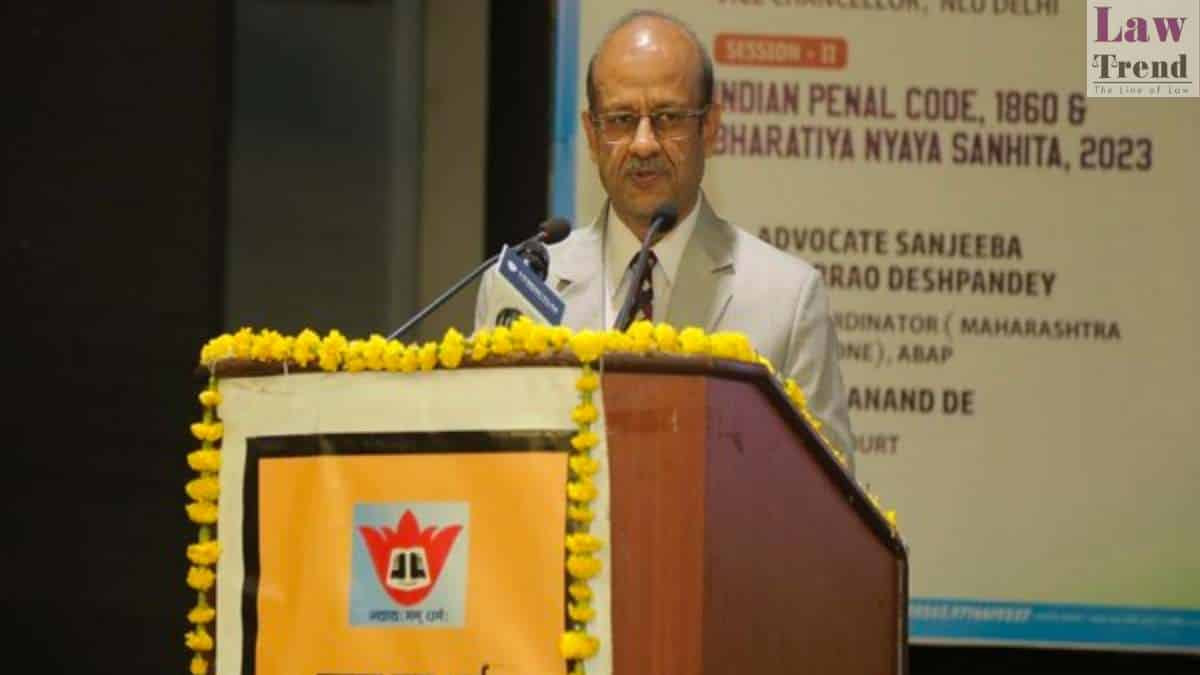
In a significant caution regarding the integration of technology in the Indian legal system, Supreme Court Justice Rajesh Bindal has asserted that Artificial Intelligence (AI) and digital tools must remain “supportive instruments” and never be permitted to override human judicial reasoning.
The remarks were delivered during a two-day national conference titled ‘Judicial Process Re-engineering and Digital Transformation,’ held on April 11-12. The event was organized by the Supreme Court’s eCommittee in collaboration with the Department of Justice, Government of India, to chart the future of technology in the judiciary.
Chairing a working session on the second day of the conference, Justice Bindal addressed the growing influence of automation in legal processes. While acknowledging the efficiency gains of digital transformation, he emphasized that the core of the judicial process—reasoning and decision-making—must remain firmly in human hands.
“AI and digital tools must be used as supportive instruments and should not be allowed to override judicial reasoning,” Justice Bindal stated, according to a press release issued by the eCommittee.
Beyond the philosophical concerns of AI, Justice Bindal also flagged practical security risks. He raised alarms regarding the use of open-source platforms within the judicial framework, citing potential threats to data confidentiality and the sensitive nature of legal documentation.
The conference served as a high-level forum for top jurists, including Chief Justices and judges from various High Courts, IT committee members, and central project coordinators. The program was structured into five working sessions, each focusing on different facets of judicial re-engineering.
- Day One: Three sessions were dedicated to expert discussions on the transformation of judicial processes and how technology can bridge gaps in the current justice delivery system.
- Day Two: Justice Bindal led the fourth session on technological aids, while the fifth session, chaired by Justice Sandeep Mehta, showcased specific technological advancements already implemented by various High Courts across the country.
The event concluded with a valedictory address by Justice J.K. Maheshwari. He highlighted the critical need for continued judicial reforms, noting that technological advancement is a cornerstone of an evolving and efficient justice delivery system.
The conference underscores the Supreme Court’s commitment to modernization while simultaneously establishing the “guardrails” necessary to protect the integrity and confidentiality of the law.




