

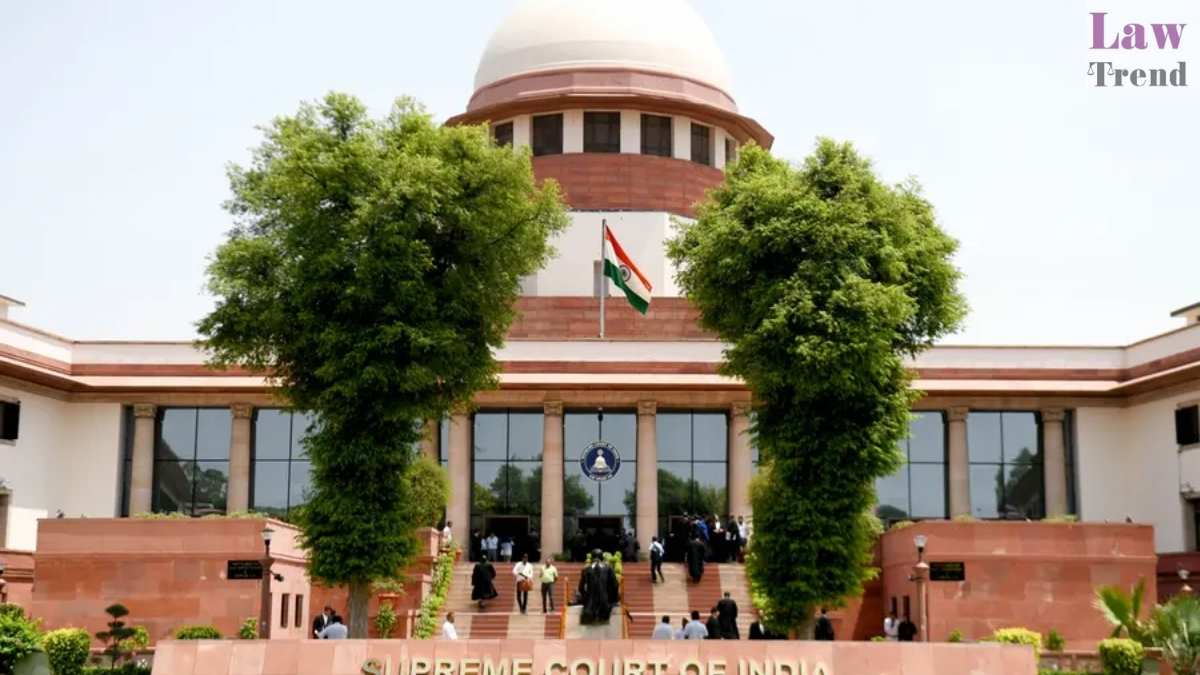
The Supreme Court has upheld Regulation 7(2) of the Uttarakhand Public Service Commission (Conditions of Service) Regulations, 2004, which allows the pension of a retired Government servant appointed as Chairman or Member of the Commission to be deducted from the salary of that post. Setting aside two judgments of the Uttarakhand High Court, the Court held that the “pay minus pension” principle does not violate the doctrine of “equal pay for equal work”.
A Bench of Justice S.V.N. Bhatti and Justice N.V. Anjaria allowed the appeals filed by the State of Uttarakhand, holding that the High Court committed a manifest error in declaring the provision ultra vires.
Background
Lieutenant General (Retd.) M.C. Bhandari retired from the Indian Army on August 30, 2006, and was appointed Chairman of the Uttarakhand PSC by order dated November 3, 2006. His salary was fixed at a basic pay of ₹26,000, from which ₹17,627, the pension he was drawing, was deducted.
In the connected case, Sohan Lal, a Provincial Civil Service officer, took voluntary retirement as Additional Secretary, Government of Uttarakhand, on July 20, 2006, and was appointed a Member of the Commission the same day. From his basic pay of ₹22,500, his pension of ₹11,025 was deducted.
Bhandari’s representation seeking refixation of salary was rejected on June 30, 2007. An Office Memorandum dated September 16, 2008, then recorded the Governor’s determination under Regulation 7(2) that pension would be deducted from the basic pay of retired officers appointed as Chairman or Member.
On April 15, 2010, the High Court declared Regulation 7(2) ultra vires Article 14 read with Article 39(d) of the Constitution, holding that the deduction breached the principle of “equal pay for equal work”, and set aside the Office Memorandum.
Arguments
Counsel Abhishek Atrey appeared for the State. Senior Counsel Harshvir Pratap Sharma and counsel Rohan Thawani appeared for the respondents.
The State submitted that the “pay minus pension” norm has been consistently applied to retired Government servants appointed to Constitutional posts after superannuation, including posts in the Uttarakhand PSC. It also relied on paragraph 526 of the Civil Service Regulations, which contemplates reduction of pay by the amount of military pension on civil re-employment.
On behalf of the respondents, it was contended that the Governor’s determination came after their appointment and that the Office Memorandum of 2008 could not be applied retrospectively.
Pension Is Withheld, Not Withdrawn
The Court explained that the deducted pension is only kept in abeyance during the tenure and revives once the officer leaves office. “In other words, there is no withdrawing of the pension, it is only the withholding during the period when the posts of the Chairman or, as the case may be, the Member of the Uttarakhand PSC is held.”
Rejecting the High Court’s reasoning, the Bench held: “The High Court wholly misdirected itself in reasoning that the principle of “equal pay for equal work” was violated and resultantly Regulation 7(2) was ultra vires Articles 14 and 39(d) of the Constitution.”
The Court also agreed with the High Court that the deduction did not amount to a variation of service conditions under the proviso to Article 318. Relying on Gurmesh Prakash Bishnoi v. State of Haryana, it noted that an embargo on receiving pension during a later tenure lifts once that tenure ends.
On the retrospectivity plea, the Court said nothing in Regulation 7(2) required the Governor to decide simultaneously with or before the appointment. Having examined the file notings, it found the decision was duly taken, and held that “at the best, the Office Memorandum reflecting the decision operated retroactively.”
It further noted that adding pension to salary would lead to absurd consequences, as the total “would exceed the actual salary payable for the post and perhaps would become more than the salary of the highest post.”
Estoppel and Acquiescence
The Court held that both officers accepted their posts knowing the Regulations applied, and were estopped from disputing them. “One who participates in a game, cannot later challenge the rules of the game.”
It added that a Government servant who accepts a post “cannot afterwards be permitted to resile from or to agitate in respect of the service conditions and the service regulations attached to the post which he accepted.” Since the challenge was raised after more than two years, at the fag end of the tenure, the principle of acquiescence also applied.
Outcome
The High Court’s judgments dated April 15, 2010, in Writ Petition Nos. 182 (SB) and 181 (SB) of 2008 were set aside, and the appeals were allowed.
Case Title: State of Uttarakhand Thr. Chief Secretary and Others v. M.C. Bhandari and Another
Case No.: Civil Appeal No. 1614 of 2011 with Civil Appeal No. 1615 of 2011
Bench: Justice S.V.N. Bhatti and Justice N.V. Anjaria
Date: November 4, 2026


