

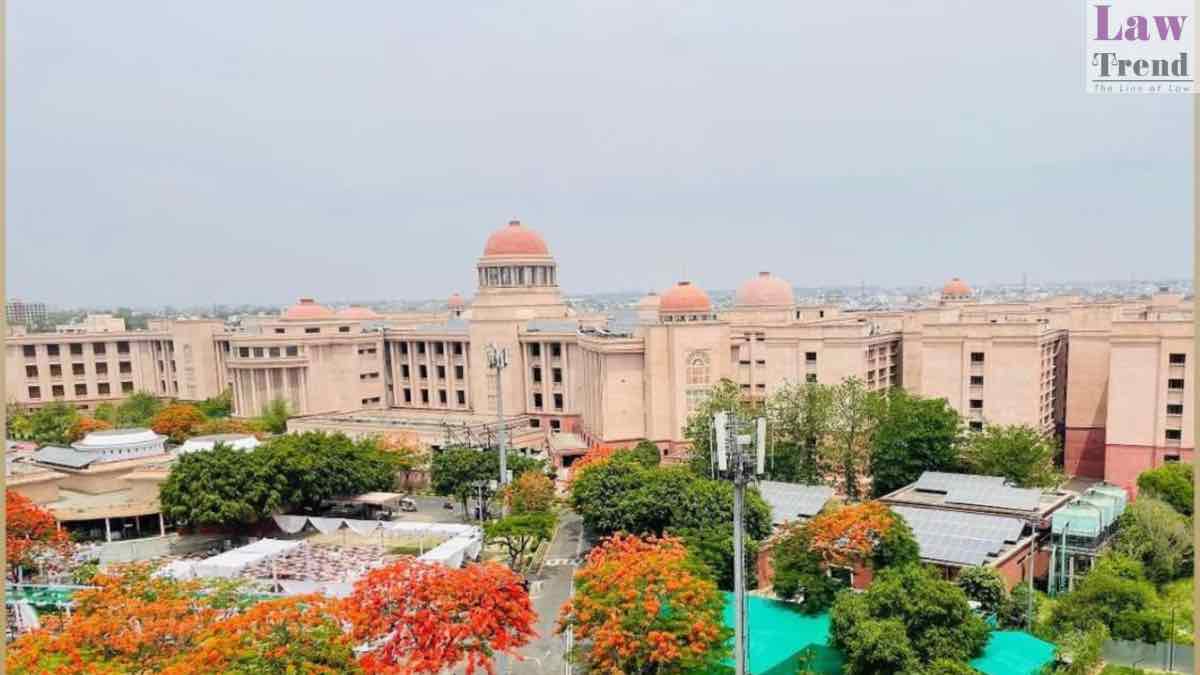
The Allahabad High Court at Lucknow has upheld the life imprisonment of three men convicted for the 2012 shooting of Dharmendra Singh in Sultanpur. The Court held that lapses by the Investigating Officer cannot benefit the accused when the eyewitness account is reliable and is corroborated by the medical evidence.
A Bench of Justice Rajesh Singh Chauhan and Justice Zafeer Ahmad dismissed two criminal appeals filed by Pankaj Singh, Brijesh Singh and Satish @ Sonu Singh. All three remain in custody to serve their sentences.
Background
According to the prosecution, on June 9, 2012, at about 8 PM, Dharmendra Singh and his brother Jag Jeevan Singh went to the house of Raj Bahadur Singh to complain about the conduct of his grandson, Anil Singh. When Dharmendra chased Anil, the accused allegedly arrived armed with country-made pistols. Pankaj Singh allegedly exhorted the others to kill Dharmendra, blaming him for the loss of the Pradhan’s post from their family and the cancellation of the ration quota.
Dharmendra fell into a drain, and Satish allegedly shot him in the head. He died at the Trauma Centre, Lucknow, the next day. The deceased’s wife, Sunita Singh, had defeated Pankaj Singh’s wife in the Gram Pradhan election.
The FIR was lodged on June 11, 2012. On December 23, 2017, the Additional Sessions Judge/F.T.C.-2, Sultanpur, sentenced the three to life imprisonment with a fine of ₹50,000 each under Section 302/34 IPC, along with sentences under Sections 504 and 506 IPC. Satish was also sentenced under Section 3/25 of the Arms Act. A fourth accused, Ritesh Singh, escaped custody during the trial, and his case was separated.
Arguments
Counsel Nagendra Mohan, assisted by Salil Mohan, appearing for the appellants, argued that the case arose from admitted election enmity. He pointed to the delayed FIR, omissions in the earliest version, the absence of medical support for an alleged second gunshot, and doubts over the presence of injured witness Rahul Singh. He also argued that the investigation failed to secure bloodstained articles and a forensic link between the recovered weapon and the bullet.
Additional Government Advocate Anurag Verma, along with Brij Mohan Sahai, assisted by Shaila Zubair, for the complainant, opposed the appeals. The State submitted that the medical evidence supported the fatal injury, that rivalry did not by itself prove false implication, and that investigative lapses could not discard otherwise credible evidence.
Court’s Findings on Defective Investigation
The Court found the delay in lodging the FIR satisfactorily explained, as the family was attending to the injured man and later completing post-mortem formalities. On omissions in the FIR, it observed, “An FIR is not an encyclopedia of the prosecution case and is not required to contain every minute detail of the occurrence.”
The Bench described the investigation as unsatisfactory, citing the failure to collect bloodstained clothes, the delayed recording of Rahul Singh’s statement and the absence of a ballistic report. However, it held, “the Court has to distinguish between a deficiency in the investigation and a deficiency in the substantive proof of the offence. The former cannot automatically result in the latter.”
On the missing ballistic report, the Court noted that the neurosurgeon had found a bullet lodged in the deceased’s head and held that “the absence of a ballistic comparison does not leave the Court without evidence regarding the homicidal firearm injury.”
While recording its disapproval of the investigation, the Bench added, “But the Court cannot permit these investigative lapses to overshadow reliable substantive evidence or to create an artificial doubt where the evidence as a whole does not warrant one.”
Common Intention and Alibi
The Court treated the description of a second shot to the stomach as an exaggeration, but held that the core account of Satish firing the fatal head shot was medically corroborated. Rejecting the argument that only the shooter could be held liable, it held that Section 34 IPC “is precisely intended to meet a situation where several persons participate in a criminal act pursuant to a common intention, though the ultimate act may be physically committed by only one of them.”
The plea of alibi was rejected as a bare assertion. The Court noted that the defence witnesses were relatives or acquaintances who deposed five years later at the request of the accused.
Outcome
Finding no perversity or illegality in the trial court’s judgment, the Bench dismissed both appeals and affirmed the convictions and sentences.
Case Title: Satish @ Sonu v. State of U.P., along with Pankaj Singh & Anr. v. State of U.P.
Case No.: Criminal Appeal No. 54 of 2018 with Criminal Appeal No. 47 of 2018
Bench: Justice Rajesh Singh Chauhan and Justice Zafeer Ahmad
Date: 30.10.2026


