

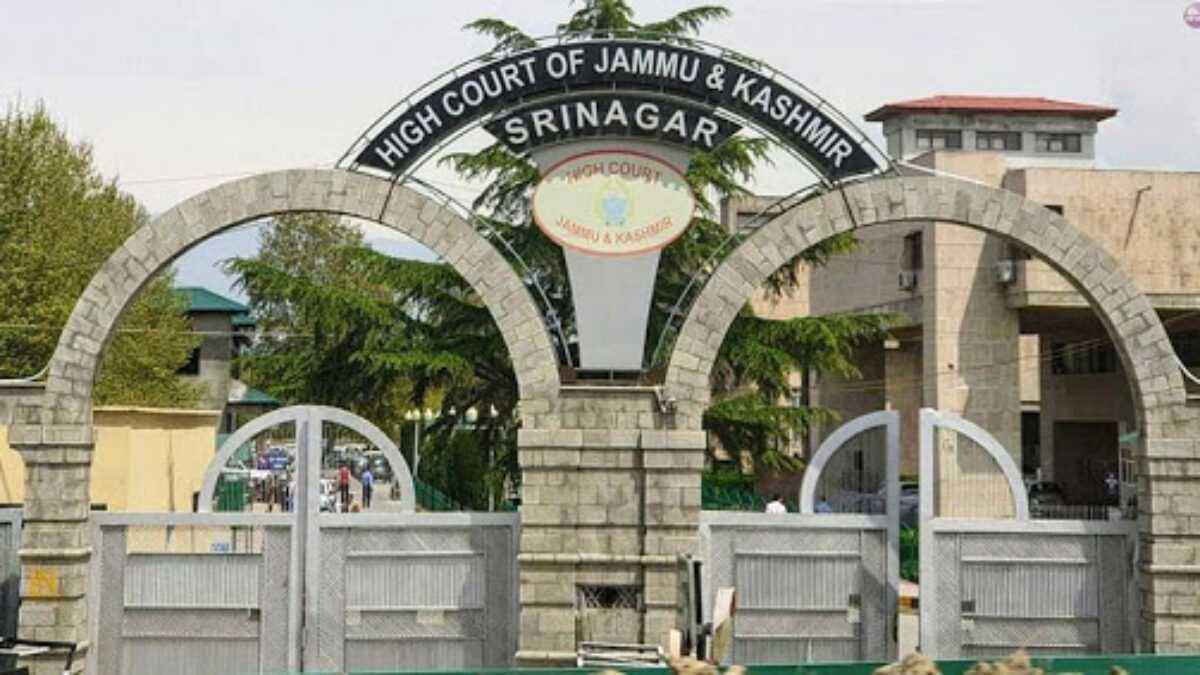
The Jammu and Kashmir and Ladakh High Court has struck down provisions of the Jammu and Kashmir Water Resources (Regulation and Management) Act, 2010, that authorised the collection of water usage charges from hydropower projects, holding that the levy effectively amounted to a tax on electricity generation beyond the legislative competence of the Union Territory legislature.
A Division Bench of Justices Rajnesh Oswal and Sanjay Dhar allowed petitions filed by independent power producers and quashed all consequential demand notices issued by the government since 2010. The court also prohibited the administration from imposing taxes on electricity generation in the form of water usage charges.
The ruling came on petitions filed by several companies, including Mass N Energy Pvt Ltd, Magpie Hydel Construction Operation Industries Pvt Ltd and Choudhary Power Projects Pvt Ltd, challenging the validity of the statutory provisions and the demands raised under them.
Charges Linked to Electricity Generation, Not Water Consumption
The central question before the High Court was whether the disputed levy constituted a permissible charge for the use of water or a tax on the generation of electricity.
Examining the method used to determine the charges, the Bench found that the assessment depended on factors such as head-height and turbine propulsion rather than the actual volume of water consumed by the power projects.
The judges concluded that the nature of the levy had to be determined by its substance rather than its description in the legislation. Since the charges were calculated using factors connected with electricity production, they constituted a tax on electricity generation and not a regulatory fee for water use.
The court distinguished between the legislature’s authority to regulate water resources under Entry 17 of List II of the Constitution and its competence to impose a tax on electricity generation.
It held that the former did not confer the power to introduce the disputed levy.
2019 Reorganisation Act Could Not Validate Unconstitutional Provisions
The administration argued that the Jammu and Kashmir Reorganisation Act, 2019, had preserved the 2010 legislation and provided it with parliamentary backing.
Rejecting this argument, the High Court referred to Supreme Court precedents concerning laws that were unconstitutional from their inception.
The Bench held that subsequent parliamentary adoption could not cure a law that was void ab initio because the legislature originally lacked the constitutional authority to enact it.
In its 50-page judgement, the court explained that the Reorganisation Act provided for the continuation of certain existing state enactments and the repeal of others. Those provisions did not validate legislation that was constitutionally defective from the beginning.
The judges also described the administration’s order as appearing to be a desperate attempt to preserve the challenged legislation.
Demand Notices Set Aside
Declaring the disputed provisions unconstitutional to the extent that they imposed water usage charges on the petitioning power producers, the High Court granted relief to the companies.
The ruling invalidated the government’s demands raised under the offending provisions from 2010 onwards and barred the imposition of similar taxes on electricity generation disguised as water usage charges.
Senior Advocate Pranav Kohli (Jammu), Advocate Shariq J Reyaz and other counsel represented the petitioning companies. Senior Additional Advocate General A R Malik and Deputy Solicitor General T M Shamsi argued the administration’s case.


