

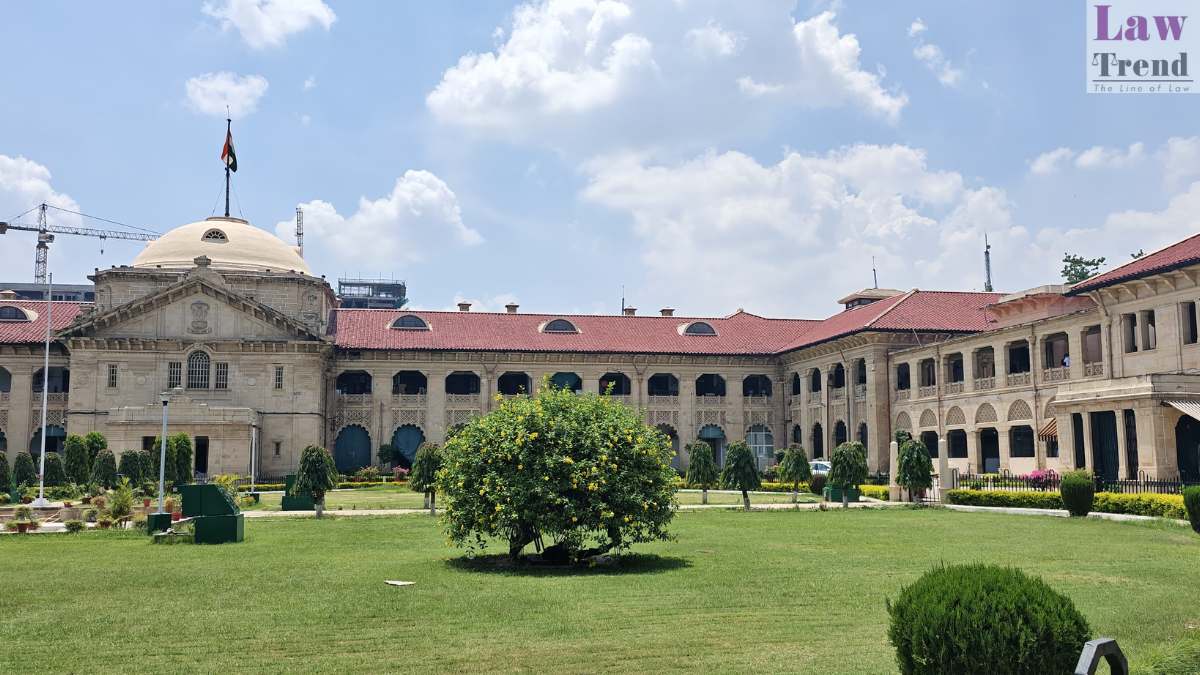
The Allahabad High Court has upheld the termination of a government school clerk whose appointment was made against a permanent post, holding that employment does not become permanent merely because the post itself is permanent. However, the Court prohibited the Uttar Pradesh government from recovering salaries paid to the employee during nearly 31 years of service under an interim judicial order.
Justice Anish Kumar Gupta, in an order dated October 24, dismissed the employee’s petition challenging his termination on September 29, 1995. The Court found that his appointment remained temporary in the absence of a formal confirmation order and that the termination did not require a prior hearing under Article 311(2) of the Constitution.
The Court nevertheless protected the payments received by the employee pursuant to its November 1, 1995, interim order, which had allowed him to continue receiving his salary while the petition remained pending.
Permanent Post Does Not Make Appointment Permanent
The dispute centred on the legal status of an employee appointed as a junior clerk at a government school for children with hearing and speech impairment in Etawah.
The High Court examined the Uttar Pradesh Temporary Government Servants (Termination of Service) Rules, 1975, and the Uttar Pradesh State Government Servants Confirmation Rules, 1991.
It found that the 1975 rules recognise officiating service against a permanent post as temporary service. The Court also noted that confirmation under the 1991 rules requires a formal order.
Although the junior clerk position was permanent, the employee’s appointment letter expressly described his engagement as temporary. No subsequent order had confirmed him in service.
The Court further considered the circumstances in which the school had recruited its initial employees. Established in 1990, the institution had made ad hoc appointments to begin functioning while awaiting regular recruitment.
The judge concluded that such appointments could not acquire permanent status solely because they were made against sanctioned permanent positions.
No Prior Hearing Required For Non-Punitive Termination
The employee had challenged the termination on the ground that he was appointed through the prescribed selection procedure against a permanent vacancy.
He argued that the authorities could not invoke the 1975 termination rules against him and that removing him without an opportunity to be heard violated the constitutional protection under Article 311(2).
The state government maintained that the appointment was temporary and had never been regularised through a formal confirmation order.
Accepting the state’s position, the High Court held that the termination order was not punitive and amounted to termination simpliciter under the applicable service rules.
Consequently, the Court found that the constitutional safeguards under Article 311(2) were not attracted in the circumstances and that the authorities were not required to conduct an inquiry or provide a hearing before issuing the termination order.
The Court found no illegality in the government’s decision and upheld the termination with effect from September 29, 1995.
Clerk Continued Receiving Salary Under 1995 Interim Order
The employee had received his appointment letter on May 8, 1991, for the junior clerk position in the pay scale of Rs 950-20-1150-25-1500. He joined the school on July 8, 1991.
Following his termination on September 29, 1995, he approached the High Court.
On November 1, 1995, the Court issued an interim direction requiring the authorities to clear his salary arrears and continue paying his monthly salary as it became due.
Although the Court had indicated that the petition should be decided within six months, the proceedings continued for approximately three decades.
As a result, the employee remained in service and received salary payments under the interim order while the legality of his termination awaited final adjudication.
Court Bars Recovery Of Salary Paid During Litigation
While dismissing the petition, the High Court considered the consequences of allowing the termination to operate retrospectively after such a prolonged period.
The judgement recorded that the employee was 28 years old when he instituted the proceedings and would be approximately 59 at the time of their conclusion.
Despite holding that the termination was legally valid from September 29, 1995, the Court directed that the government could not recover any amount paid to him pursuant to the interim order of November 1, 1995.
The judgement did not determine the total salary received during the intervening period or identify any specific amount proposed for recovery.
The Court also did not grant additional compensation to the employee.
Accordingly, the petition stood dismissed, the original termination remained effective from September 29, 1995, and the salary payments made under the Court’s interim directions were protected from recovery.


