

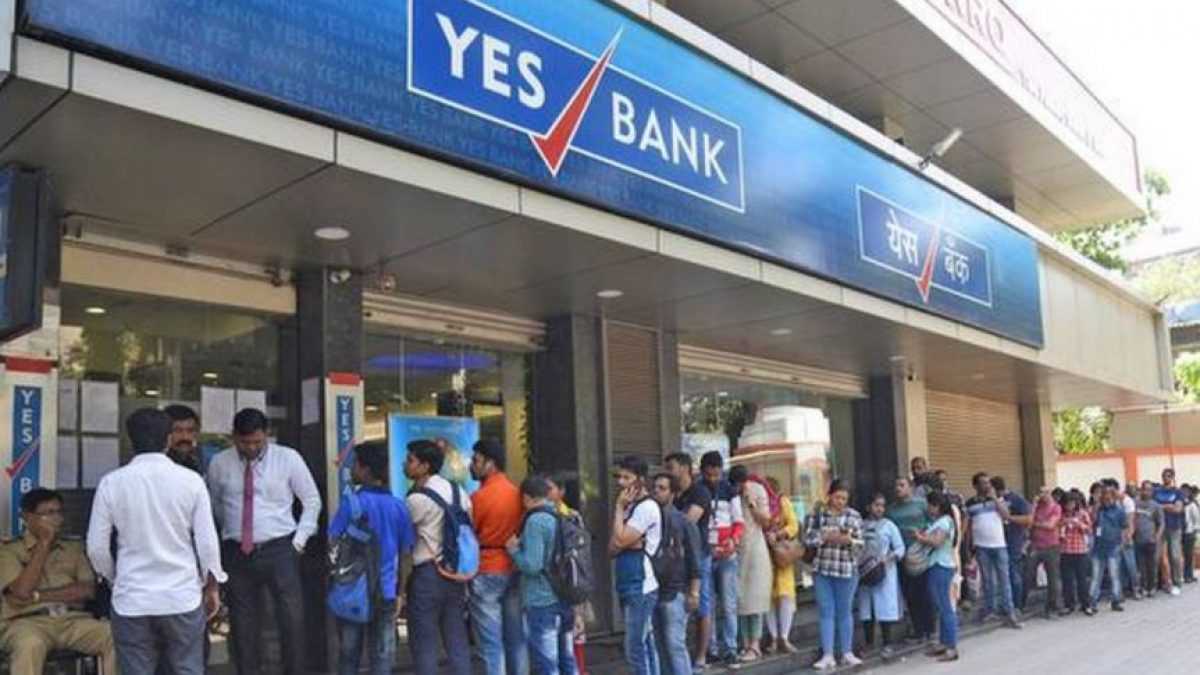
In a significant judicial setback for Yes Bank Limited, a Supreme Court bench comprising Justice Dipankar Datta and Justice Augustine George Masih dismissed the appeals filed by the bank, the Reserve Bank of India, and the Union of India, upholding the Bombay High Court’s verdict that quashed the permanent write-down of Additional Tier 1 (AT-1) bonds worth over Rs 8,415 crore. The Court held that the bank’s Administrator acted without legal authority and ultra vires both the statutory Reconstruction Scheme and the RBI Master Circular, directing that the liability toward the annual coupon rate on the bonds remains fully intact as per the Information Memoranda.
Background and Yes Bank’s Financial Turmoil
Yes Bank had issued Basel III compliant AT-1 bonds in the nature of non-convertible debentures across two tranches: Rs 3,000 crore on December 23, 2016, and Rs 5,415 crore on October 18, 2017, appointing Axis Trustee Services Limited as the debenture trustee. The bank’s financial condition witnessed a severe decline, culminating in its Common Equity Tier 1 (CET1) ratio plunging to an astonishing 0.6% by December 31, 2019, against the mandatory regulatory benchmark of 7.375%.
Following failed capital-raising efforts, the Central Government placed Yes Bank under a moratorium on March 5, 2020, under Section 45 of the Banking Regulation Act, 1949. Concurrently, the RBI superseded Yes Bank’s Board of Directors under Section 36ACA of the Act and appointed an Administrator. Although the Draft Reconstruction Scheme published on March 6, 2020, contained an explicit clause permanently writing down the AT-1 bonds, that specific provision was omitted in the final ‘Yes Bank Limited Reconstruction Scheme, 2020’ notified on March 13, 2020. Despite this omission, the Administrator on March 14, 2020, issued an order extinguishing the bonds in full and communicated the decision to stock exchanges, prompting bondholders to challenge the order before the Bombay High Court.
Yes Bank’s Defence Before the Supreme Court
Appearing for Yes Bank and the Administrator, Senior Counsel Shyam Divan and Balbir Singh, supported by Solicitor General Tushar Mehta for RBI and State Bank of India, vigorously defended the write-down. They argued that setting aside the Administrator’s action would trigger a severe financial avalanche across the banking system, undoing the very reconstruction designed to rescue Yes Bank.
The bank submitted that a synchronized strategy of a “bail-in” (writing down the AT-1 bonds) and a “bail-out” (infusion of equity by SBI) was fundamentally indispensable to restore Yes Bank’s financial health and capital adequacy. Furthermore, Yes Bank contended that under Clause 6(1) of the Reconstruction Scheme—which preserved subsisting contracts and powers—the Administrator retained the inherent authority to effectuate the write-down.
Relying on the statutory definition of a “reconstructed bank”, Yes Bank contended that reconstruction is an ongoing, continuous process that does not conclude until every single obligation under the Scheme is discharged. On this premise, the bank argued that the authority to write down the bonds subsisted with the Administrator throughout the multi-year implementation of the Scheme.
The respondents, led by Senior Advocates C.A. Sundaram, Dr. Abhishek Manu Singhvi, and Neeraj Kishan Kaul, resisted the bank’s stance, arguing that once the Central Government deliberately abandoned the write-down provision in the final Scheme, the Administrator could not bypass that decision. They also argued that under Clause 2.15 of Annex 16 of the Master Circular, the power to effectuate a write-down at the Point of Non-Viability (PONV) belonged solely to the RBI, not the bank or its Administrator, and had to take place strictly before reconstitution took effect.
Supreme Court Rejects Yes Bank’s Stand
The Court declined Yes Bank’s plea to view the write-down through subsequent developments or its post-reconstruction recovery, ruling that an administrative action must be evaluated solely based on the legal position and facts on March 14, 2020.
Addressing the bank’s core argument regarding the Administrator’s continuing powers under the Reconstruction Scheme, the bench held that the deletion of the write-down clause was a deliberate act of the Central Government. The Court observed:
“If it were the intention of the Central Government to allow the Administrator to write down the AT-1 Bonds after publication of the Reconstruction Scheme even after exclusion of the relevant clause from the Draft Scheme, that would have made it susceptible to face the criticism of acting clandestinely and the accusation of committing an act amounting to a fraud on public. We do not, for a moment, think that the Central Government intended to have the AT-1 Bonds written down, having regard to the turn of events right from 3rd March, 2020. Instead, it happened to be the Administrator who, in our opinion, acted under an erroneous impression or mistaken belief that reconstruction of YES BANK by virtue of the Reconstruction Scheme notwithstanding, he retained the authority to write down the AT-1 Bonds. This, in our opinion, was an impermissible act and ultra vires the Master Circular read with the Reconstruction Scheme.”
Rejecting Yes Bank’s reliance on general savings clauses, the Court emphasized that “a power not specifically conferred cannot be implicitly vested through a general, omnibus savings clause.”
On the bank’s contention that the write-down could occur at any point while reconstruction was ongoing, the Court interpreted the phrase ‘before reconstitution’ in Clause 2.15 of Annex 16 of the Master Circular, noting that ‘before’ strictly means before the Scheme takes effect:
“To read the clause in its present form in the manner urged by Mr. Divan would not only defeat the very object of the AT-1 Bonds but would produce an inherent absurdity, leaving investors to wonder at what point the guillotine blade might fall.”
The Court drew a parallel with the amalgamation of Lakshmi Vilas Bank Limited with DBS Bank India Limited, where Tier 2 bonds were written down on November 26, 2020, one day prior to the amalgamation scheme taking effect on November 27, 2020.
Examining Section 36ACA of the Banking Regulation Act, the Court held that the Administrator merely steps into the shoes of Yes Bank’s Board of Directors and cannot usurp regulatory authorities vested solely in the RBI. The bench ruled:
“The Administrator could not have assumed the regulatory role of the RBI and exercise a power which it did not have at all.”
While acknowledging Yes Bank’s argument that both a bail-in and bail-out were practically necessary, the Court observed that “mere necessity cannot possibly circumvent the manner in which the write down ought to have been exercised.”
Strictures on Yes Bank’s Conduct and Retail Sales
The Supreme Court took severe exception to the conduct of Yes Bank and regulatory authorities, highlighting the lender’s failure to act on early warnings and its improper distribution of high-risk bonds to individual investors:
“The triumvirate of the RBI, the Administrator, and of course, YES BANK, in conducting the entire affair of dealing with the bonds worth more than 8,514 crore is, to put it mildly, questionable. Putting the investors to such uncalled-for risk, could have well been avoided. The purpose of the AT-1 Bonds is imperative: it acts as a safety barrier to the Bank from collapsing altogether. That purpose could have been served had the RBI and YES BANK acted in accordance with the terms of the Master Circular. The RBI was a mere bystander, allowing the CET1 ratio of YES BANK to drop to an astonishing low of 0.6% while the business of YES BANK was being carried out in a clandestine manner.”
The Court further reprimanded Yes Bank for selling institutional-grade instruments to retail investors:
“However, we find that YES BANK not only permitted but actively offered these instruments to individual investors in violation of the Master Circular… A tighter scrutiny ought to have been exercised before luring individual investors to such high-risk securities.”
The Decision
The Supreme Court dismissed the appeals filed by Yes Bank, the RBI, and the Union of India, vacating all interim orders. Upholding the Bombay High Court’s judgment, the bench ordered that the payment of the annual coupon rate on the AT-1 bonds remains unaffected by the litigation and must be honoured strictly under the terms of the Information Memoranda. The parties were directed to bear their own costs.
Case Details
Case Title: Yes Bank Limited & Anr. v. Axis Trustee Services Limited & Ors. (with connected matters)
Case No.: Civil Appeal No. 3182 of 2025 (with Civil Appeal Nos. 3193-3202 of 2025, 3183-3192 of 2025, and 3203-3212 of 2025)
Bench: Justice Dipankar Datta, Justice Augustine George Masih
Date: October 15, 2026




