

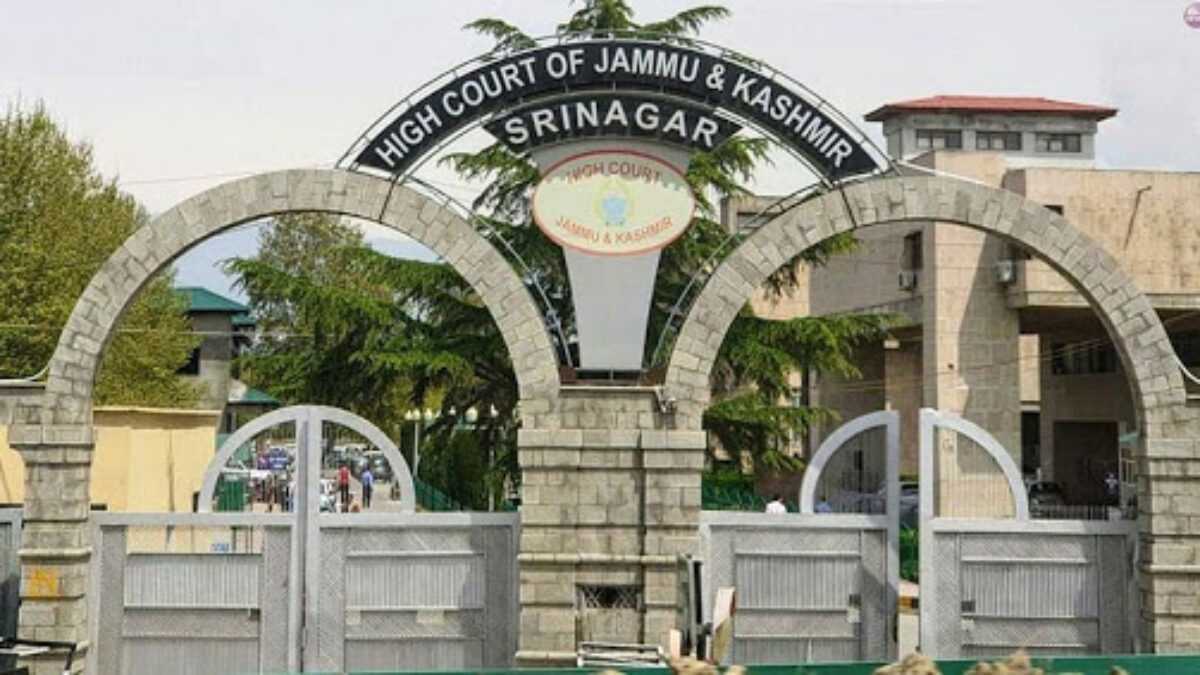
The High Court of Jammu and Kashmir and Ladakh has dismissed a petition by a Border Security Force jawan who alleged he was pressured into taking voluntary retirement following a dispute over his beard, ruling that the case falls outside its territorial jurisdiction.
Justice Rajnesh Oswal dismissed the plea on September 30 after determining that no material part of the cause of action arose within Jammu and Kashmir. The court emphasized that it was not determining the merits of the dispute—including whether the revocation of beard permission was lawful or whether the retirement was coerced—leaving the petitioner, Khursheed Ahmad Khan, at liberty to approach the appropriate court of jurisdiction.
Dismissal on Territorial Jurisdiction
The decision centered on a preliminary objection raised by the BSF regarding where the events transpired. The border force pointed out that Khan had submitted his voluntary retirement application to the Commandant of the 50th Battalion at Praharinagar in Tura, Meghalaya, and the resulting order striking him off the unit’s strength was issued there.
Khan’s legal counsel argued that the Srinagar wing of the High Court possessed jurisdiction because the Inspector General of BSF Kashmir was listed as a respondent, and the Director General of the force is based in New Delhi.
Rejecting those arguments, the court noted that the Kashmir officer had no connection to the controversy, identifying the Inspector General of BSF Shillong as the relevant supervisory authority. The court further clarified that under Article 226 of the Constitution, jurisdiction cannot be established across any high court merely because the force’s directorate is situated in the national capital. Citing legal precedent, the court reiterated that while even a fraction of the cause of action can confer jurisdiction, that fraction must be an integral and material component of the dispute, which was absent within Jammu and Kashmir.
Origins of the Facial Hair Dispute
The underlying conflict dates back to January 6, 2018, when Khan was granted official permission to maintain a neatly trimmed beard.
According to the BSF, that accommodation remained contingent on his beard staying neat and properly maintained. On June 16, 2023, force authorities reported finding Khan untidily dressed with a long, unkempt beard. After he allegedly refused direct instructions to trim it in compliance with his original authorization, the force revoked his grooming permission.
Khan contended that this abrupt withdrawal directly triggered his decision to seek voluntary retirement on June 16, 2023, and alleged that the two events were closely tied together. His retirement request was sanctioned on the same day it was tendered.
Conflicting Accounts Over Voluntary Exit
The two sides presented divergent narratives regarding the circumstances surrounding Khan’s exit from the service.
Khan maintained that the cancellation of his grooming approval was an act of vindictiveness that forced him into resigning under duress. He sought to revoke his retirement request on June 17, 2023, but the authorities turned down his application. On July 5, 2023, an official order instructed him to draw his pension and barred him from resuming duties. Khan subsequently submitted a formal representation to the BSF Director General on July 19, 2024, which his petition stated was left unaddressed.
The BSF countered these claims, asserting that Khan voluntarily approached authorities after a parade expressing his wish to leave the force. According to the border agency, the battalion commandant interviewed Khan before other officers and specifically asked whether his exit was prompted by any external pressure or coercion.
The force recorded in its official register that Khan unequivocally denied being under duress. Instead, the BSF stated that Khan cited personal grounds, including his mother’s ill health and his own inability to handle demanding service conditions due to his medical state. The competent authority subsequently approved his immediate retirement after evaluating his circumstances, service record, and recent conduct.




