

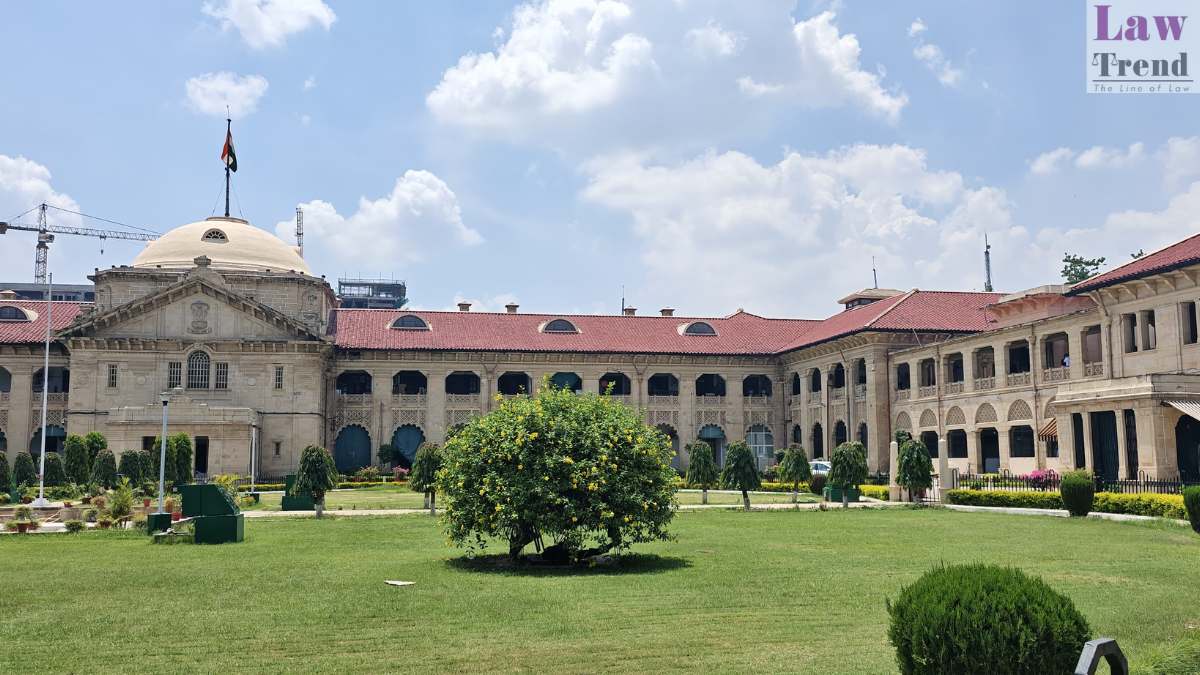
The Allahabad High Court has dropped criminal proceedings against two men who were booked during the Covid-19 pandemic after authorities alleged they had attended a religious event at Delhi’s Hazrat Nizamuddin Markaz and could spread the virus, ruling that the prosecution was founded entirely on unfounded assumptions.
Delivering the order on September 18, Justice Dr. Gautam Chowdhary quashed the proceedings pending before the Additional Chief Judicial Magistrate in Jaunpur. The court observed that permitting the case to proceed would constitute an abuse of both the judicial process and the law, noting that the individuals had been falsely implicated due to ulterior motives and mala fide intent.
Case Grounded Solely On Presumption
The case originated from a first information report registered on April 2, 2020, at the Shahganj police station in Jaunpur under various sections of the Epidemic Diseases Act, 1897, and the Disaster Management Act, 2005.
According to the police, information was received that the two men had traveled to Delhi to take part in a religious congregation at the Nizamuddin Markaz. Authorities claimed that upon their return, both men resided at home with their families without alerting officials. Citing fears that the men might carry the infection and transmit it to others, the police had them medically evaluated and placed them in a quarantine center.
Subsequent medical diagnostics, however, revealed that both men tested negative for the coronavirus.
Court Finds Charges Frivolous And Baseless
Before the High Court, the applicants contended that the allegations in the FIR were untruthful and frivolous. They submitted that although investigating officers had taken statements from the examining medical practitioner and police personnel, the final charge sheet was prepared in a cursory manner without factual support, particularly given their negative test results.
The court highlighted that the state did not contest these details. Justice Chowdhary stated that the prosecution was initiated merely on the speculative fear that the applicants could be infected and might transmit the disease, an apprehension that was later disproved by negative laboratory tests. The judge concluded that the prosecution was launched on baseless assumptions rather than evidence.
Precedent In Related Congregation Cases
The ruling comes after similar legal developments in Delhi. Last year, the Delhi High Court dismissed 16 FIRs and corresponding charge sheets filed against 70 Indian citizens connected to the Tablighi Jamaat, an international Islamic religious movement. Those individuals had been accused of risking infection spread by arranging an international gathering at the Nizamuddin Markaz between March 13 and March 15, as well as housing foreign nationals in mosques and private residences from March 24 to March 30, 2020.
Those complaints had been registered between March 31 and April 2, 2020, across the Chandni Mahal, Sarai Rohilla, and Krishna Nagar police stations.
In related action, the Delhi Police Crime Branch had initially booked seven Indian nationals under Section 3 of the Epidemic Diseases Act, provisions of the Disaster Management Act, and several sections of the Indian Penal Code. The agency eventually submitted 48 charge sheets alongside 11 supplementary charge sheets against 955 foreign attendees, invoking Section 14(b) of the Foreigners Act, 1946. Among those foreign nationals, 908 resolved their cases through plea bargain procedures before a magistrate court.




