

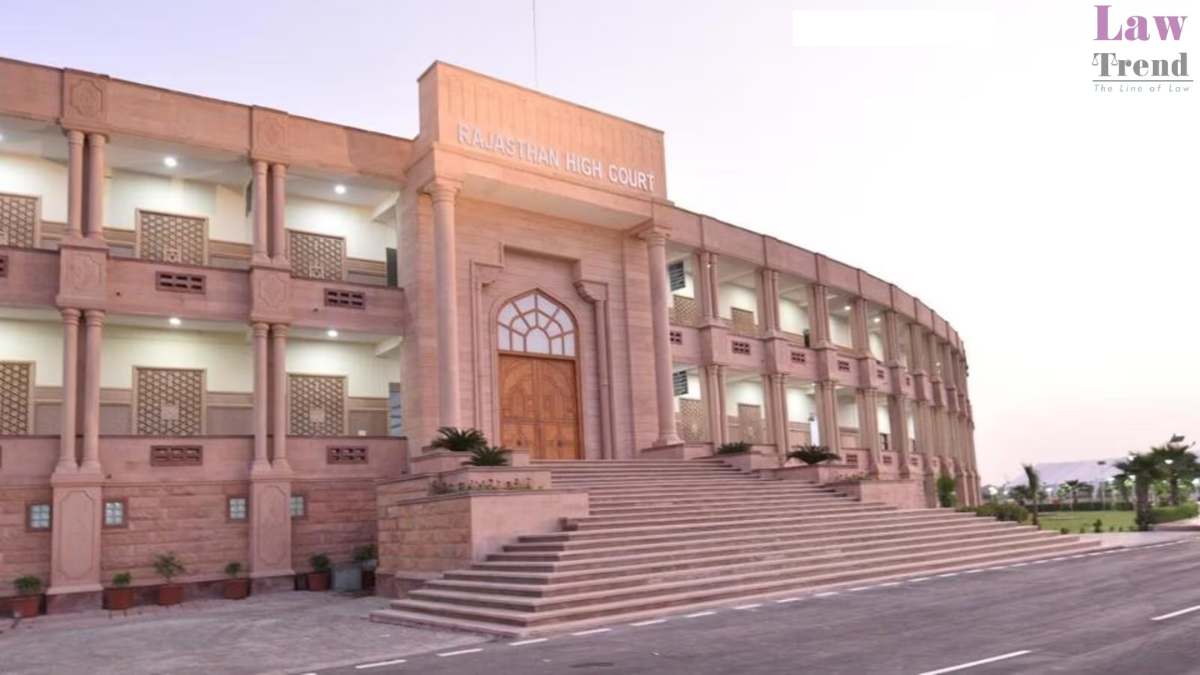
The Rajasthan High Court has declined an urgent request to halt the election for the chairperson of the Tijara Municipal Council, affirming that ongoing electoral proceedings cannot be derailed midway while underscoring that elected representatives possess an indefeasible right to cast their ballots freely.
Presiding over a special sitting on a gazetted state holiday, Justice Anoop Kumar Dhand left administrative action on voter suppression claims to the State Election Commission, which had already commissioned an administrative inquiry into allegations that municipal councillors had been unlawfully confined.
Allegations Of Illegal Detention Ahead Of Polling
The urgent petition was initiated by Ram Avtar Saini, an elected member from Ward 33 of Tijara who contested for the council’s top post. Polling had been slated to take place between 10 a.m. and 2 p.m. on September 21.
Saini approached the court asserting that law enforcement personnel had illegally detained a group of councillors allied with his candidacy at the prompting of two private respondents, deliberately keeping them from participating in the ballot. The petitioner pointed to a video recording of one councillor confirming the detention and noted that an earlier grievance submitted to the sub-divisional officer in Tijara had produced no effective administrative intervention.
Among the remedies sought, Saini urged the court to defer the election until the detained members were liberated, provide police protection and secure transit for himself and his supporters to the polling venue, mandate that the State Election Commission guarantee fair balloting, order the registration of a formal police complaint, deploy an independent poll observer, and require recorded videography of the entire voting process.
State Denies Police Role And Highlights Ongoing Probe
Opposing the petition, the state government refuted any police involvement in the alleged confinement. The advocate general submitted that appropriate administrative channels had already been engaged, explaining that the local returning officer had transmitted the complaint directly to the State Election Commission.
The court was apprised that the poll panel had already initiated an official inquiry through the additional district magistrate of Bhiwadi, who was mandated to tender a factual report by 1:30 p.m. on September 21.
State counsel also submitted that the video supplied by a councillor indicated the alleged detention site was located in Panchkula, Haryana. Based on territorial jurisdiction, the state argued that any grievance involving detention in that state ought to be raised via a habeas corpus plea before the Punjab and Haryana High Court.
Judicial Restraint And Inviolable Voting Rights
The High Court did not record any factual finding verifying that the councillors were illegally confined.
Evaluating the plea to delay polling, Justice Dhand cited established Supreme Court precedents dictating judicial restraint once electoral machinery has been set in motion. Under these principles, scheduled balloting must run its course, and subsequent disputes must be pursued through designated statutory channels rather than through mid-election judicial pauses.
Simultaneously, the bench stressed that public authorities hold no power to strip newly elected councillors of their legal franchise, terming unhindered voting an essential foundation of democratic systems. Justice Dhand noted that an individual’s right to take part in an election cannot be compromised by administrative whims or political interference.
Given that the State Election Commission had already commissioned a factual probe through the Bhiwadi additional district magistrate, the court refrained from intervening in the balloting and directed that the commission take appropriate lawful action upon receiving the magistrate’s report.
Courts Must Act As Alert Guardians Even On Holidays
The high court conducted the urgent proceedings on September 21, a day designated as an official holiday across Rajasthan for Ramdev Jayanti, Teja Dashami, and Khejarli Martyrs’ Day.
Addressing the timing of the hearing, Justice Dhand observed that the judicial system is not constrained by official holidays when fundamental and statutory liberties require safeguard. He remarked that courts are duty-bound to operate on holidays and Sundays whenever an urgent necessity emerges concerning a citizen’s life, liberty, or legal protections.
Describing the judiciary as an ever-watchful sentinel for civic rights, the judge affirmed that judicial doors do not shut when a citizen seeks urgent redress for a grievance.




