

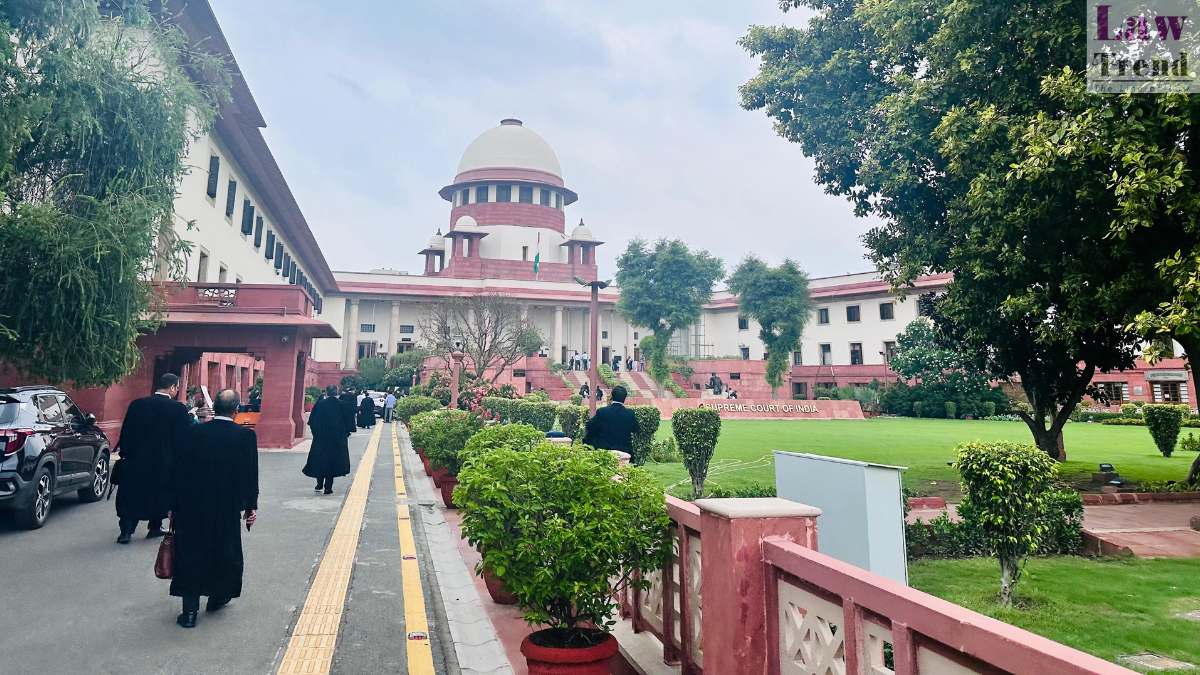
The Supreme Court has held that a civil court dealing with a plaint concerning a public charitable or religious trust under Section 92 of the Code of Civil Procedure, 1908 (CPC) cannot pass protective or preservatory interim orders while the application seeking leave to institute the suit is still pending. A Bench of Justice Manoj Misra and Justice Manmohan held that grant of leave is a mandatory pre-condition for institution of a suit under Section 92 and, until then, there is no proceeding in which interlocutory relief can be granted.
The Court, however, clarified that where the facts disclose compelling urgency, notice to the proposed defendants before granting leave may be dispensed with for reasons recorded in writing. The Bench dismissed appeals challenging a Karnataka High Court judgment which had set aside an order constituting an ad hoc committee to manage the affairs of People’s Education Trust.
Background
The dispute arose from proceedings concerning People’s Education Trust. The Principal District and Sessions Judge, Mandya, had on May 2, 2025 exercised powers under Order XL Rule 1(a) CPC and constituted an ad hoc committee comprising the existing trustees to manage the Trust’s day-to-day affairs pending further directions.
On June 25, 2025, the Karnataka High Court set aside that order. It reiterated its earlier position that a suit under Section 92 remains “stillborn” until leave to institute it is granted and that the civil court consequently lacks jurisdiction to make interlocutory orders during the pre-leave stage.
The issue before the Supreme Court was whether a civil court, when presented with a Section 92 plaint along with an application for leave to institute the suit, can exercise protective or preservatory jurisdiction before deciding the leave application. The judgment noted conflicting views among different High Courts on this question.
Arguments Before the Supreme Court
Senior Advocate Dr. Aditya Sondhi, appearing for the appellants, argued that once a court is seized of an application under Section 92, it cannot remain a “mute spectator” until leave is granted. He submitted that the court retains power to appoint a receiver under Section 94 read with Order XL Rule 1 CPC and also possesses inherent jurisdiction under Section 151.
The appellants argued that an application seeking leave is itself a civil proceeding and that Order XL Rule 1 does not restrict appointment of a receiver only to suits. Alternatively, reliance was placed on the inherent powers preserved by Section 151 CPC to contend that courts could issue protective orders where necessary to secure the ends of justice or prevent abuse of process.
Senior Advocate Raghavendra S. Srivatsa and Advocate Amit Pai, appearing for the respondents, countered that a leave application under Section 92 does not become a substantive proceeding merely because it is separately registered under the Karnataka Civil Rules of Practice. They argued that the suit comes into existence only after leave is granted and that an application for appointment of a receiver cannot therefore be entertained beforehand.
Leave Under Section 92 Is a Mandatory Pre-Condition
Examining Section 92, the Supreme Court noted that a suit concerning an alleged breach of an express or constructive trust created for public charitable or religious purposes may be instituted by the Advocate-General or by two or more persons interested in the trust who have obtained leave of the court.
The Court said that after the 1976 amendment, the requirement of the Advocate-General’s consent was replaced, in cases instituted by two or more persons, with the mandatory requirement of obtaining the court’s leave. It therefore concluded that obtaining leave is a condition precedent to institution of such a suit.
Explaining the purpose of Section 92, the Bench observed that it seeks both to safeguard public trust property against mismanagement and to protect public trusts and their trustees from vexatious litigation.
“The provision thus embodies a delicate balancing act of safeguarding public trust property from mismanagement, while simultaneously shielding the trust from vexatious and malicious litigation. Consequently, it is both a ‘protective shield’ and a ‘remedial sword’.”
The Court referred to Operation Asha v. Shelly Batra and Ors. and noted that a Section 92 suit requires the cumulative fulfilment of three conditions: the trust must be for public charitable or religious purposes, there must be a breach of trust or necessity for court directions in its administration, and the relief sought must fall within Section 92(1).
Leave Application Is Only a ‘Threshold Proceeding’
The Supreme Court agreed with the respondents that merely registering the leave application as a separate petition does not make it a substantive proceeding. Consideration of leave, the Court held, is a “threshold proceeding”, while substantive proceedings under Section 92 arise in the nature of a suit after leave is granted.
“Consequently, the grant of leave under Section 92 is an essential and mandatory pre-condition, in the absence of which there exists no pending proceeding in which interlocutory applications can be entertained.”
The Court further held that supplemental proceedings under Section 94 necessarily require an underlying proceeding. An application under Order XL Rule 1 cannot circumvent the threshold requirement of obtaining leave because, without leave, the Section 92 action has not matured into a proceeding.
“Accordingly, until leave is granted, there is no lis before the Court and consequently no jurisdiction to invoke supplemental powers.”
Section 151 Cannot Override Section 92 Safeguard
The Bench rejected the argument that inherent powers under Section 151 could be invoked to appoint a receiver before leave was granted. It held that inherent powers cannot operate contrary to express provisions of the CPC.
The Court said Section 92 is a special provision whose safeguards must be satisfied before interlocutory orders are passed. It also held that Section 141, which applies CPC procedure to miscellaneous proceedings as far as possible, cannot alter substantive rights or override the safeguards created by Section 92.
“Inherent powers and principles of statutory interpretation can be invoked only where jurisdiction already exists.”
Receiver Cannot Be Appointed Before Leave
The Supreme Court also rejected the submission that appointment of a receiver should be permissible because it is merely protective or preservatory rather than adjudicatory.
“A Court which lacks jurisdiction cannot assume jurisdiction merely on the basis of how the relief sought is characterised.”
The Bench added that appointment of a receiver over a public trust cannot be regarded as merely preservatory because it is intrusive and can dislodge the management of the trust. If leave were ultimately refused after a receiver had already been appointed, the trust’s management would have suffered prejudice.
Urgent Cases Can Be Dealt With by Granting Leave Without Prior Notice
At the same time, the Supreme Court recognised that urgent situations may arise where immediate interim protection is necessary to safeguard the property of a public charity.
It held that although notice to proposed defendants should ordinarily precede grant of leave, prior notice is not indispensable where compelling urgency exists. Courts must, however, exercise utmost care and caution while granting leave ex parte. A defendant remains entitled to seek revocation of such leave.
The Court said that after granting leave for prima facie cogent reasons, the court can exercise its jurisdiction to grant appropriate interim relief.
Decision
Answering the substantial question of law, the Supreme Court held:
“A Civil Court, seized of a plaint under Section 92 of the Code together with an application seeking leave to institute the suit, is not empowered to pass protective or preservatory interim orders pending disposal of the leave application.”
The Court clarified that for compelling reasons recorded in writing, including cases where the facts demonstrate the necessity of urgent relief, notice before grant of leave can be dispensed with. With this clarification, the appeals were dismissed and all pending applications were disposed of.
Case Title: S. Panchalingu & Ors. v. People’s Education Trust (R) & Others Etc.
Case No.: Civil Appeal Nos. ___ of 2026 arising out of SLP (C) Nos. 25577-25579 of 2025
Bench: Justice Manoj Misra and Justice Manmohan
Date: September 18, 2026




