

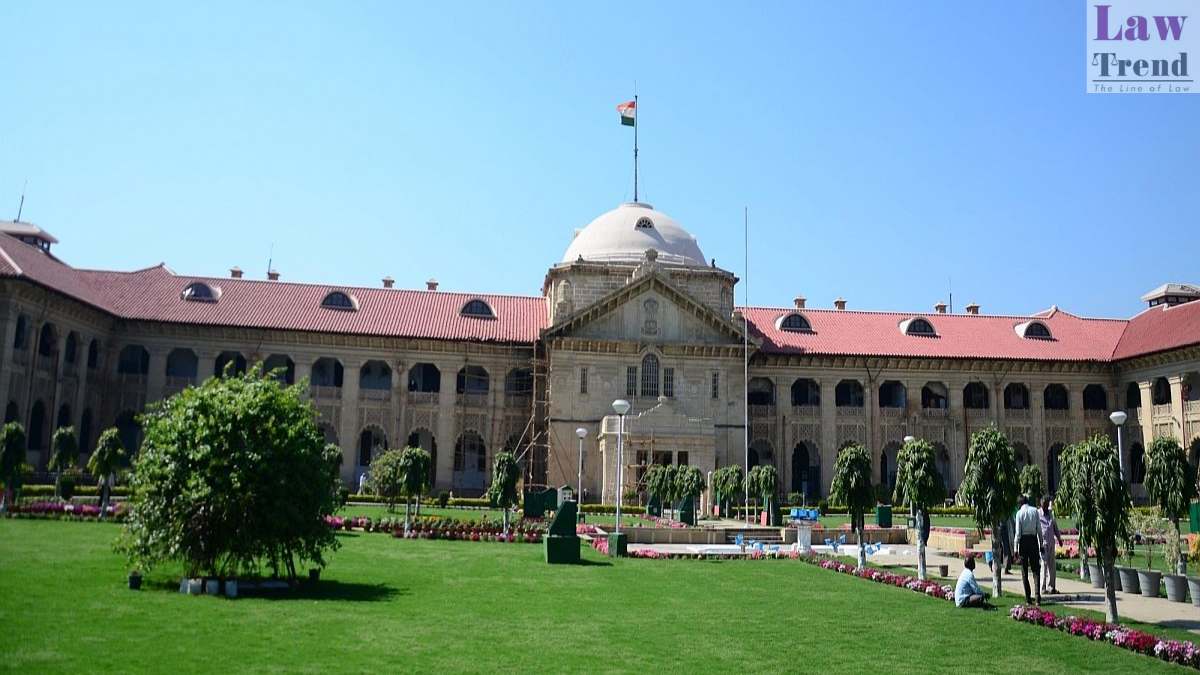
The Allahabad High Court has ruled that while change of religion does not ipso facto extinguish a person’s Scheduled Tribe (ST) status, retaining that status requires proof of continuing adherence to tribal customs, traditions, and acceptance by the tribal community. In a judgment delivered by Justice Arun Kumar, the High Court dismissed a batch of writ petitions challenging revenue orders that invalidated the purchase of tribal agricultural lands by a woman born into the Bhuiyan Scheduled Tribe who had married a Muslim man and adopted an Islamic social and religious identity for decades. The Court held that because she failed to substantiate her continuing connection with the Bhuiyan tribe at the time of the land purchases, the transactions violated statutory restrictions prohibiting transfers of tribal land to non-tribals, thereby vesting the land in the State Government.
Background of the Case
The petitioner, Nanhki @ Naimunnisha, a resident of Village Korchi, Tehsil Duddhi, District Sonbhadra, claimed Scheduled Tribe status by birth as the daughter of Mahaveer, a member of the Bhuiyan community. Supported by an ST certificate issued by the Tehsildar, Duddhi, she purchased agricultural land situated in Village Bagharu, Tehsil Duddhi, through registered sale deeds executed between 2011 and 2018:
- Sale deed dated July 25, 2017, executed by Bajrangi for 0.0150 hectare in Plot No. 4123 (Writ-C No. 17043 of 2026);
- Sale deed dated November 4, 2011, executed by Ramswarath for 0.3905 hectare across multiple plots (Writ-C No. 17171 of 2026); and
- Sale deed dated November 26, 2018, executed by Sitakunwar for 0.0084 hectare in Plot No. 3144Ka (Writ-C No. 17214 of 2026).
The vendors belonged to the Gour Scheduled Tribe, and the petitioner maintained that the transactions were lawful transfers between members of Scheduled Tribes, duly recorded in revenue mutation entries.
However, following inquiry reports submitted in late 2025 and early 2026, the revenue authorities initiated proceedings under Sections 104 and 105 of the Uttar Pradesh Revenue Code, 2006. On January 22, 2026, the Deputy Collector, Duddhi, District Sonbhadra, held the sale deeds void for violating Section 157-B of the Uttar Pradesh Zamindari Abolition and Land Reforms Act, 1950 (and Section 99 of the Revenue Code) and directed the lands to vest in the State Government. The petitioner then approached the High Court under Article 226 of the Constitution.
Arguments of the Parties
Counsel for the petitioner contended that she had never abandoned her Bhuiyan tribal identity or converted from it. They argued that her marriage to Sirajuddin under Islamic rites and documents mentioning her as Muslim could not displace her birth status. It was argued that unlike paragraph 3 of the Constitution (Scheduled Castes) Order, 1950, the Constitution (Scheduled Tribes) Order, 1950 contains no provision excluding a person from tribal status upon religious change. Placing reliance on the Supreme Court ruling in Rameshbhai Dabhai Naika v. State of Gujarat (2012), counsel submitted that birth status is not extinguished merely by inter-community marriage. The petitioner also challenged the proceedings on grounds of unexplained delay of over a decade and violation of natural justice, highlighting that her caste certificate had never been formally revoked.
Opposing the petitions, the Additional Advocate General raised a preliminary objection that an efficacious alternative remedy was available via revision under Section 210 of the Revenue Code, citing Paltoo Ram Yadav v. State of U.P. & Others (2023).
On merits, the State presented inquiry reports, family register entries, and local statements establishing that the petitioner had lived for several decades as Naimunnisha, married Sirajuddin according to Islamic rites, raised two children named Ejajuddin and Haseena Bano, and was recorded as Muslim in the family register. The State argued that the petitioner showed no evidence of observing Bhuiyan tribal traditions or enjoying community recognition. Relying on State of Kerala v. Chandramohanan (2004) and Chinthada Anand v. State of Andhra Pradesh & Others (2026), the State submitted that long assimilation into another faith causes tribal customs to fall into eclipse. The State also cited Additional Commissioner, Revenue v. Akhlaq Hussain and another (2020) to contend that a statutory prohibition cannot be cured by registration, mutation, or delay, and asserted that the caste certificate had been obtained through suppression of material facts regarding her marital and religious identity.
Court’s Analysis and Observations
The High Court first rejected the preliminary objection regarding alternative statutory remedies. Referring to the Coordinate Bench decision in Qamar Abbas v. Additional Commissioner (2024), the Court observed that the rule of exhausting alternative remedies is discretionary and does not bar constitutional jurisdiction where substantive legal questions—such as the governing statutory regime for pre-2016 transactions and the legal test for continuing tribal status—require determination.
Examining the merits, the Court accepted that mere conversion does not automatically extinguish Scheduled Tribe status, noting that under Chandramohanan and Chinthada Anand, the Constitution (Scheduled Tribes) Order, 1950 does not prescribe a religion-based bar. However, the Court clarified that membership of a tribe remains a question of fact:
“The question whether, notwithstanding conversion, a person continues to remain a member of the tribe is essentially a question of fact, to be determined with reference to the tribal traits, customs, traditions and continuing connection with the tribal community.”
The Court distinguished Rameshbhai Dabhai Naika, noting it addressed the status of a child born of an inter-community marriage rather than whether an adult who embraced a different religious and social life maintained her tribal affiliation. Citing Chinthada Anand, the Court reiterated:
“From the above, it becomes clear, that once a person belonging to a Scheduled Tribe converts to another religion, ultimately through the passage of time, the customs, rituals and other traits of that particular tribe may fall into eclipse. If so, in such circumstance, it is proved that the person in question has completely renounced himself from the customs, rituals and other traits of his tribe, and has assimilated into the converted religion following the practices and customs of that particular religion, a reasonable inference can be drawn that such a person shall not be considered a part of the tribe.”
Evaluating the evidence, the Court found that the petitioner presented only bare denials and failed to produce substantive material showing that she continued to participate in Bhuiyan community life or was accepted by the tribe:
“The relevant question is not merely what the petitioner’s status was at birth, but whether she continued to possess the status required for the protection of Section 99 on the date of the transaction.”
Addressing the petitioner’s reliance on the Scheduled Tribe certificate, registered deeds, and revenue records, the Court held that these cannot override mandatory statutory prohibitions:
“Registration of an instrument establishes its registration; it does not, by itself, validate a transaction which is prohibited by a mandatory provision of law. The recital in a sale deed that the purchaser belongs to the Scheduled Tribe is evidence of the representation contained in the document, but such recital cannot itself confer a statutory status upon a person who did not possess that status on the relevant date.”
The Court clarified that the validity of the sales had to be assessed under Section 157-B read with Sections 166 and 167 of the U.P. Zamindari Abolition and Land Reforms Act, 1950, as the transactions occurred before the enforcement of the substantive provisions of the U.P. Revenue Code, 2006 on February 11, 2016. Rejecting the plea of delay by relying on Akhlaq Hussain, the Court ruled:
“Neither registration of the sale deeds, nor subsequent revenue entries, nor possession, nor lapse of time can override the statutory consequences flowing from a transfer prohibited by law.”
Summing up its factual and legal assessment, the Court observed:
“This conclusion is not founded upon the mere fact of her marriage with Sirajuddin, nor upon the mere allegation of conversion, nor upon the isolated entry recording her religion as Muslim. It rests upon the prolonged circumstances brought on record by the respondents concerning her subsequent family, religious and social identity, coupled with the absence of convincing material establishing continued adherence to the customs and social practices of the Bhuiyan Scheduled Tribe, continuing participation in its community life and acceptance by the Bhuiyan community.”
Decision
Holding that the petitioner did not possess Scheduled Tribe status on the respective dates of purchase, the High Court held the transfers to be void under Section 157-B read with Section 166 of the U.P. Zamindari Abolition and Land Reforms Act, 1950, entailing statutory vesting in the State Government under Section 167.
Finding no jurisdictional error or breach of natural justice in the revenue authority’s determination, the High Court dismissed all three writ petitions, affirmed the orders dated January 22, 2026 passed by the Deputy Collector, Duddhi, and vacated any interim protection granted to the petitioner.
Case Title: Nanhki @ Naimunnisha Versus State of U.P. and 3 others (with connected matters)
Case No.: WRIT-C No. 17043 of 2026 (Leading Writ Petition) Along with Writ-C No. 17171 of 2026 and Writ-C No. 17214 of 2026
Bench: Justice Arun Kumar
Date: September 14, 2026




