

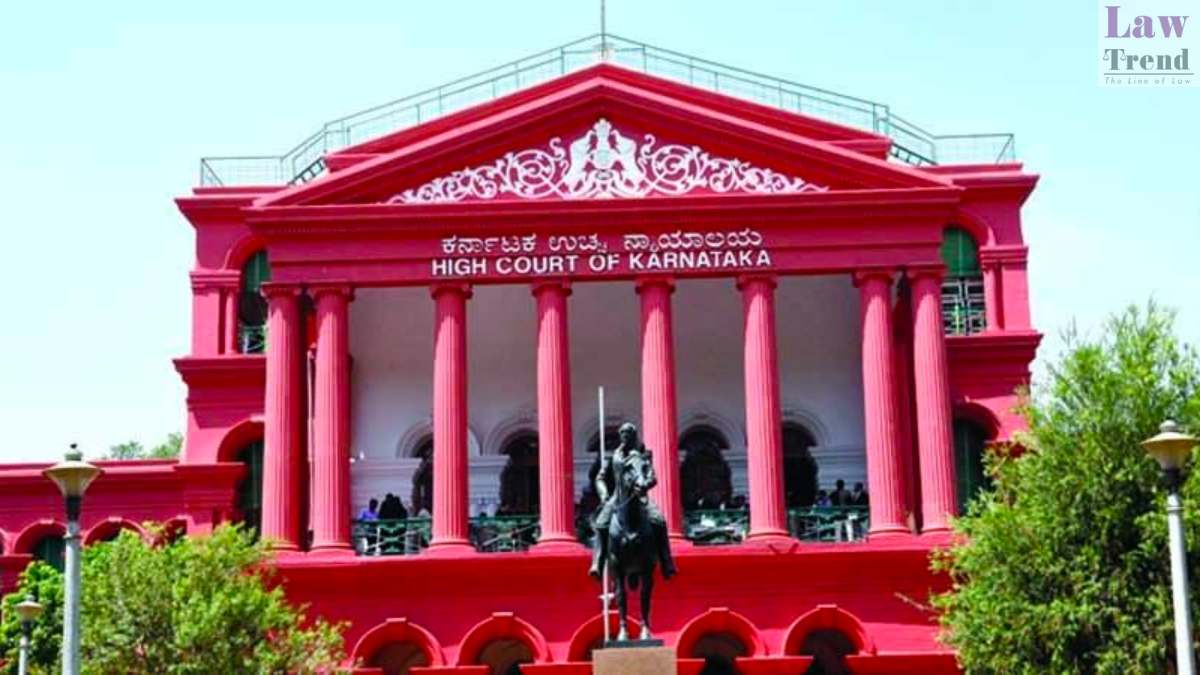
The Karnataka High Court has overturned a Bengaluru sessions court directive that ordered an inquiry into alleged site allotment irregularities involving the Siddartha Vihar Trust, ruling that the court should have allowed the complainant to correct technical defects in his affidavit before deciding on an investigation.
Justice M Nagaprasanna, partly allowing a petition against the August 11 ruling of the LXXXI Additional City Civil and Sessions Judge, held that procedural deficiencies in the verification clause should not have diverted the case away from the statutory investigation framework under Section 175 of the Bharatiya Nagarik Suraksha Sanhita (BNSS). The High Court remanded the matter to the sessions court with directions to give the complainant a chance to rectify the affidavit and subsequently evaluate the plea in accordance with prescribed legal procedures.
The bench stressed that it was expressing no view on the merits of the accusations, leaving it entirely to the sessions court to decide whether the complaint warrants an investigation once proper procedure is completed.
Procedure Cannot Obstruct Justice, Says High Court
Addressing the lower court’s decision to order an inquiry under Section 223 of the BNSS rather than considering an investigation under Section 175, Justice Nagaprasanna observed that procedure is meant to serve justice rather than derail it. The bench stated that the truth cannot be compromised over an imperfect verification clause in an affidavit.
The court highlighted that the complaint raised allegations of corruption involving public servants, which typically depend on evidence contained within official documentation, departmental files, correspondence, and administrative committee minutes rather than records in the complainant’s custody. The judge noted that a private citizen could not reasonably be expected to establish on their own who processed the relevant files, the grounds on which the trust was treated as eligible under a reserved category, or whether an improper nexus existed between public officials and trust members.
Origins of the Allotment Dispute
The legal proceedings stem from a private complaint lodged by Vijayraghava Marathe, president of the anti-corruption outfit Lanchamukta Karnataka Vedike. Marathe sought an investigation under Section 175(3) of the BNSS into the allotment of civic amenity land by the Bangalore Development Authority (BDA) to the Siddartha Vihar Trust.
According to records cited in the sessions court proceedings, the trust was established in 1994 with five trustees, including Congress president and Rajya Sabha Leader of the Opposition Mallikarjun Kharge. A 2010 supplementary deed later inducted his wife, Radhabai M Kharge, along with his sons Rahul Kharge and Priyank Kharge, the Karnataka Home Minister.
The complainant alleged that despite being a secular charitable body with broad public objectives, the trust sought a BDA civic amenity plot under the Scheduled Caste category. The petition further claimed that the trust secured a 50 per cent concession on the lease fee and later obtained an alternative 8,002-square-metre plot in Bengaluru’s BTM Fourth Stage after initially being allotted an 8,125-square-metre site, alleging collusion with BDA personnel and misuse of official influence.
Next Steps Before the Sessions Court
While the sessions court had acknowledged the charitable and secular nature of the trust from its deeds and noted the sequence of land allotments and discounts, it declined to direct a police investigation under Section 175(3) due to errors in the accompanying affidavit. It had instead ordered a court inquiry under Section 223 of the BNSS.
With the High Court nullifying that direction, the sessions court must now permit the complainant to submit a properly verified affidavit and re-examine whether to refer the allegations for investigation under Section 175 of the BNSS alongside applicable legal safeguards.


