

Court Fee Paid Under Inadvertent Filing Of Non-Maintainable Appeal Must Be Refunded To Prevent Unjust Enrichment: Madras High Court
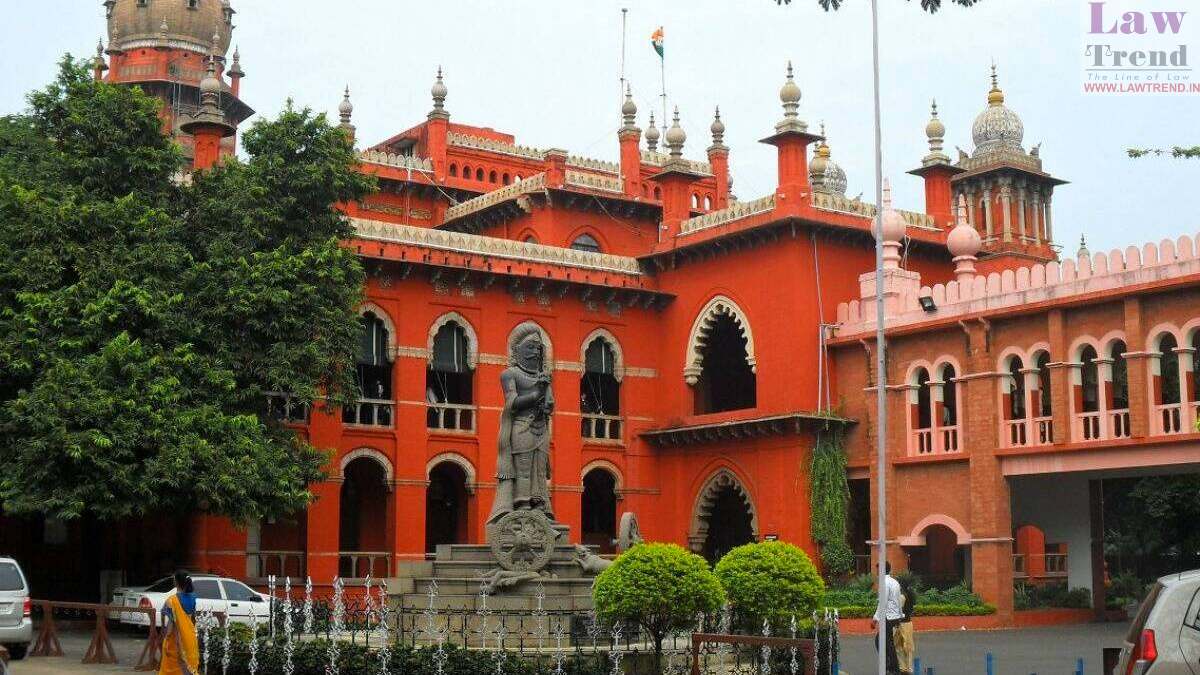

The Madurai Bench of the Madras High Court, comprising Justice G.R. Swaminathan and Justice K.K. Ramakrishnan, has held that court fees paid due to an inadvertent filing of a non-maintainable arbitration appeal must be refunded to the litigant. Closing an appeal filed against an arbitral award under Section 37 of the Arbitration and Conciliation Act, 1996, the Court ruled that retaining court fees when no judicial service could be rendered amounts to failure of consideration and unjust enrichment for the State.

Background of the Case

The petitioner, J. Murugavel, filed an arbitration appeal under Section 34(2) and Section 37(2) of the Arbitration and Conciliation Act, 1996, seeking to set aside an arbitral award dated October 24, 2024, passed in favor of the respondent, Pichai, Proprietor of Vel Murugan Traders.

However, under Section 37 of the Act, a final award passed by an arbitrator is not appealable. A final arbitral award can only be challenged by filing a petition under Section 34 of the Act. The appeal was mistakenly filed and numbered by the Registry. Finding the appeal ex-facie not maintainable, the High Court closed the proceedings, granting the petitioner liberty to pursue appropriate legal remedies. Following the closure, counsel for the petitioner requested a refund of the court fee paid at the time of filing.

Arguments of the Parties

Advocate S. Arjun, appearing for the petitioner, submitted that since the appeal was filed under a procedural mistake and was not maintainable, the court fee paid by the litigant should be refunded.

The Court evaluated the request under Section 70 of the Tamil Nadu Court-Fees and Suits Valuation Act, 1955, which mandates that “the fee paid by mistake or inadvertence shall be ordered to be refunded”.

The Court’s Analysis

The Division Bench analyzed the scope of Section 70 of the Tamil Nadu Court-Fees and Suits Valuation Act, 1955. The Court noted that the statutory use of the word “shall” casts a mandatory duty on courts to order a refund when payment occurs due to mistake or inadvertence.

Distinguishing the present situation from K.S. Venkatraman & Co. (P) Ltd. v. State of Madras [(1966) 79 LW 392], where a deliberate payment of court fees for obtaining relief was held non-refundable upon abandonment, the Bench observed that procedural mistakes fall squarely within Section 70. The Bench referred to Zahoorunnissa Begum Sahiba v. T. Mohammed Ali Sahib (1961 74 L.W 745) and Indian Bank v. Godfrey W. Noble (2012 SCC OnLine Mad 4114), which affirmed that court fees paid under erroneous procedures or in courts lacking jurisdiction are refundable.

READ ALSO  कोर्ट की कार्यवाही की रिपोर्टिंग करने से मीडिया को रोका नहीं जा सकता: सुप्रीम कोर्ट

Addressing the Full Bench decision in The Official Receiver, Coimbatore v. S.A. Ramaswamy [(1980) 93 LW 468], which restricted the use of inherent powers under Section 151 CPC for court fee refunds, the Bench noted that the explicit statutory scope of Section 70 was not adjudicated in that matter.

To interpret “inadvertence,” the Court relied on the decision of Justice V. Ratnam in N. Rangaswamy Naidu v. Narayanan Naicker (CRP No. 913 of 1980), which defined inadvertence as “…an unintentional act or omission as distinguished from an intentional act or omission; “careless” or “negligent”; opposite of deliberate action and that doer never really meant to do what he did and he was not aware of what he was doing… the quality of being inadvertent, lack of heedfulness or attentiveness, inattention; negligence, an effect of inattention, a result of carelessness, an oversight, mistake or fault from negligence…”

The Bench also cited the earlier Full Bench decision in Adusumilli Gopalakrishnayya v. Adivi Lakshmana Rao (1925 49 MLJ 590), which observed that “there is no reason to make him pay Court-fees twice over, and it is simpler for the Court to direct an amendment of the cause-title.” Furthermore, referencing the Queen’s Bench decision in Finch v. Richardson [(2009) 1 WLR 1338], the Court noted that an act done out of ignorance of law can also be characterized as inadvertence.

The Court observed that mistakes under Section 70 include both mistakes of fact and law, referencing The Sales Tax Officer, Banaras v. Kanhaiya Lal Mukund Lal Saraf (1958 SCC OnLine SC 28). The Bench cited the Bombay High Court Full Bench ruling in Prabhakarbhat v. Vishwambhar Pandit [ILR (1883) 8 Bom 313], which stated:

READ ALSO  Why Would a Related Witness Spare the Real Culprit to Frame the Innocent?: Chhattisgarh HC Upholds Conviction in  Murder Case

“Where a Court fee on the institution of a suit has been paid in a Court which cannot possibly afford the relief sought, it does not seem consistent with sound principle that the plaintiff should be condemned to lose the fees thus paid, or that he should not be allowed to ask without paying a second fee for an adjudication from a Court which can really give one.”

The Division Bench expressed agreement with the Delhi High Court’s ruling in Amit Jain v. Mahavir International (P) Ltd. (2023 SCC OnLine Del 2657), which warned that refusing to refund court fees in unadjudicated matters creates docket exclusion and discourages litigants. It further highlighted Supreme Court precedents including The High Court of Judicature at Madras v. M.C. Subramaniam [(2021) 3 SCC 560] and J.K. Forgings v. Essar Construction India Ltd. (2009 113 DRJ 612), emphasizing that fiscal statutes should be interpreted liberally in favor of citizens.

READ ALSO  When Writ Petition Can be Filed Against an Order Passed in Mutation Proceedings? Explains Allahabad HC

Applying the underlying spirit of Article 265 of the Constitution of India, which forbids collection of tax without authority of law, the Bench reasoned that receiving court fees for a non-maintainable appeal lacks legal authority. Applying principles of contract and failure of consideration, the Court noted that litigants are consumers of justice who seek adjudication; if a matter cannot be adjudicated due to initial non-maintainability, no service is rendered, and retaining the fee would amount to unjust enrichment by the State.

Court Decision

The High Court closed the arbitration appeal as non-maintainable and directed the Registry to refund the court fee paid by the appellant forthwith and without delay.

The Court granted the appellant liberty to pursue appropriate legal remedies and ordered that the time spent prosecuting this non-maintainable appeal be excluded while computing the period of limitation. No costs were awarded.

Case Title: J.Murugavel vs. Pichai
Case No.: Arb Appeal(MD) No. 63 of 2026
Bench: Justice G.R. Swaminathan and Justice K.K. Ramakrishnan
Date: 06-08-2026

Law Trend
Law Trendhttps://lawtrend.in/
Legal News Website Providing Latest Judgments of Supreme Court and High Court

Related Articles

Latest Articles

