

Subsequent Ratification By Competent Authority Validates Unauthorized Acceptance Of Resignation Retrospectively: Supreme Court

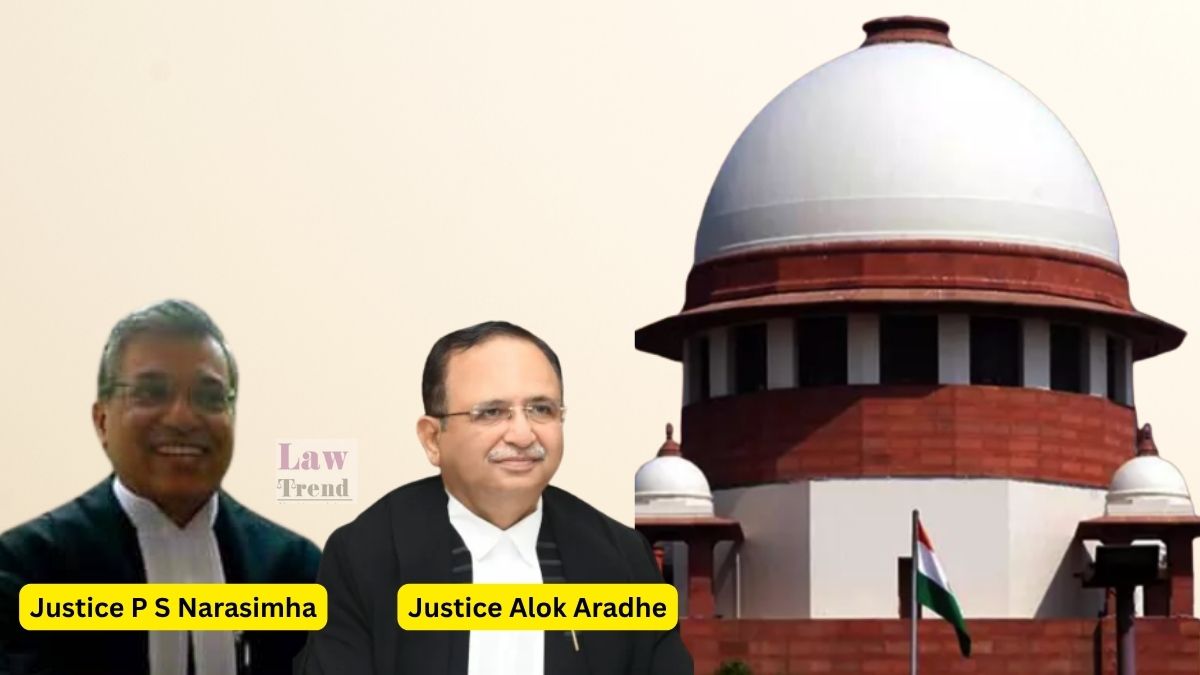
The Supreme Court, comprising a bench of Justice Pamidighantam Sri Narasimha and Justice Alok Aradhe, ruled that the ratification of an unauthorized acceptance of a resignation by a competent authority validates the acceptance from its original date, preventing an employee from subsequently withdrawing the resignation. Resolving appeals concerning Delhi Technological University (DTU) and National Institute of Technology Calicut (NITC), the apex court allowed DTU’s appeal against the reinstatement of its former employee, B.S. Rawat, dismissed Rawat’s cross-appeal for back wages, and dismissed his Special Leave Petition seeking reinstatement at NITC.

Background of the Cases

The matter arose from two separate proceedings involving B.S. Rawat.

In the DTU matter, Rawat joined as Assistant Registrar (Legal) on August 23, 2010. Under Section 23(2)(ix) of the Delhi Technological University Act, 2009, the Board of Management (BOM) is vested with the power to appoint administrative personnel. On May 19, 2016, Rawat tendered his resignation to take effect from September 1, 2016. He subsequently requested a waiver of the notice period and sought acceptance with effect from May 31, 2016. On May 25, 2016, the then Vice-Chancellor holding additional charge accepted his resignation with effect from May 31, 2016, and Rawat was relieved after receiving his no-dues, last pay, and experience certificates.

Four months later, on September 22, 2016, Rawat sought to withdraw his resignation, claiming it was not accepted by the BOM, the competent authority. On September 26, 2016, the BOM in its 20th meeting ratified the acceptance, and Rawat’s withdrawal request was formally rejected on November 3, 2016. Rawat challenged this before the High Court of Delhi. A Single Judge ordered his reinstatement with full back wages and interest. On appeal, a Division Bench affirmed the reinstatement but denied back wages as Rawat had secured gainful employment. Both DTU and Rawat filed appeals before the Supreme Court.

In the NITC matter, following his departure from DTU, Rawat joined NITC as Deputy Registrar on February 8, 2017. On November 8, 2018, he tendered a conditional resignation, which was returned as impermissible under Statute 30 of the First Statutes of the National Institute of Technology, 2009. He then submitted an unconditional resignation while requesting leave to withdraw it before being relieved. The competent authority accepted the resignation on November 22, 2018, communicating it on December 4, 2018, with a relieving date of January 11, 2019. On November 28, 2018, upon selection on deputation with the East Delhi Municipal Corporation, Rawat sought to withdraw his resignation. The authority rejected the withdrawal request on January 7, 2019, and relieved him on January 11, 2019.

READ ALSO  Why the Hindu Succession Act Does Not Apply to Tribal Daughters' Inheritance: SC Explains

Rawat challenged the decision in the High Court of Kerala. A Single Judge ordered reinstatement without back wages. On cross-appeals, a Division Bench set aside the reinstatement order and dismissed Rawat’s appeal for back wages, prompting Rawat to file a Special Leave Petition before the Supreme Court.

Arguments of the Parties

Counsel for DTU submitted that the acting Vice-Chancellor had accepted the resignation, which was subsequently ratified by the BOM. DTU argued that Rawat, having requested the waiver of the notice period and accepted all terminal benefits, could not challenge the authority of the acceptance. Rawat, appearing in person, contended that his resignation was never approved by the competent authority, making ratification legally invalid, and maintained that he was entitled to reinstatement with back wages.

In the NITC matter, Rawat argued that the institute erred in relieving him before the notice period expired, that the Board of Governance had not accepted his resignation, and that an action without jurisdiction could not be ratified. Counsel for NITC contended that under the proviso to Statute 30 of the NIT First Statutes, 2009, a resignation becomes effective on the date of acceptance, and the rejection of the withdrawal request was lawful.

Court’s Analysis and Legal Findings

The Supreme Court examined the questions of law regarding the doctrine of ratification, the conduct of the parties, and the statutory framework governing resignations.

1. Competent Authority and the Doctrine of Ratification

The Court observed that under Section 23(2)(ix) of the 2009 Act, the BOM is the competent authority to accept resignations. Professor Yogesh Singh, who accepted the resignation on May 25, 2016, held only an additional charge of Vice-Chancellor, and the BOM’s powers had not been validly delegated to him.

However, analyzing the doctrine of ratification, the Court referenced Black’s Law Dictionary, which defines ratification as “the confirmation of a previous act done either by the party himself or by another”. The bench highlighted the maxims “ratihabitio mandato aequiparatur” (subsequent ratification is equivalent to prior command) and “omnis ratihabitio retrotrahitur et mandato priori aequiparatur” (a ratified act is deemed valid from the date of the original unauthorized act).

READ ALSO  Supreme Court Asks Centre To Look Into Allegation of Closure of GPF Accounts of Seven Patna HC Judges

The Court culled out six key legal principles governing ratification:

  1. Ratification means making a previously invalid act valid by subsequent approval.
  2. A subsequent ratification is equivalent to prior authority.
  3. Ratification operates retrospectively, relating back to the date of the original act.
  4. Only the competent authority can ratify an invalid act.
  5. Express approval via a resolution or decision is sufficient without passing a fresh order.
  6. Ratification cures defects of authority, not acts that are inherently illegal or void by law.

The Court referred to prior decisions in Sri Parmeshwari Prasad Gupta v. Union of India, High Court of Judicature for Rajasthan v. P.P. Singh, Maharashtra State Mining Corpn. v. Sunil, National Institute of Technology v. Pannalal Choudhury, and Municipal Commissioner, Jamnagar Municipal Corporation v. R.M. Doshi.

2. Conduct of the Employee and Estoppel

The Court held that a resignation accepted initially by an unauthorized officer becomes an irrevocable transaction if both parties treat it as final. Citing Reichel v. Bishop of Oxford and Union of India v. Gopal Chandra Misra, the Court noted that a resigner who has “consummated” the transaction by his own conduct cannot later upset it.

The bench noted that Rawat himself sought an earlier relieving date, accepted his no-dues and experience certificates, and used the experience certificate to secure employment at NITC. The Court observed:

“He cannot have his cake and eat it too, i.e. he cannot claim the benefits of a completed exit from DTU when it suited him to move on, and simultaneously claim that no exit ever legally occurred when it suits him to return.”

The Court concluded that once ratified on September 26, 2016, the acceptance related back to May 25, 2016. Therefore, no resignation remained in existence for Rawat to withdraw on September 22, 2016.

READ ALSO  What are the Requirements of Civil Contempt? Explains Supreme Court

3. Decision on NITC Resignation

Regarding the Kerala High Court judgment, the Supreme Court examined Statute 30 of the NIT First Statutes, 2009, which provides that a resignation “shall take effect only on the date on which the resignation is accepted by the appointing authority”. Citing Raj Kumar v. Union of India, the bench held that non-communication does not keep the resignation alive if accepted by the competent authority. Rawat’s resignation became effective on November 22, 2018, making his November 28, 2018 withdrawal letter belated.

Furthermore, under Paragraph 3 of the Office Memorandum dated February 11, 1988, the competent authority retains discretion to refuse withdrawal. The Court noted that Rawat had recorded in his letter that he was “not interested to work anymore” in the institute and sought withdrawal only after selection on deputation elsewhere. Citing Air India Express Ltd. v. Captain Gurdarshan Kaur Sandhu, the Court held that the authority’s order dated January 7, 2019, refusing withdrawal was rational and valid.

Decision

The Supreme Court issued the following directions:

  1. Civil Appeal No. 9308 of 2024 (DTU v. B.S. Rawat) was allowed. The Delhi High Court judgment directing Rawat’s reinstatement was set aside, and W.P.(C) No. 2611 of 2019 was dismissed.
  2. Civil Appeal No. 9309 of 2024 (B.S. Rawat v. DTU) seeking back wages was dismissed.
  3. Special Leave Petition (C) Nos. 625-626 of 2021 (Bharat Singh Rawat v. NIT Calicut) was dismissed.

Case Title: Delhi Technological University v. B.S. Rawat
Case No.: Civil Appeal No. 9308 of 2024 (with Civil Appeal No. 9309 of 2024 and SLP (C) Nos. 625-626 of 2021)
Bench: Justice Pamidighantam Sri Narasimha and Justice Alok Aradhe
Date: August 04, 2026

Law Trend
Law Trendhttps://lawtrend.in/
Legal News Website Providing Latest Judgments of Supreme Court and High Court

Related Articles

Latest Articles

