

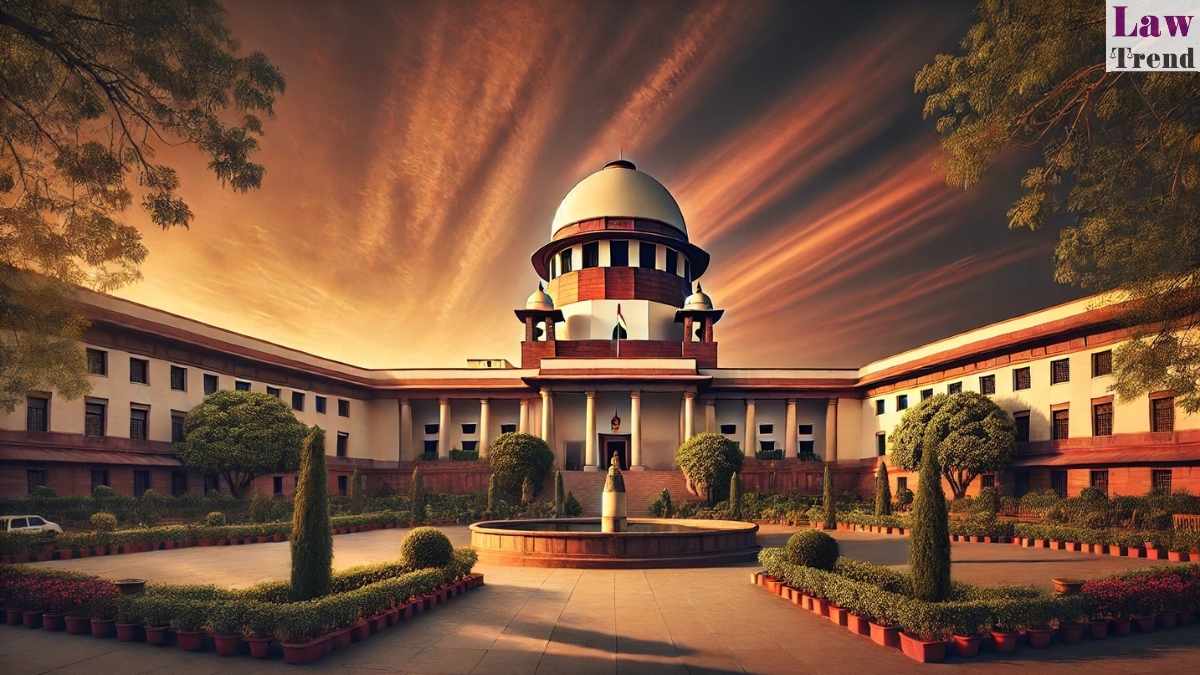
The Supreme Court on Friday dismissed an appeal by the Uttarakhand government challenging the grant of bail to Abdul Malik, an accused in the February 2024 Banbhoolpura violence case, stating that an individual’s liberty hinges on the prosecution’s case rather than judicial inaccuracies in court orders.
A bench led by Justice Bagchi affirmed the Nainital High Court’s decision to grant bail to Malik, rejecting arguments from the state government that the lower court had issued an unreasoned or cryptic order. The top court observed that even if a bail order lacks detailed reasoning, interference is unnecessary if the record reflects an application of mind, particularly when an accused has endured prolonged custody.
Judicial Rationale on Personal Liberty
During the proceedings, Senior Advocate Gaurav Bhatia, representing the Uttarakhand government, argued that the High Court’s brief ruling contradicted established Supreme Court precedents requiring detailed justification for bail. In response, Justice Bagchi noted that existing judgments on unreasoned bail orders require re-examination, emphasizing that individual freedom should not be compromised due to procedural or drafting deficiencies in judicial decisions.
Addressing arguments that releasing the accused would harm police morale, the court remarked that state authorities should focus on securing convictions in a timely manner rather than routinely challenging bail orders in higher courts. Justice Bagchi highlighted that after holding an accused in custody for two years, the state’s failure to conclude prosecution cannot be masked by filing appeals against bail.
Questions Over UAPA Invocation
The court also scrutinized the legal provisions invoked by state law enforcement, specifically questioning the applicability of the Unlawful Activities (Prevention) Act in the matter. When the state counsel contended that a mob burning a police station severely impacted public order, Justice Bagchi delineated the distinction between general public order offenses and stringent anti-terror laws, suggesting that invoking the UAPA in such circumstances was open to debate.
The bench recalled earlier instances where similar state appeals against bail were dismissed, reiterating concerns over a growing pattern of authorities routinely contesting bail decisions.
Case Background and Allegations
The case originates from violent clashes in the Banbhoolpura area of Nainital district on February 8, 2024, during the demolition of a mosque. Prosecutors alleged that a crowd pelted stones at security personnel, set fire to private and government vehicles, attacked a local police station, and hurled petrol bombs. Authorities identified Malik and his son as the main conspirators behind the unrest, claiming the plot was organized at Malik’s residence.
However, state counsel acknowledged during court proceedings that Malik was not physically present at the scene during the violence on February 8.
Malik was taken into judicial custody on February 23, 2024, following an FIR registered at the Banbhoolpura Police Station. He faces charges under the Indian Penal Code, the Unlawful Activities (Prevention) Act, the Arms Act, the Prevention of Damage to Public Property Act, and the Criminal Law Amendment Act.
The Nainital High Court granted him bail on April 16, overturning a February 6, 2025 decision by the Special Judge in Haldwani that had initially denied his release. The Supreme Court’s latest ruling closes the state’s bid to cancel that bail.




