

Ad Hoc Service Within Quota Counts For Seniority Despite Lack Of PSC Consultation: Supreme Court
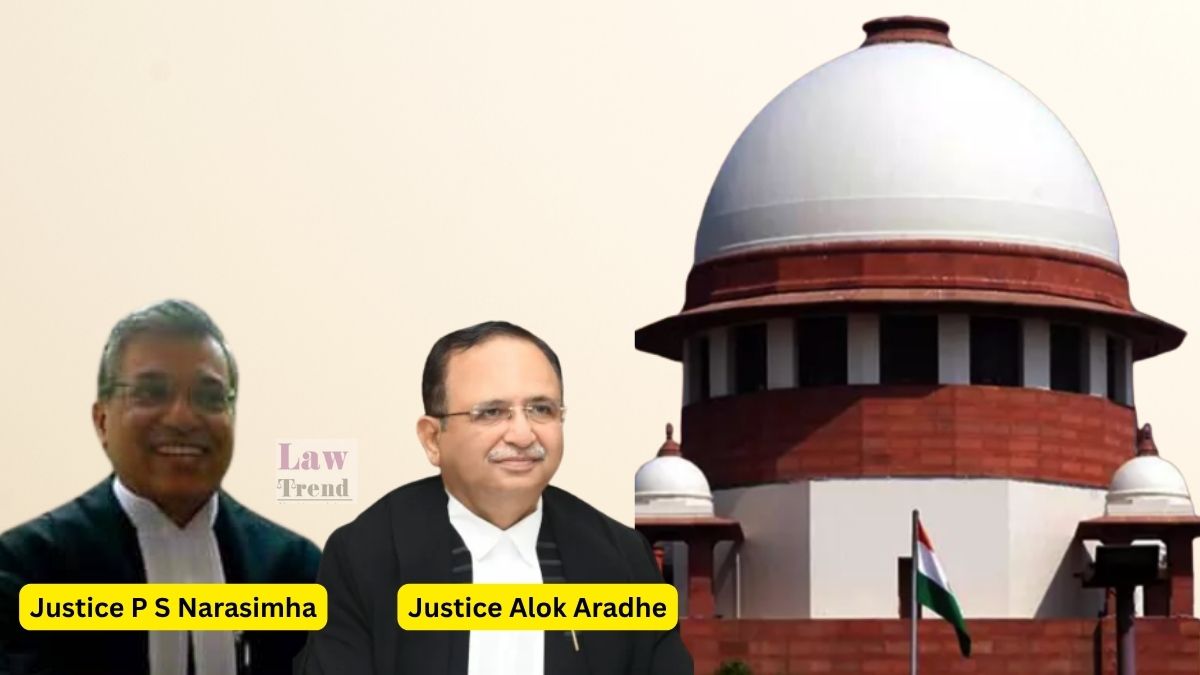
In a significant ruling on service jurisprudence, a Supreme Court bench comprising Justice P. S. Narasimha and Justice Alok Aradhe held that promotee officers who served continuously on an ad hoc basis within their allocated quota are entitled to count such service toward regular appointment and seniority, even if the State failed to consult the Public Service Commission as required by procedural regulations. Delivering the judgment, Justice Alok Aradhe held that consultation requirements under service regulations are directory rather than mandatory, and the State Government cannot take advantage of its own default to deny legitimate seniority benefits to promotees. Consequently, the Apex Court allowed the appeal filed by the promotee Deputy Collectors, holding them entitled to regular appointment from the date of their initial ad hoc promotion on October 1, 2007, and directed the State of Uttarakhand to revise the seniority list within three months.

Background of the Case

The dispute traces back to the notification of the Uttaranchal Civil Services (Executive Branch) Rules, 2005 (the Rules) on February 17, 2006. Under these Rules, the cadre of Deputy Collector comprises 80 posts, divided equally between direct recruits and promotees from the cadre of Tehsildar.

The promotee respondents were originally appointed as Naib Tehsildars and were confirmed as permanent Tehsildars on July 1, 2007. On September 12, 2007, a Departmental Promotion Committee (DPC) convened to address an acute shortage of Civil Service Officers in the State. Noting that direct recruitment was time-consuming, the DPC recommended 10 Tehsildars, including the promotees, for ad hoc promotion to the post of Deputy Collector. On October 1, 2007, the promotees were promoted as Deputy Collectors as a temporary/stop-gap arrangement until posts were filled by direct recruitment through the Uttarakhand Public Service Commission.

On December 6, 2007, the State Government forwarded a requisition for regular promotion, citing vacancies in the Deputy Collector cadre. Meanwhile, direct recruits were appointed in August 2009 pursuant to an advertisement issued on December 26, 2004.

On April 8, 2010, the Commission promoted 15 permanent Tehsildars but excluded the promotees, prompting them to file a writ petition. Following a High Court direction to review promotions, the Commission issued a proceeding on May 7, 2012, promoting the promotees as Deputy Collectors with effect from May 7, 2012, rather than October 1, 2007. Aggrieved by this prospective regularization and a two-year probation condition, the promotees filed Writ Petition (S/B) No. 68 of 2013 before the High Court of Uttarakhand at Nainital.

READ ALSO  Suit for Declaration of Civil Death Not Barred by Section 34 of the Specific Relief Act Merely Because the Plaintiff Did Not Claim Further Relief: Allahabad HC

On August 8, 2019, the High Court directed the State Government to verify whether vacancies existed in the promotee quota for 2007–2008, holding that if vacancies existed, the promotees would be entitled to regular appointment from October 1, 2007. Aggrieved by various parts of this directive, the State Government, direct recruits, and promotees filed cross-appeals before the Supreme Court.

Arguments of the Parties

Appearing for the State of Uttarakhand and the direct recruits, senior advocates Mr. A.N.S. Nadkarni and Mr. P.S. Patwalia, alongside counsel Ms. Anu Gupta, submitted that the promotees could not count their ad hoc service for computing seniority because their initial appointments were stop-gap arrangements made dehors the Rules without consulting the Commission. They contended that appointments were made in excess of the promotee quota, without required DPC procedures under the Rules, and before the promotees had completed their mandatory two-year probation as Tehsildars. Reliance was placed on the decision in Vinod Giri Goswami v. State of Uttarakhand (2020) and State of West Bengal v. Aghore Nath Dey (1993).

Conversely, senior advocate Mr. Nidhesh Gupta, appearing for the promotees, argued that 19 vacant posts were available under the promotee quota during 2007–2008, establishing that the promotions were well within the prescribed quota. He contended that consultation with the Public Service Commission under Regulation 5(a) of the Uttaranchal Public Service Commission (Limitations of Functions) Regulations, 2003 is directory, not mandatory. He further asserted that the High Court erred in remanding the vacancy determination to the State when official records already confirmed the existence of adequate vacancies. He cited State of Uttar Pradesh v. Manbodhan Lal Srivastava (1957) and P. Rammohan Rao v. K. Srinivas (2025).

The Court’s Analysis

The Supreme Court addressed two central issues: first, whether non-compliance with Regulation 5(a) of the 2003 Regulations invalidated the appointments; and second, whether the promotees were entitled to the benefit of the proviso to Rule 24(4) of the Rules.

Examining Regulation 5(a), which stipulates that temporary or officiating appointments continuing beyond one year require consultation with the Commission, the Court analyzed whether the requirement was mandatory or directory. Applying the classic test from the Privy Council in Montreal Street Railway Co. v. Normandin (1917) and the Federal Court in Biswanath Khemka v. The King Emperor (1945), as adopted by the Constitution Bench in Manbodhan Lal Srivastava, the Court held that public duties breached without employee fault must be construed as directory.

Summarizing the constitutional principle, the Court observed that “Applying the Montreal Street Railway and Biswanath Khemka (supra) test, it was held that since the consultation requirement concerns the performance of a public duty, and treating acts, done without such consultation as void would cause serious general inconvenience and injustice to persons who have no control over the authority, responsible for making the reference, the provision must be read as directory.”

Applying this reasoning to the facts, the Court observed: “However, the consultation being a directory requirement, the default of consultation does not invalidate the ad hoc appointments by way of ad hoc promotions of the promotees to the post of Deputy Collector. It would not be fair to let the State take advantage of its own continuing default by treating the promotees’ ad hoc appointment, recommended by a duly constituted DPC and eventually regularised by competent authority, as bad in law.” Reaffirming principles from Suraj Parkash Gupta v. State of J&K (2000), Direct Recruit Class II Engineering Officers’ Association v. State of Maharashtra (1990), and P. Rammohan Rao, the Court held that government delay in regularization supports rather than defeats an employee’s claim.

On the second issue, the Court reviewed official communications dated December 6, 2007, and April 16, 2012, which unequivocally established that 19 posts under the promotee quota were vacant in the recruitment year 2007–2008. Since only 10 Tehsildars were promoted, the appointments were indisputably within the promotee quota. The Court found that the High Court erred in directing a fresh determination of vacancies by the State Government when facts on record were clear. Distinguishing Vinod Giri Goswami, the Court noted that ad hoc service is countable under Rule 24(4) provided the promotee worked continuously within the quota until regularized.

READ ALSO  May Consider Interim Bail for Arvind Kejriwal Amid Lok Sabha Elections: SC

Decision of the Court

The Supreme Court modified the High Court’s judgment and held that the promotees are entitled to regular appointment as Deputy Collectors with effect from October 1, 2007. The Court directed the State Government to issue a revised seniority list of Deputy Collectors within three months.

Civil Appeal No. 3071 of 2024 filed by the promotees was allowed, while Civil Appeal Nos. 3070 of 2024, 3072 of 2024, and 4452 of 2024 filed by the State and direct recruits were dismissed.

READ ALSO  Supreme Court To Oversee Overhaul Of NEET Process, Demands Comprehensive Reform Plan From Centre

Case Title: The State of Uttarakhand v. Jagdish Chandra Kandpal & Ors.
Case No.: Civil Appeal No. 3070 of 2024
Bench: Justice P. S. Narasimha and Justice Alok Aradhe
Date: July 29, 2026

Law Trend
Law Trendhttps://lawtrend.in/
Legal News Website Providing Latest Judgments of Supreme Court and High Court

Related Articles

Latest Articles


