

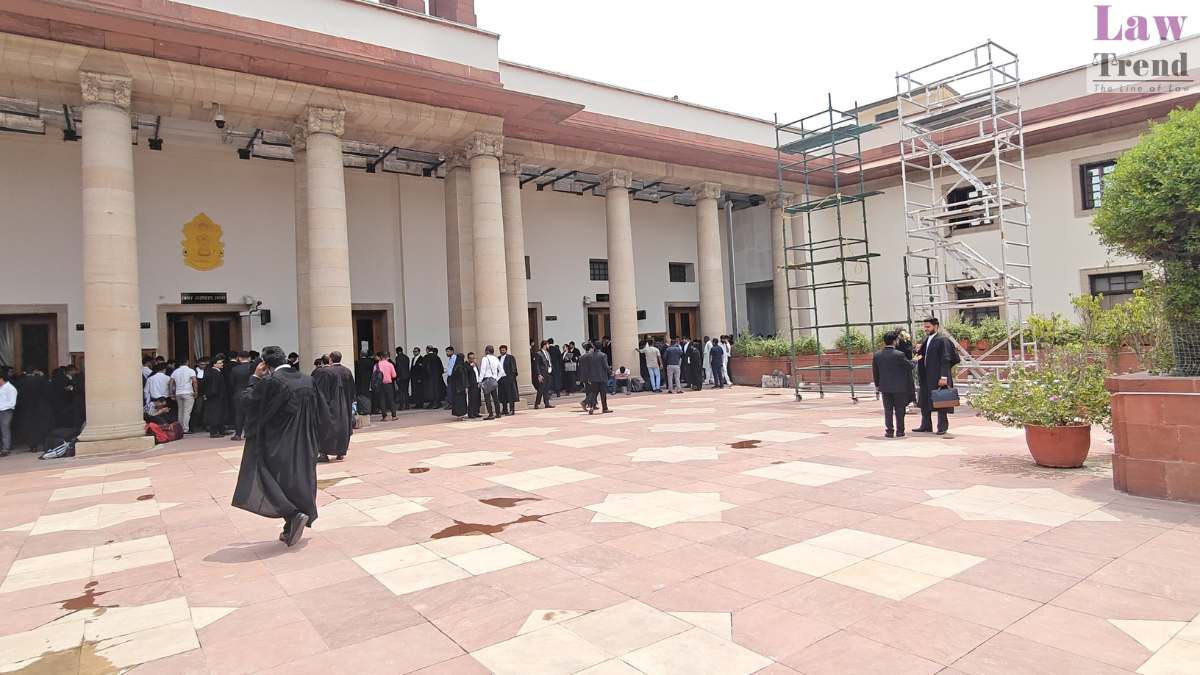
The Supreme Court on Tuesday directed authorities not to take coercive action against protesters involved in the recent student demonstrations linked to the Cockroach Janata Party (CJP), while ordering the immediate release of all detained minors across States where the protests took place.
A Bench comprising Chief Justice of India Surya Kant and Justices Joymalya Bagchi and V. Mohana clarified that the protection would not apply to individuals with criminal antecedents. The Court also indicated that allegations of excessive use of force by police prima facie warranted an independent inquiry and said it was considering the constitution of a high-powered committee to investigate the incidents.
Before taking a final decision on such a probe, the Bench granted the Union government, Delhi Police and other concerned States an opportunity to place their versions on record. Notices were issued to the Chief Secretaries of Delhi, Maharashtra, Bihar, Kerala, Madhya Pradesh and Uttar Pradesh.
Court Orders Preservation Of Evidence
To ensure that material relevant to the incidents is not lost, the Court directed authorities to preserve CCTV footage, drone recordings, body camera footage, wireless communications, PCR call records and other evidence connected with the protests.
The Bench further ordered that personal and digital information collected by police about protesters must not be placed in the public domain.
Court Notes Allegations Of Excessive Force
During the hearing, the Court took note of allegations that pellet guns were used against protesters, resulting in injuries, including the alleged loss of eyesight of a student. It also recorded allegations regarding the use of rubber bullets, electric batons and lathis fitted with nails during crowd-control operations.
The Bench additionally noted claims that some police personnel were deployed in civilian clothing during the protests.
Solicitor General Tushar Mehta, appearing for the authorities, submitted that criminal elements had infiltrated the demonstrations and had attacked police personnel, resulting in injuries.
Bench Signals Need To Revisit Protest Protocols
The Supreme Court observed that the framework governing public protests, evolved through earlier judicial decisions, may require reconsideration. It said an effective institutional mechanism should be activated whenever large-scale protests or similar situations arise.
Chief Justice Surya Kant observed that public agitations are an inherent feature of a democracy. At the same time, he said allegations of excesses during the recent protests required a transparent and comprehensive inquiry. The Court added that it was not equipped to investigate such factual disputes itself, making an independent high-powered committee an appropriate option.
The matter has been listed for hearing next week.
Key Interim Directions
The Court’s interim directions include:
- No coercive action against protesters, except those with criminal antecedents.
- Immediate release of all persons below 18 years of age detained during the protests.
- Prohibition on publication of protesters’ personal or digital data collected by police.
- Preservation of CCTV footage, drone recordings, body camera footage, wireless communications and PCR records relating to the protests.
- Notices to the Chief Secretaries of Delhi, Maharashtra, Bihar, Kerala, Madhya Pradesh and Uttar Pradesh.
Background Of The Case
The proceedings arise from a batch of petitions seeking nationwide guidelines to safeguard peaceful protests following allegations of excessive police action during demonstrations at Delhi’s Jantar Mantar and in Bihar. Some petitions also sought action against protesters accused of assaulting police personnel.
The protests began in June after the online collective Cockroach Janata Party called demonstrations over repeated question paper leaks and demanded the resignation of Union Education Minister Dharmendra Pradhan, who subsequently resigned on July 25.
The movement intensified after climate activist Sonam Wangchuk joined the protest and began a hunger strike. He was later shifted from the protest site to a hospital by Delhi Police, citing his deteriorating health, and ended his 26-day fast at Medanta Hospital on July 23.
On July 20, police used baton charges, tear gas and, according to the petitions, pellet guns to disperse protesters during the “Sansad Chalo” march towards Parliament. Similar demonstrations and police action were reported from Bihar, where a police officer was allegedly seen carrying an AK-47 during the protests.
The resignation of the Education Minister on July 25 was followed by the withdrawal of the protests, but allegations regarding the conduct of law enforcement agencies have continued to remain at the centre of the litigation.




