

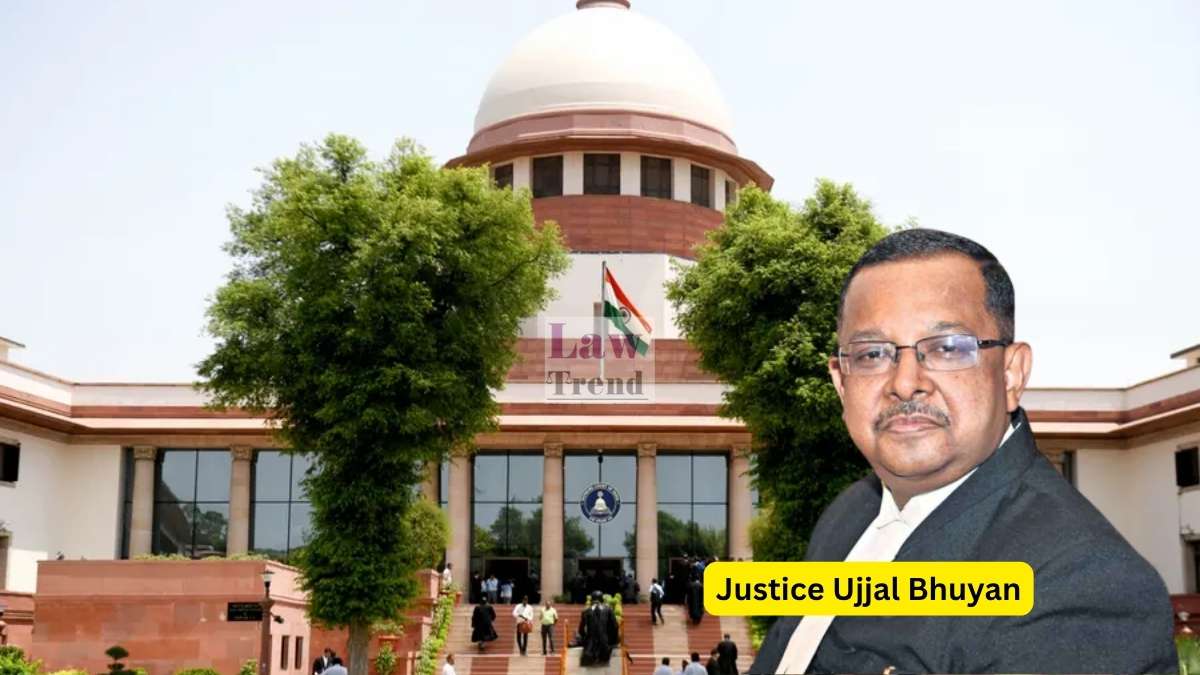
Supreme Court judge Justice Ujjal Bhuyan has voiced strong concern over the increasing criminalisation of peaceful dissent and routine activities in India, cautioning that severe judicial bail conditions risk discouraging citizens from exercising their constitutional freedoms.
Speaking on Saturday at the 4th Memorial Lecture of Justice G.P. Singh at the National Law Institute University in Bhopal, Justice Bhuyan stated that freedom of expression, debate, and peaceful demonstration are essential components of a functioning democracy. He remarked that ordinary acts of protest are increasingly being met with criminal prosecutions.
Concerns Over Arrests and Student Protests
Illustrating his concerns, Justice Bhuyan cited the case of a group of youths who were jailed for three months after being arrested for consuming chicken biryani while breaking a fast over the Ganga river. He noted that no statute forbids the consumption of chicken in that location and maintained that eating chicken biryani cannot be classified as an offence.
Justice Bhuyan also pointed to the treatment of environmental activists and student demonstrators, noting that citizens raising alarms over environmental degradation are driven away like criminals. He highlighted that university students engaging in campus protests frequently face arrests, spend 30 to 40 days in custody before securing bail, and often suffer academic suspensions that require legal intervention to resolve.
Questions Over Judicial Bail Conditions
Addressing the role of the judiciary, Justice Bhuyan questioned whether restrictive bail terms imposed by courts are indirectly suppressing public dissent. While acknowledging that courts eventually grant bail, he noted that such relief is frequently delayed.
He specifically criticised bail conditions that prohibit individuals from making social media posts or attending public gatherings, stating that such restrictions significantly curtail fundamental liberties.
Referencing the Supreme Court’s 2024 ruling against punitive “bulldozer justice,” Justice Bhuyan described the decision as welcome, though he observed that it arrived two years too late.
Critique of High Court Rulings and Post-Retirement Appointments
Justice Bhuyan raised objections to a decision by the Bombay High Court that denied permission for a rally in solidarity with Palestine. He expressed surprise at the court’s reasoning, which had questioned why citizens sought to demonstrate over events in Gaza rather than domestic matters. He noted that India maintains formal diplomatic relations with Palestine, including hosting a Palestinian embassy.
In addition, Justice Bhuyan criticized the practice of retired judges accepting political positions. Responding to a former Chief Justice of India’s assertion that entering the Rajya Sabha was intended to bridge the gap between the judiciary and the executive, Justice Bhuyan described the rationale as fundamentally flawed.
Scrutiny of Judgments and Hope in Future Lawyers
Emphasising the need for public accountability, Justice Bhuyan urged law students and legal scholars to critically examine judicial decisions. He clarified that evaluating or criticizing a court judgment is distinct from attacking the personal integrity of a judge, adding that the legitimacy of the judiciary depends on public confidence rather than internal self-assessment.
Concluding his address, Justice Bhuyan expressed confidence in incoming legal professionals, stating that the new generation of lawyers and students displays a stronger commitment to the rule of law and the Constitution than previous generations.


