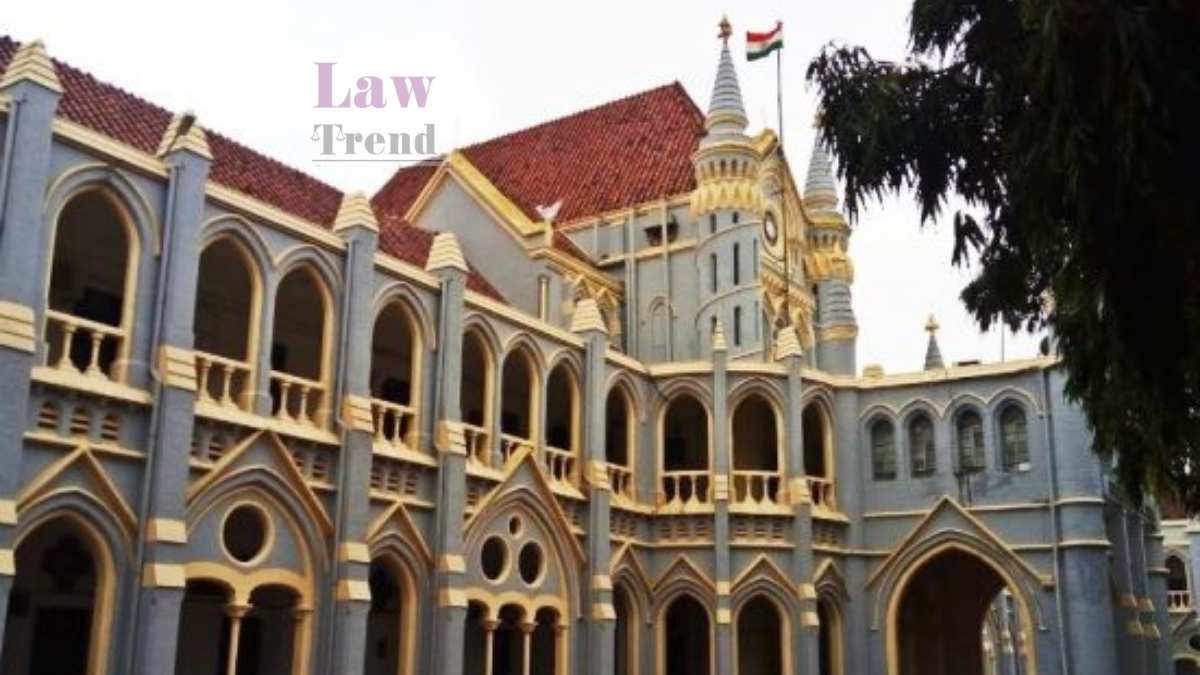
The High Court of Madhya Pradesh at Indore, presided over by Justice Jai Kumar Pillai, has ruled that a District Collector lacks statutory jurisdiction under the Code of Criminal Procedure, 1973 (Cr.P.C.) to direct the police to reopen an investigation or recall a closure report. Allowing the writ petition filed under Article 226 of the Constitution of India, the court quashed the orders of the Collector, holding that executive interference in statutory criminal investigations is ultra vires and destructive to the rule of law.
Background of the Case
The case arose from a writ petition filed by Deepak Manulal Garg, who challenged the legality, validity, and jurisdictional propriety of an order/memo dated September 8, 2025, and subsequent memos issued by the Collector (Respondent No. 2).
The factual background reveals that a First Information Report (FIR) bearing Crime No. 96/2020 was registered at Police Station Kotwali for offences punishable under Sections 420, 467, 468, and 471 of the Indian Penal Code (IPC). Upon concluding the investigation, the Investigating Officer found insufficient material against the accused. Consequently, the Station House Officer (SHO) forwarded Closure Reports to the competent court on May 7, 2024, and May 21, 2024.
Subsequently, the Collector issued the impugned communications directing the police authorities to “recall” the Closure Reports and reopen the investigation into the crime.
Arguments of the Parties
The learned counsel for the petitioner, led by a Senior Advocate alongside Shri Arjun Agrawal and Shri Amit Agrawal, vehemently argued that the Collector’s directives were entirely without jurisdiction. They submitted that the statutory framework of the Cr.P.C. does not vest any authority in a District Collector to interfere with an ongoing or concluded investigation, order its reopening, or direct the recall of a Closure Report once it has been sent to the competent Court. The petitioner contended that such executive interference in criminal matters is arbitrary and must be quashed.
On the other hand, the learned Government Advocate, representing the State and appearing with Shri Gaurav Rawat, supported the Collector’s orders. The state’s counsel contended that the intent behind the directive was to ensure a fair and complete probe. They argued that the communications should be viewed in light of Section 173(8) of the Cr.P.C., which expressly provides for “further investigation.”
The Court’s Analysis
The High Court identified the core legal issue as whether a District Collector possesses statutory jurisdiction under the Cr.P.C. to direct an investigating agency to recall a Closure Report and reopen an investigation.
Analyzing the statutory scheme, the court observed that the Cr.P.C. clearly demarcates the independent boundaries of the investigating agency and the judiciary. Once an FIR is registered, the prerogative to investigate lies strictly with the police. If no case is made out after the probe, a final report (Closure Report) is forwarded under Section 173(2) of the Cr.P.C. to the Magistrate empowered to take cognizance.
The court emphasized that once the police submit this report, the jurisdiction shifts strictly to the concerned Judicial Magistrate, who has the discretion to accept the report, reject it and take cognizance, or direct further investigation.
Highlighting the limits of executive power, the court stated:
“The Collector does not exercise any supervisory, appellate, or judicial authority over the statutory investigative process under the Cr.P.C. to compel the SHO to “recall” a report that has already been forwarded. Permitting such an action would amount to allowing the executive to usurp the judicial function of the Magistrate, which is fundamentally destructive to the rule of law.”
The court further ruled that:
“The impugned directive by the Collector is, therefore, entirely alien to the scheme of the Cr.P.C. An order passed without jurisdiction is a nullity. The Collector has traveled beyond the scope of his statutory authority in directing the reopening of the investigation and the recall of the Closure Report.”
The Decision
Consequently, the High Court allowed the writ petition and quashed the impugned order/memo dated September 8, 2025, along with the subsequent memos concerning the reopening of the investigation in Crime No. 96/2020.
However, the court clarified that this order will not prevent the competent Judicial Magistrate from exercising lawful jurisdiction over the Closure Report. It also does not bar the police from exercising their independent statutory powers of further investigation under Section 173(8) of the Cr.P.C., provided it is done strictly in accordance with the law and uninfluenced by the quashed executive directives. No order was made as to costs.
Case Details:
Case Title: Deepak Manulal Garg Versus The State of Madhya Pradesh and Others
Case No.: Writ Petition No. 48444 of 2025
Bench: Justice Jai Kumar Pillai
Date: 14/07/2026